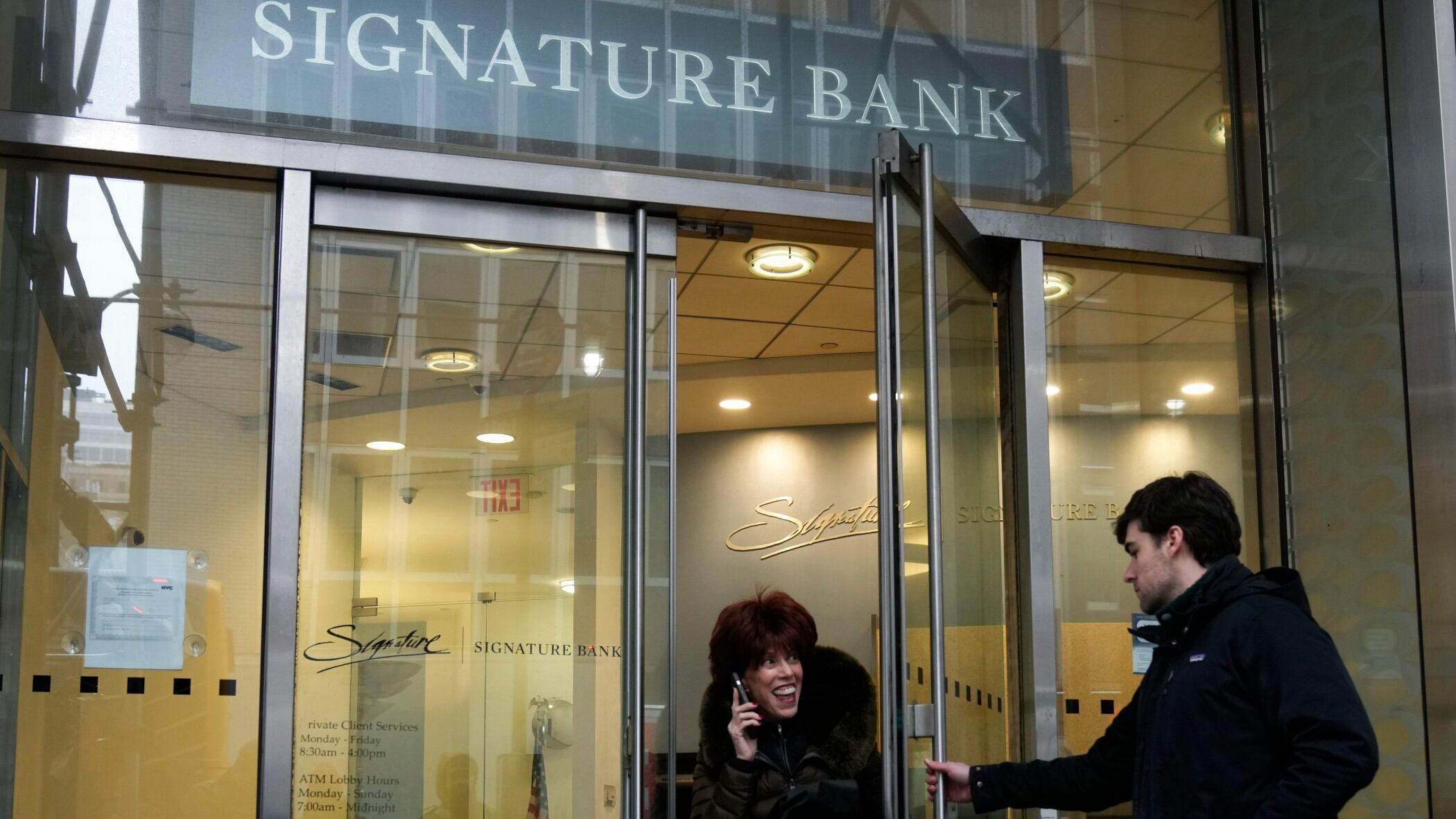
A woman leaves a branch of Signature Bank in New York, Monday, March 13, 2023. (AP Photo/Seth Wenig, File)
By Ken Sweet
New York Community Bank has agreed to buy a significant chunk of the failed Signature Bank in a $2.7 billion deal, the Federal Deposit Insurance Corp. said late Sunday.
The 40 branches of Signature Bank will become Flagstar Bank, starting Monday. Flagstar is one of New York Community Bank's subsidiaries. The deal will include the purchase of $38.4 billion in Signature Bank's assets, a little more than a third of Signature's total when the bank failed a week ago.
The FDIC said $60 billion in Signature Bank's loans will remain in receivership and are expected to be sold off in time.
Signature Bank was the second bank to fail in this banking crisis, roughly 48 hours after the collapse of Silicon Valley Bank. Signature, based in New York, was a large commercial lender in the tristate area, but had in recent years gotten into cryptocurrencies as a potential growth business.
After Silicon Valley Bank failed, depositors became nervous about Signature Bank's health due to its high amount of uninsured deposits as well as its exposure to crypto and other tech-focused lending. By the time it was closed by regulators, Signature was the third largest bank failure in U.S. history.
The FDIC says it expects Signature Bank's failure to cost the deposit insurance fund $2.5 billion, but that figure may change as the regulator sells off assets. The deposit insurance fund is paid for by assessments on banks and taxpayers do not bear the direct cost when a bank fails.
Nvidia smashes earnings with record-breaking revenue and soaring Blackwell demand as shares slip this morning, Barron’s senior writer Adam Levine unpacks it all
Jeff Wagoner, CEO of Outrigger Hospitality Group, discusses the company’s coral preservation initiatives and sustainable practices at their hotels and resorts.
Dena Jalbert, Head of M&A at Align Advisory, discusses the state of mergers and acquisitions in 2025 and beyond, highlighting key trends and opportunities.
Kim Perell, author and entrepreneur, shares actionable tips and tricks to help current and aspiring entrepreneurs kick off 2026 with confidence and momentum.
Emera CEO Scott Balfour discusses soaring energy demand, AI-driven grid challenges, clean-power investments, and how the company is building a resilient future.
JB Mackenzie discusses Robinhood’s new entertainment prediction markets, letting users engage with pop culture, award shows, and more through low-stakes bets.
Rhett Power shares his startup journey, lessons from his early years and insights from his book on overcoming negative self-talk to lead with confidence.
Despite inflation, Americans aren’t giving up the gym. Crunch Fitness CEO Jim Rowley discusses strong growth, value-driven expansion and what the future holds.
Home prices far outpacing incomes, low inventory, and higher living costs are reshaping the market. WSJ’s Veronica Dagher breaks down the challenges ahead.
As commercial options tighten, more travelers are turning to private aviation. Wheels Up CEO George Mattson breaks down capacity and demand challenges.