Facebook's David Marcus Knows Why People Prefer the Messenger App
The way companies communicate with their customers is changing drastically, and Facebook’s head of Messenger says his company’s app creates a space for them to have a better dialogue.
David Marcus joined Cheddar CEO Jon Steinberg from the WPP Stream conference in Ojai, California Friday. He points out that no one ever seems to call companies anymore. Not only is the process tedious, he says, but it’s not the way clients prefer to communicate. Marcus thinks Messenger is a more viable and effective option than even traditional texting.
This push for consumers and companies to communicate via Messenger, which was created in 2011, comes at a time where communication apps are on the rise. Data research firm Statista projects that by 2019 2.19 billion people will be using mobile phone messaging.
Marcus said in September that Facebook Messenger had 1.3 billion active users every month. The company’s other product, WhatsApp, has over 1 billion daily users on the platform. According to Statista, WhatsApp is the most popular option worldwide, and Messenger ranks #3.
Marcus argued that the number of people choosing to communicate via Messenger continues to increase. “As a result [the app] becomes a great platform for businesses as well,” he said.
He points to a survey Facebook conducted found that over 64 percent of people across demographics would prefer to communicate with a brand via a platform like Messenger. But there is a generational difference. A study by Goldman Sachs found that 34 percent of millennials like a brand more when it uses social media, but that number drops to 16 percent in individuals over 36.
Facebook has sought to monetize Messenger through advertising.
“We have ‘Click to Messenger’ ads … you can buy ads that direct people to opening more conversations with your brands inside of Messenger.”
Integrating a system where brands and consumers can increase communication is reminiscent of Facebook’s active advertisement strategy. The tech behemoth one of the two dominant players in the advertising industry -- the other being Google. It rules display advertising with a projected market share of 39 percent this year and revenues at $16.33 billion, according to eMarketer.
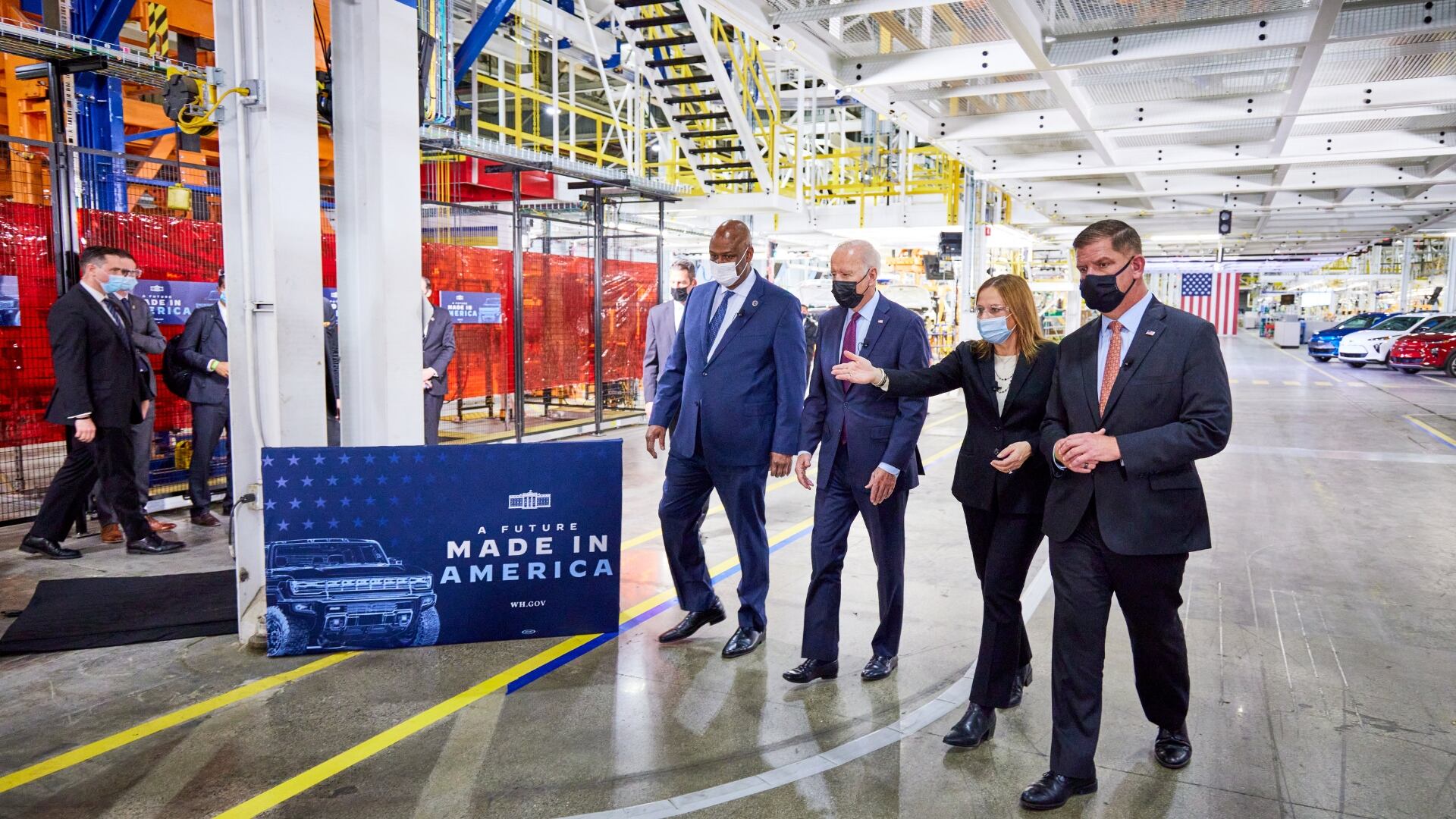
Gerald Johnson, Executive VP, Global Manufacturing and Sustainability at General Motors, joins Cheddar News to break down what Factory ZERO signifies for GM's all-electric future and why the auto manufacturer will be a leader in the growing EV industry.
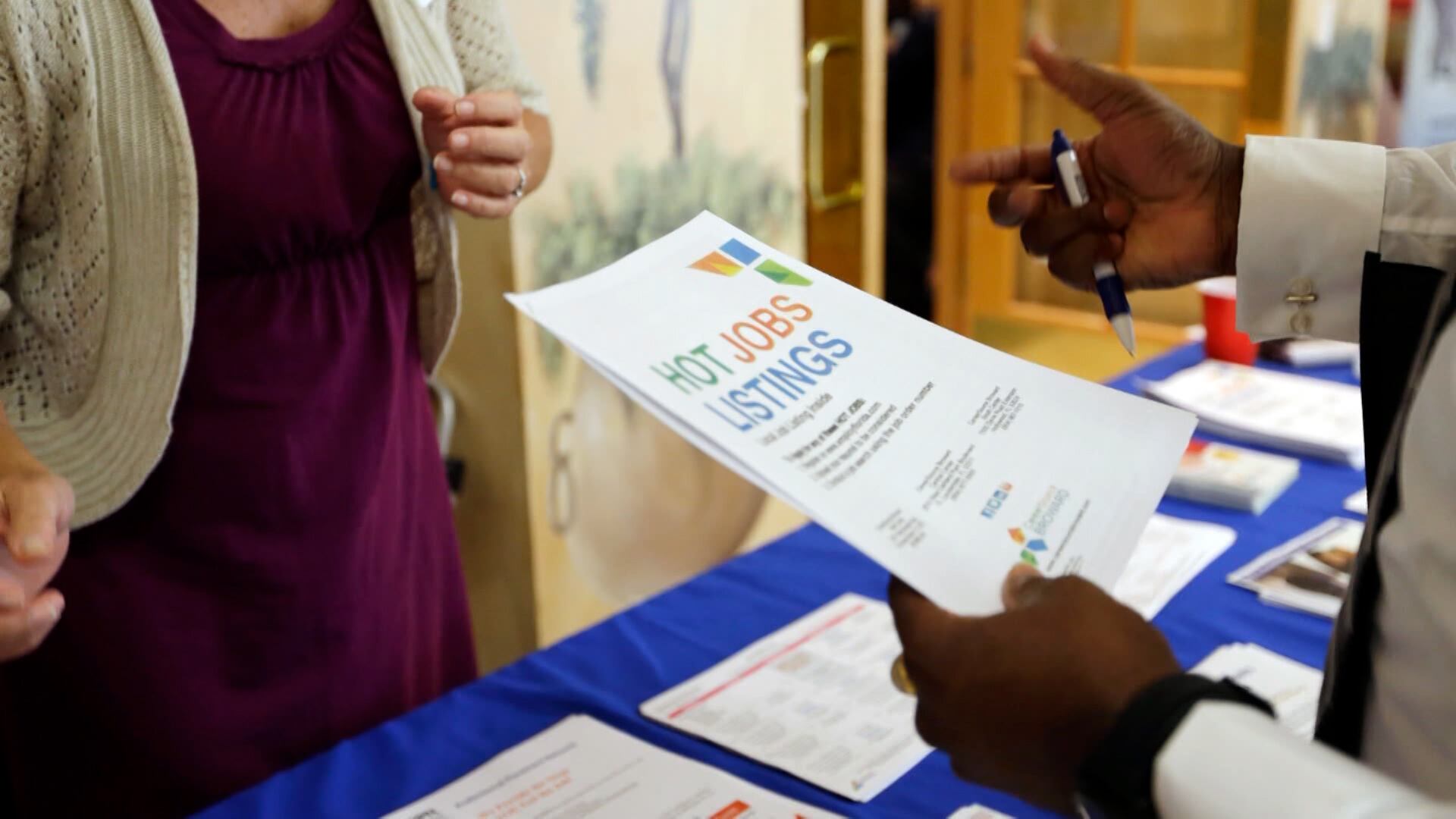
According to the U.S. Labor Department, a record 4.4-million people quit their job in September, with data showing there are seven unemployed workers for every ten job openings.
However, Americans aren't just quitting their jobs for more suitable ones, many are embracing their entrepreneurial side, leaving to start their own business. Dick Schulze, founder of Best Buy joined Cheddar's Opening Bell to discuss.
Airlines are gearing up for a busy winter season as they continue to rebound from the pandemic. But jet fuel prices combined with the ongoing labor shortage could put a damper on those holiday gains. Christian Vernet, president of La Compagnie, the only all business class airline in the world, joined Cheddar for an update on the state of the airline industry and how it's dealing with the surge in demand after the U.S. reopened its border to international visitors.
Cadillac is launching its first ever all-electric vehicle. The 2023 Lyriq boasts an estimated 300 mile range, $60,000 dollar starting price, a 33-inch advanced LED display, among many other features. The rollout comes as Cadillac has posted record third quarter global sales and plans to become all-electric by 2030. Rory Harvey, vice president of Cadillac, joined Cheddar to discuss what drivers can expect from the Lyriq, and how the brand has been able to deal with the ongoing chip shortage.
Octavio Marenzi, Founder & CEO of Opimas, discusses how labor participation is directly correlated with wage pressures and why supply chain issues are having little effect on earnings from the retail sector.
Philip Palumbo, Founder, CEO & Chief Investment Officer of Palumbo Wealth Management, discusses why wage pressure could impact earnings going forward and talks about the valuation mismatch within the tech sector.
Adam Coons, Portfolio Manager at Winthrop Capital Management, explains why supply chain constraints are the biggest risk to markets and which sectors are poised to outperform if interest rates rise.
Macy's reported a Q3 earnings beat and raked in $5.4 billion in revenue. The department store giant also said it is equipped to handle the expected holiday shopping rush. The company also announced it would be launching its own curated digital marketplace in 2022.
Zumba Fitness CEO Alberto Perlman joined Cheddar's "Between Bells" to talk about the rise in demand for in-person training after the company saw a 55 percent jump in scheduled classes over Q3. Perlman noted that while demand for in-person training is increasing, the pandemic exposed a market for at-home sessions that will likely persist even after it ends. "The world is becoming hybrid, and people are finding ways to fit in two workouts a week at home and then three workouts at the gym. And our instructors are perfectly positioned to adapt to those environments," he said.
Sting is the latest recording artist looking to unload his music catalog — for a staggering $250 million. Universal Music Group is said to be at the top of the list of suitors but the pop star's hits could still end up remaining with Sony.