By Amy Forliti and Michael Balsamo
A federal grand jury has indicted the four former Minneapolis police officers involved in George Floyd’s arrest and death, accusing them of willfully violating the Black man’s constitutional rights as he was restrained face-down on the pavement and gasping for air.
A three-count indictment unsealed Friday names Derek Chauvin, Thomas Lane, J. Kueng and Tou Thao.
Specifically, Chauvin is charged with violating Floyd's right to be free from unreasonable seizure and unreasonable force by a police officer. Thao and Kueng are also charged with violating Floyd’s right to be free from unreasonable seizure, alleging they did not intervene to stop Chauvin as he knelt on Floyd's neck. All four officers are charged for their failure to provide Floyd with medical care.
Floyd’s May 25 arrest and death, which a bystander captured on cellphone video, sparked protests nationwide and widespread calls for an end to police brutality and racial inequities.
Chauvin was also charged in a second indictment, stemming from the arrest and neck restraint of a 14-year-old boy in 2017.
Lane, Thao and Kueng made their initial court appearances Friday via videoconference in U.S. District Court in Minneapolis. Chauvin was not part of the court appearance.
Chauvin was convicted last month on state charges of murder and manslaughter in Floyd’s death and is in Minnesota’s only maximum-security prison as he awaits sentencing. The other three former officers face a state trial in August, and they are free on bond. They were allowed to remain free after Friday's federal court appearance.
Floyd, 46, died after Chauvin pinned him to the ground with a knee on his neck, even as Floyd, who was handcuffed, repeatedly said he couldn’t breathe. Kueng and Lane also helped restrain Floyd — state prosecutors have said Kueng knelt on Floyd’s back and Lane held down Floyd’s legs. State prosecutors say Thao held back bystanders and kept them from intervening during the 9 1/2-minute restraint.
Chauvin’s attorney, Eric Nelson, argued during his murder trial that Chauvin acted reasonably in the situation and that Floyd died because of underlying health issues and drug use. He has filed a request for a new trial, citing many issues including the judge’s refusal to move the trial due to publicity.
Nelson had no comment on the federal charges Friday. Messages left with attorneys for two of the other officers were not immediately returned, and an attorney for the fourth officer was getting in an elevator and disconnected when reached by The Associated Press.
To bring federal charges in deaths involving police, prosecutors must believe that an officer acted under the “color of law,” or government authority, and willfully deprived someone of their constitutional rights, including the right to be free from unreasonable seizures or the use of unreasonable force. That’s a high legal standard; an accident, bad judgment or simple negligence on the officer’s part isn’t enough to support federal charges.
Roy Austin, who prosecuted such cases as a former deputy assistant attorney general in the Department of Justice’s Civil Rights Division, said prosecutors have to prove that the officers knew what they were doing was wrong in that moment but did it anyway.
Conviction on a federal civil rights charge is punishable by up to life in prison or even the death penalty, but those stiff sentences are extremely rare and federal sentencing guidelines rely on complicated formulas that indicate the officers would get much less if convicted.
In Chauvin’s case, if the federal court uses second-degree murder as his underlying offense, he could face anywhere from 14 years to slightly more than 24 years, depending on whether he takes responsibility, said Mark Osler, a former federal prosecutor and professor at the University of St. Thomas School of Law.
Osler said the guidelines clearly state that any federal sentence would be served at the same time as a state sentence — the sentences wouldn’t stack. Chauvin is due to be sentenced on the state charges June 25.
The first indictment says Thao and Kueng were aware Chauvin had his knee on Floyd's neck, even after Floyd became unresponsive, and "willfully failed to intervene to stop Defendant Chauvin's use of unreasonable force."
All four officers are charged with willfully depriving Floyd of liberty without due process — for their alleged deliberate indifference to Floyd’s medical needs.
The second indictment, against Chauvin only, alleges he deprived a 14-year-old of his right to be free of unreasonable force when he held the teen by the throat, hit him in the head with a flashlight and held his knee on the boy’s neck and upper back while he was prone, handcuffed and unresisting.
According to a police report from that 2017 encounter, Chauvin wrote that the teen resisted arrest and that after the teen, who he described as 6-foot-2 and about 240 pounds, was handcuffed, Chauvin “used body weight to pin” the boy to the floor. The boy was bleeding from the ear and needed two stitches.
President Joe Biden's administration has made policing reform a major issue. Attorney General Merrick Garland has said he was refocusing the department around civil rights and does not believe there is equal justice under the law.
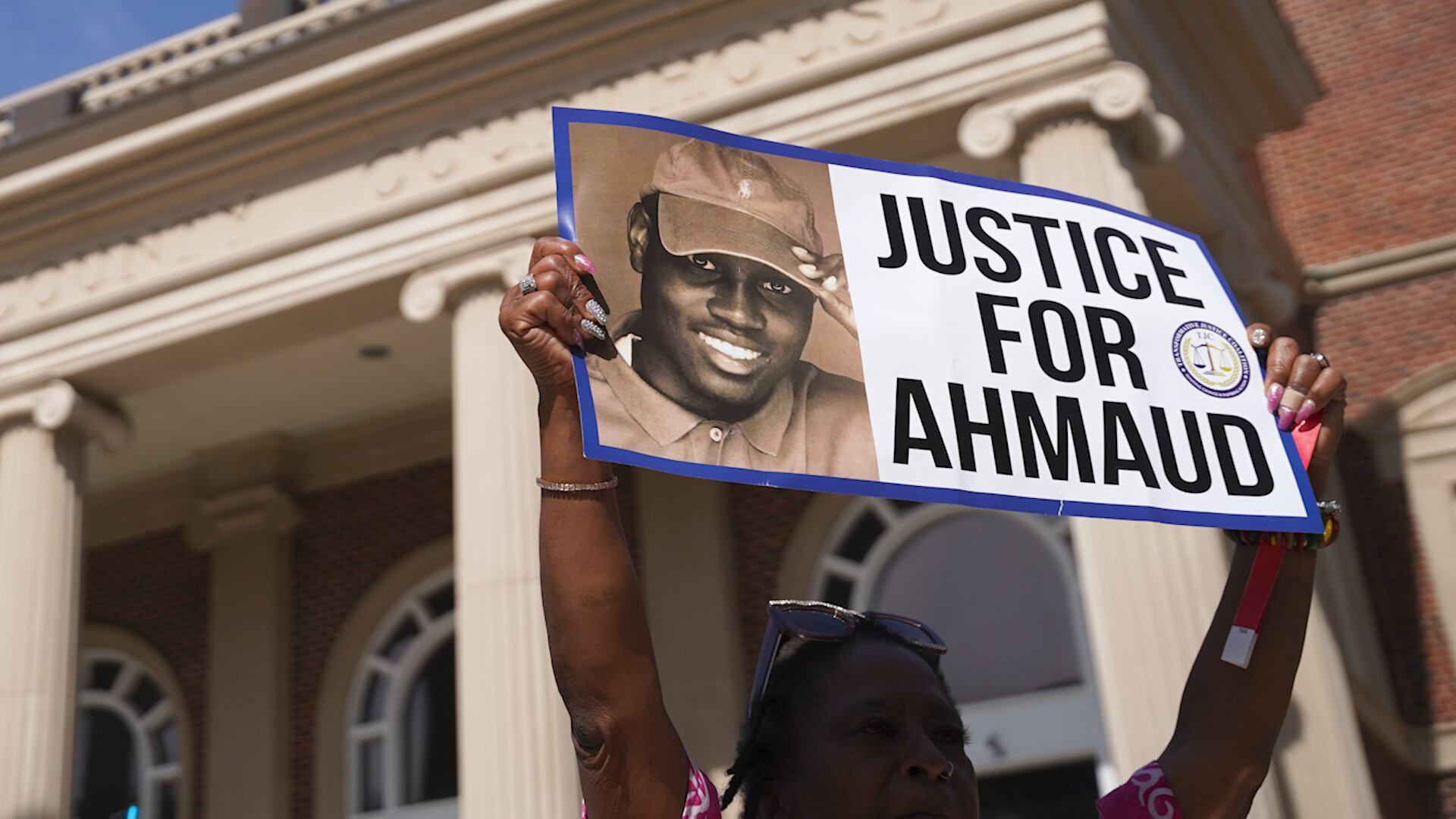
In late April, the Justice Department indicted three men on federal hate crime charges in the February 2020 death of Ahmaud Arbery, a 25-year-old Black man who was running in a Georgia neighborhood when he was chased down and shot. At the time, it was the most significant civil rights prosecution undertaken by Biden’s Justice Department.
The Justice Department also recently announced it was opening a sweeping investigation into the Minneapolis Police Department. The investigation will examine whether there is a pattern or practice of unconstitutional or unlawful policing at the department, and it could result in major changes.
Garland announced a similar probe into policing in Louisville, Kentucky, over the March 2020 death of Breonna Taylor, who was fatally shot by police during a raid at her home.
Chauvin was convicted of second-degree unintentional murder, third-degree murder and second-degree manslaughter. Experts say he will likely face no more than 30 years in prison when he is sentenced in June. The other officers face charges alleging they aided and abetted second-degree murder and manslaughter. All four officers were fired.
___
Balsamo reported from Washington.