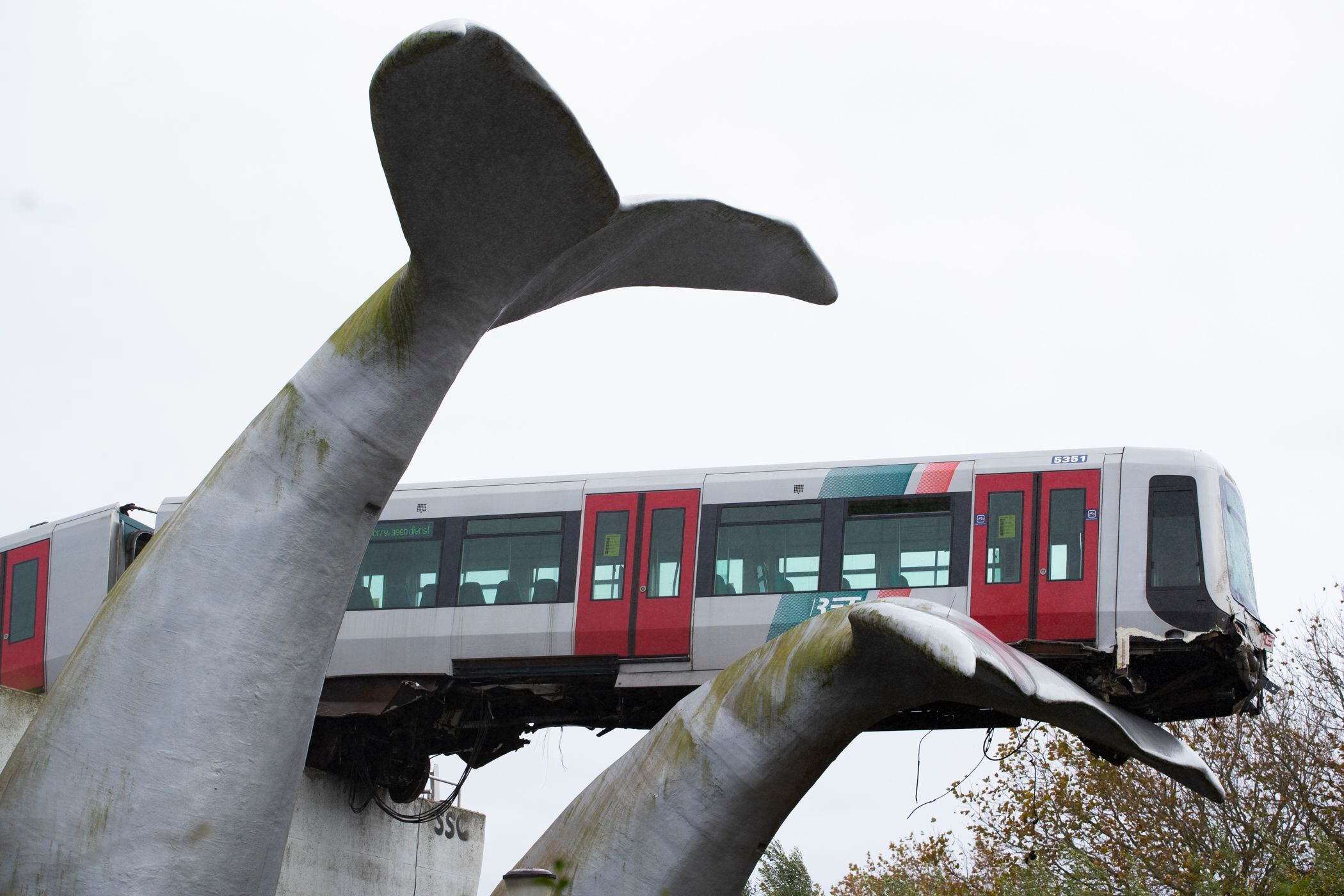
The whale's tail of a sculpture caught the front carriage of a metro train as it rammed through the end of an elevated section of rails with the driver escaping injuries in Spijkenisse, near Rotterdam, Netherlands, Monday, Nov. 2, 2020. (AP Photo/Peter Dejong)
This really was a fluke.
The driver of a metro train escaped injury when the front carriage rammed through the end of an elevated section of rails and was caught by a sculpture of a whale's tail near the Dutch port city of Rotterdam.
The train was left perched upon one of two tail fins known as “flukes” several meters (yards) above the ground.
It created such a stir locally that authorities urged sightseers to stay away, adding that coronavirus restrictions were in force.
Even so, some 50 people were at the scene late Monday morning as engineers tried to work out how to stabilize and then remove the train amid strengthening winds.
“A team of experts is investigating how we can make it safe and get it down,” Carly Gorter, a spokeswoman for the local security authority, said in a telephone interview.
“It's tricky,” she added.
The authority said late Monday that a crane would attempt to lift the train off the whale Tuesday morning.
The architect who designed the sculpture, Maarten Struijs, told Dutch broadcaster RTL he was pleased that it likely saved the life of the driver.
“I'm surprised it's so strong,” he said. “If plastic has been standing for 20 years, you don't expect it to hold a metro carriage.”
The company that operates the metro line said the driver was uninjured and there were no passengers on the train when it crashed through stop barriers at the end of the station in the town of Spijkenisse, on the southern edge of Rotterdam, early Monday morning. The station is the final stop on the metro line.
Authorities launched an investigation into how the train could plow through the barrier at the end of the rail tracks. The driver was being interviewed as part of the probe, the Rijnmondveilig security authority said.
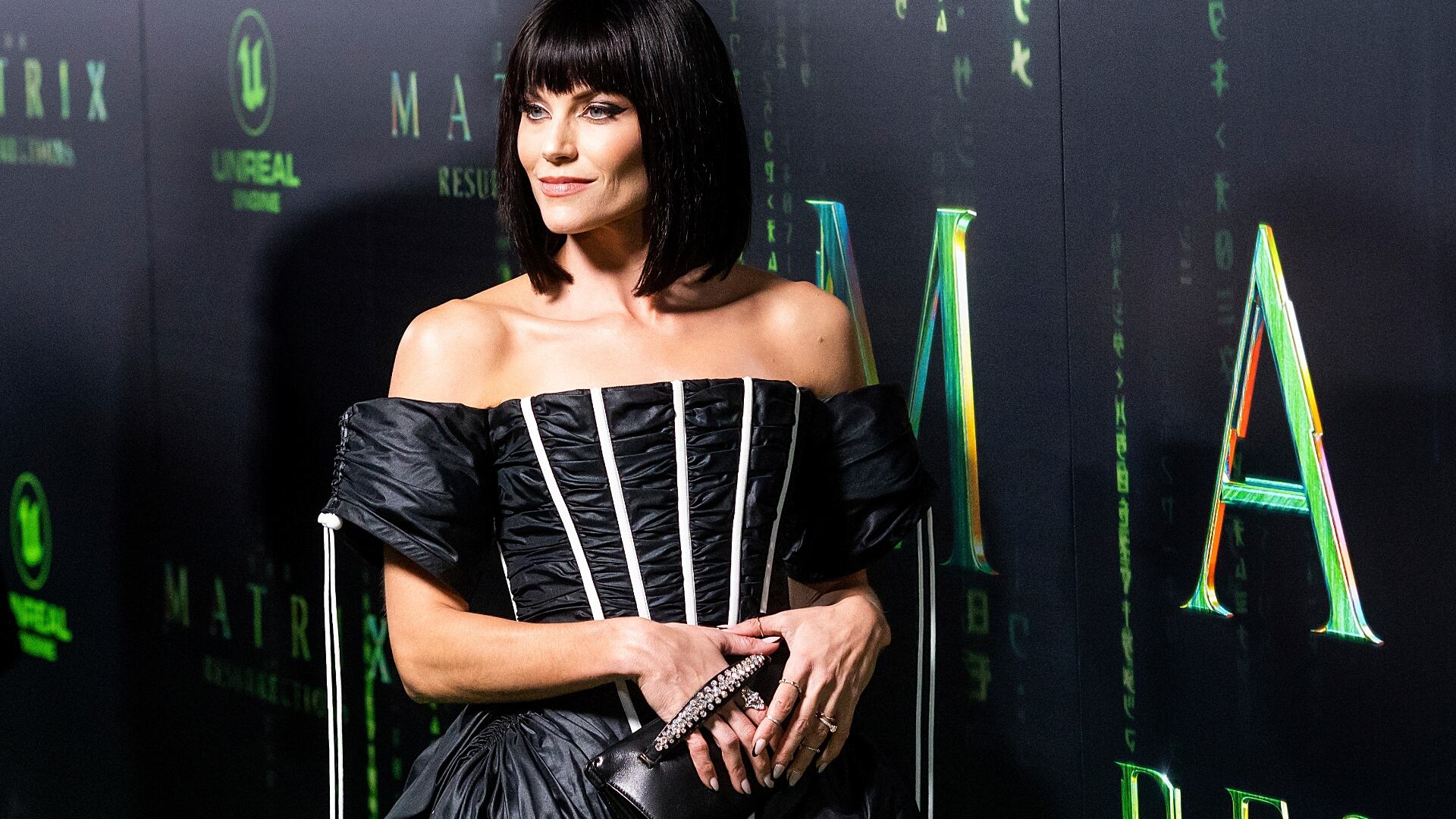
We are just one day away from what has been called the most influential tech event in the world. CES 2022 will officially kick off on Wednesday in Las Vegas, but the annual tech summit is being impacted by COVID-19, like so many other recent events. The Consumer Technology Association originally planned for a hybrid event to take place from January 5-8, with some in-person events and some virtual; however, a few big-name companies announced they will not be attending in-person, so the CTA decided to shorten the event by one day, with it now ending on Friday. Consumer electronics senior analyst Will Greenwald joins Cheddar News' Closing Bell to discuss.
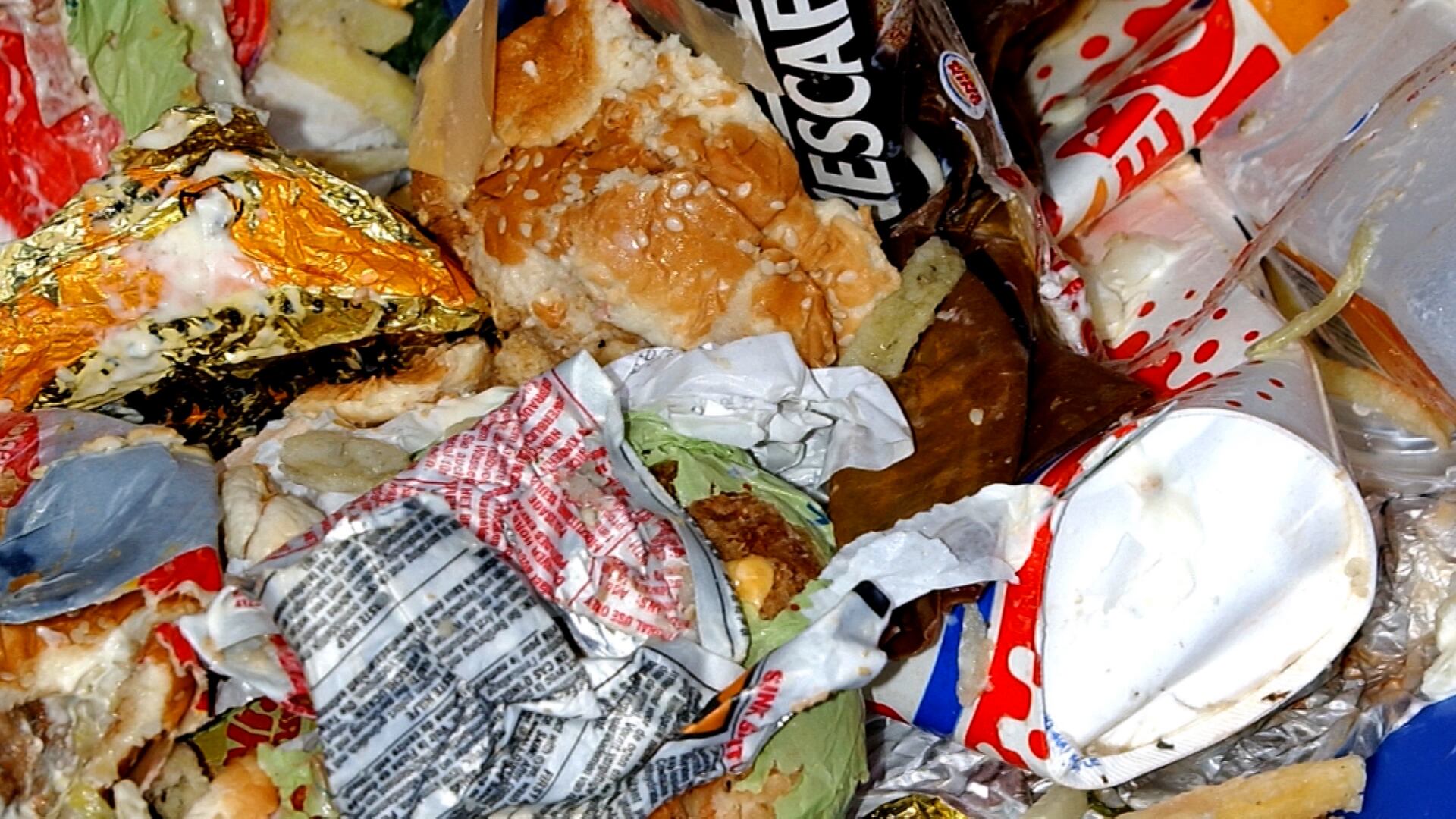
California's new composting law will affect what residents do in their kitchens. As of this week, Californians will have to recycle excess food in an effort to reduce emissions caused by food waste. Cities and counties will turn recycled food into compost or use it as a renewable energy source. California's new law is the largest mandatory residential food waste recycling program in the country. Rachel Wagoner, Director of the California Department of Resources, Recycling and Recovery called the law 'the biggest change to trash' since recycling started in the 1980s. She joined Cheddar Climate to discuss.
Fast-casual restaurant chain Sweetgreen is rolling out its first salad subscription service called sweetpass as it looks to customers tackling new year weight loss and health goals. Members will receive up to 30 percent off of purchases.
Washington DC and the surrounding areas saw a record breaking snow storm Monday as a strong storm system works its way across the eastern U.S. The extreme weather event caused extensive damage in the greater Washington area, leaving thousands in the region without power. Jonathan Porter, Chief Meteorologist, AccuWeather, joined Wake Up with Cheddar to discuss the fierce storm.
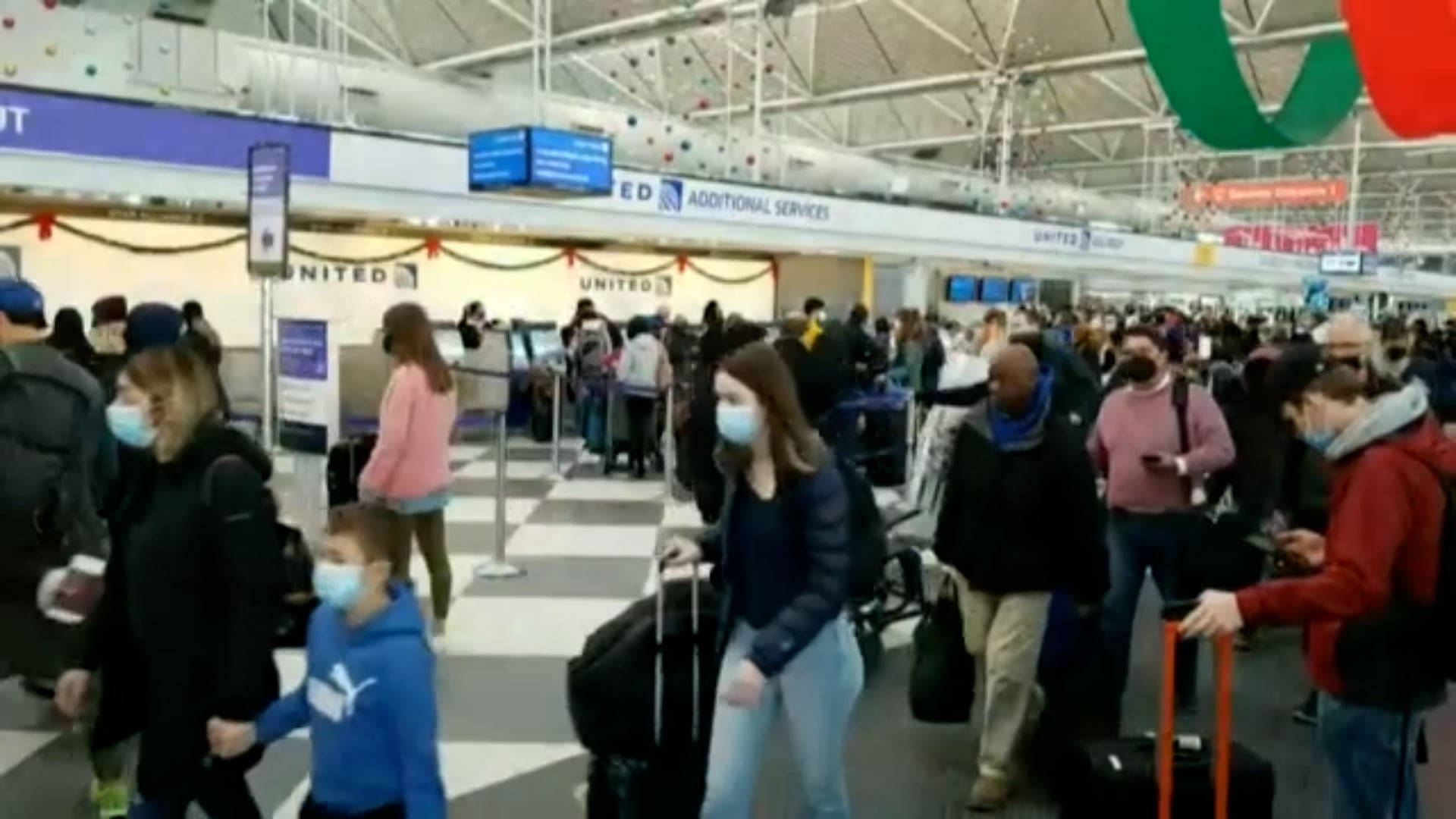
Airlines canceled more than 3,000 flights on Monday over severe weather and crew shortages. The cancellations come on one of the busiest travel days of the holiday season, and is a continuation of the industry-wide disruption that started before Christmas. Thomas Pallini, Aviation Reporter for Insider joined Wake Up with Cheddar to discuss.
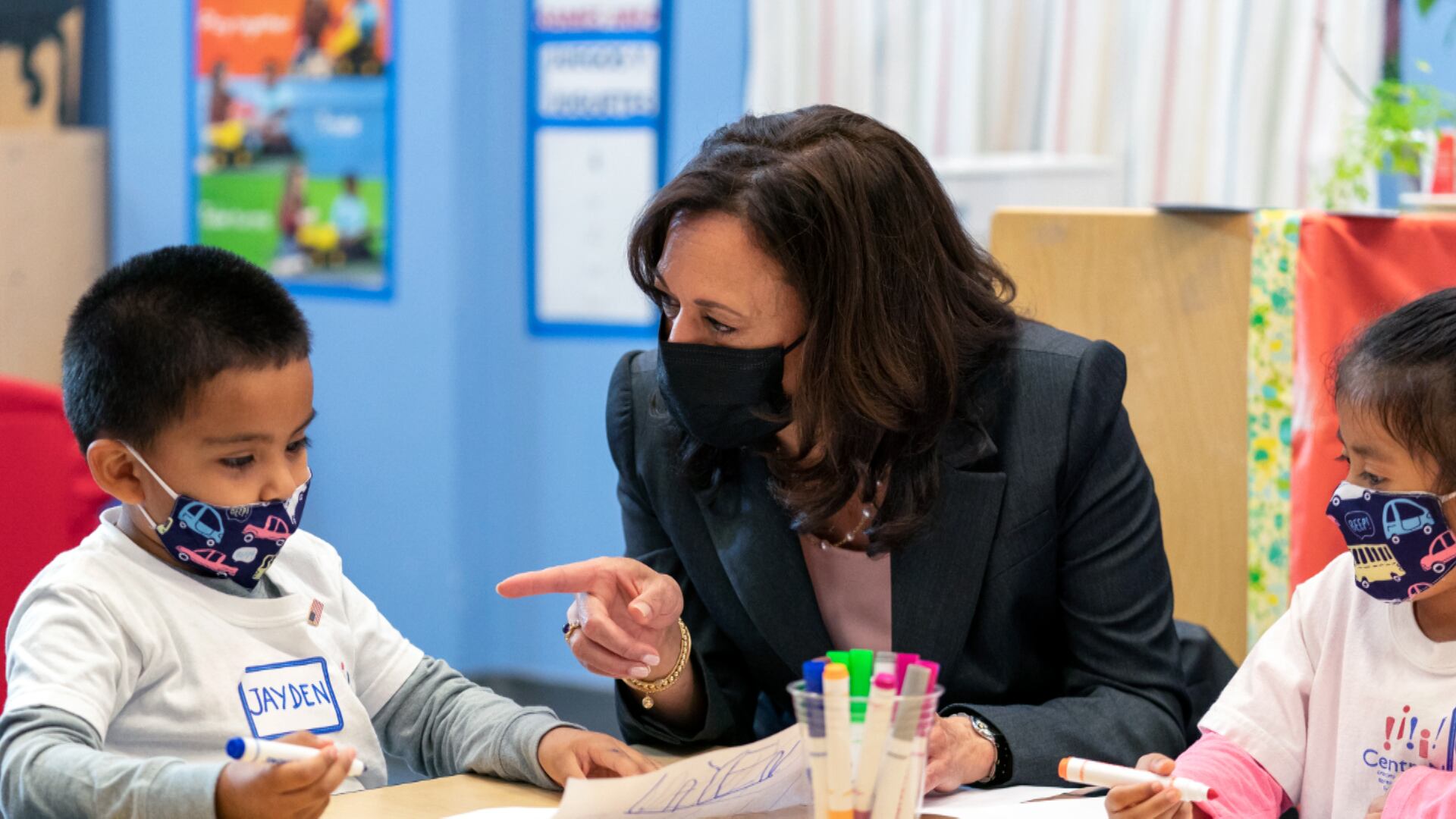
Millions of Americans with young children have relied on the child tax credit since the federal government began issuing checks in July 2021. The last round of payments was sent out just before the Christmas holiday — at the same time as the omicron variant surged. Leah Hamilton, associate professor of social work at Appalachian State University, joined Cheddar to discuss what the end to the tax credit means as the U.S. sees the end of many relief programs and its highest number of COVID cases since the start of the pandemic. "It'll become harder for families to meet their basic needs, increasing national childhood poverty rates and the proportion of families who have difficulty putting food on the table, maintaining stable housing, and paying their bills," Hamilton said. She also pointed to research that the credit as a long-term investment in children offsets claims that it contributes to macroeconomic impacts like inflation.
Several Silicon Valley insiders are being accused of contorting a 1990s-era tax break to avoid taxes on millions of dollars of investment profits. The tax break is known as the qualified small business stock exemption, and it allows early investors in certain companies to avoid half of the taxes on up to $10 million in capital gains. A piece recently published in the New York Times says venture capital firms like Andreessen Horowitz replicated the tax exemption by giving shares of companies to friends and family, who would otherwise face a 23.8% capital gains bill. The CEO of Roblox is also accused of replicating the tax break for his family members at least 12 times. Although the loophole known as 'stacking' is considered to be legal, the Times piece implies that the exemption has been manipulated for the ultra-wealthy to become more wealthy. Greycroft co-founder and Chairman Emeritus Alan Patricof joins Cheddar News' Closing Bell to discuss.
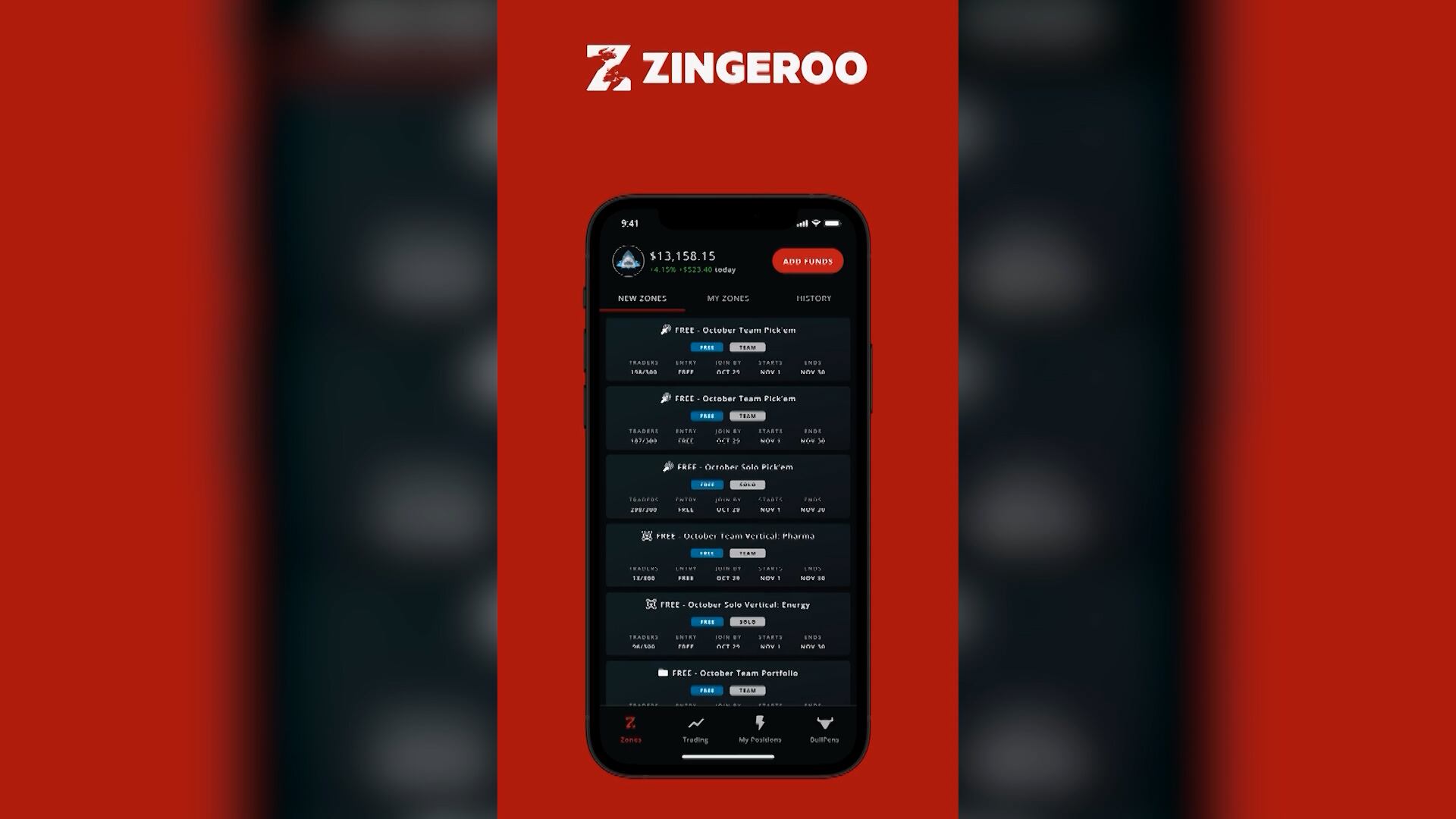
There is a new player in the mobile app stock trading space.
Zingeroo recently announced a funding round of $8.5 million. The company says it aims to bring 'friendly competition' to stock trading, by literally breaking trading down into daily and weekly competitions between friends. Zingeroo also says it hopes its new approach can make trading more accessible, educational, and social than ever before. Zingeroo co-founder and CEO Zoe Barry joins Cheddar News' Closing Bell for more.