Volunteer Nicolle Eagan plays the violin for dogs being cared for at the ASPCA animal recovery center, Friday, April 21, 2023, in New York. Many nonprofits use images of suffering and need to motivate people to give, but a recent study from economists found there may be other effective strategies for prompting acts of generosity. (AP Photo/Mary Altaffer, File)
Those ads showing caged dogs and desperate looking cats while Canadian singer Sarah McLachlan's “Angel” played in the background have been not just effective at making viewers sad, but also remarkably successful at raising money for the American Society for the Prevention of Cruelty to Animals since 2007.
However, a new study shows other strategies may also be effective at motivating people to give, apart from all that “ sadvertising.” Maybe try “Hakuna Matata.”
The study from Nathan Chan, assistant professor at the University of Massachusetts Amherst, and Casey Wichman, assistant professor at the Georgia Institute of Technology, found that people in good moods are more likely to donate to a charitable cause.
The study gathered posts made to Twitter, the social media platform now called X, from people who gave to Wikipedia and posted a hashtag acknowledging the donation. The researchers analyzed the posts from before and after the users made a donation and found that it improved shortly before they gave.
“It suggests that rather than this conventional notion that people give because it makes them feel good about themselves for doing the right thing, we found that people were in a good mood prior to donating, and that’s potentially the causal factor for why they decided to give," Wichman said.
The findings indicate charities may want to improve a potential donor's mood before making the ask, Wichman said.
Their study isn't the first to find a connection between well-being and generosity, said Lara Aknin, professor of social psychology at Simon Fraser University, but it does a provide a valuable look at a person's specific feeling at a specific moment in a real world example. One takeaway could be that it would be beneficial to reach people at times when they are already feeling good, like on holidays or a loved one's birthday, she said.
But people give for many reasons and many levers motivate that generosity, Aknin said, including showing how a potential donor can make a meaningful impact on other people, animals or causes they care about. She also warned that people are very attuned to ulterior motives attached to requests for help.
“If people feel that they’re insincerely being fattened up before the request, then that could that could really spoil giving,” she said, “which I think for many people is truly a pretty wonderful experience when they get to give in ways that they care about and feel like they’ve chosen to do so.”
The researchers used natural language processing tools to analyze the sentiments of a person's tweets and identify their mood based on their posts.
They also designed a second experiment to test their findings where they asked online volunteers to decide how to split $50 between themselves and a charity. They showed some a clip of “Hakuna Matata” from from “The Lion King,” while others watched a science video about microbes. Those who watched the dancing warthog gave a little more to charity and were more likely to give the whole amount, though the results are less conclusive because of a small sample size.
While nonprofits always want to attract additional donations, many feel a particularly acute need right now. Human service, arts and educational organizations among others were profoundly stretched and stressed by the pandemic. Many continue to report increased demand for their services at the same time, economic conditions like inflation and major declines in the stock market impacted philanthropic giving. Last year, the overall amount of donations dropped for only the fourth time in four decades, according to Giving USA.
The trend also continued of fewer donors giving more, and so Michael Thatcher, CEO of Charity Navigator, encouraged nonprofits to experiment carefully and keeping true to an organization's mission.
"I think we need to be trying new things right now because there is donor fatigue," he said. But also, he added, “Don't try every new fad.”
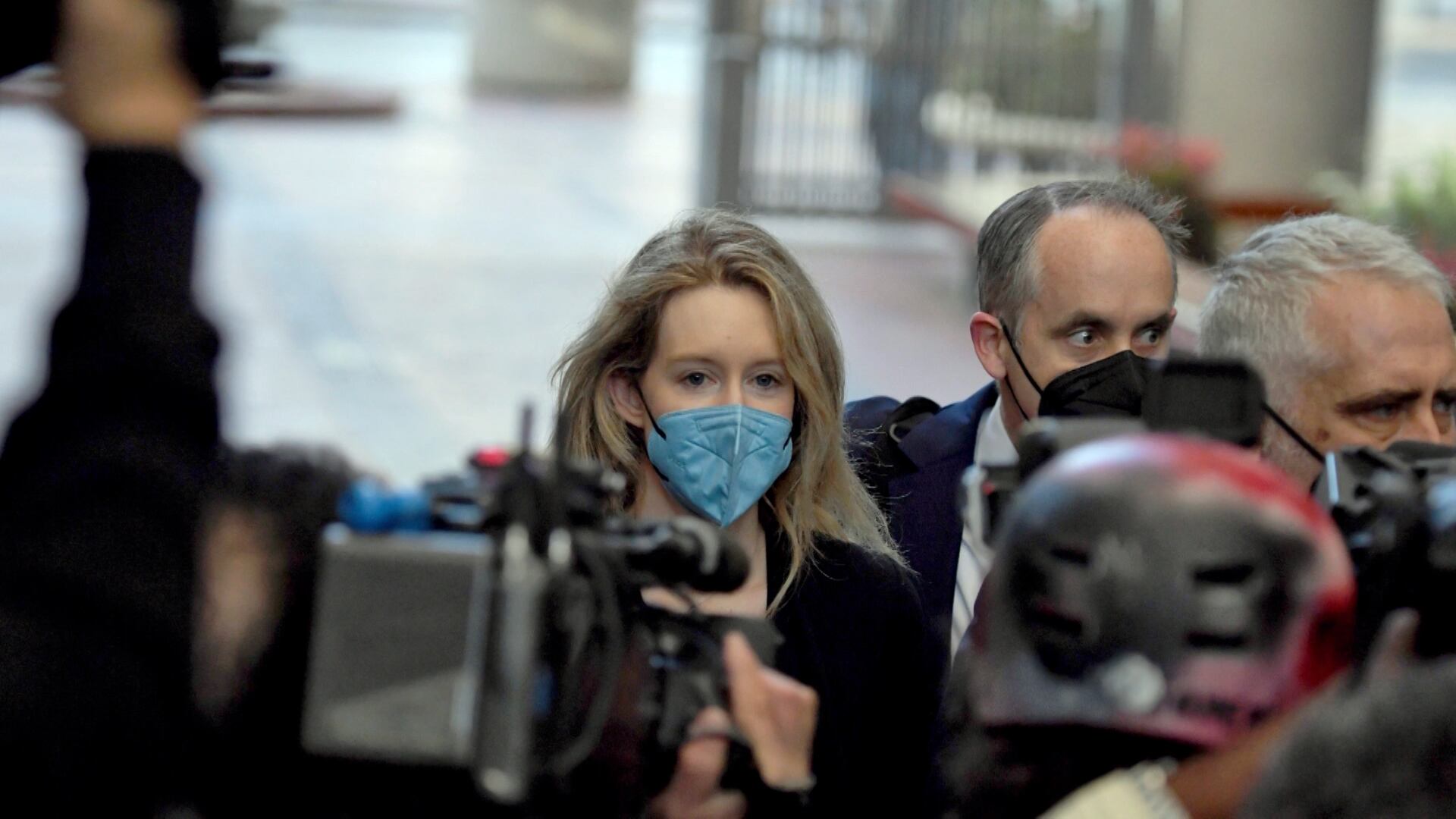
The six-month trial of Theranos founder Elizabeth Holmes has come to an end with the former tech startup star found guilty of four out of 11 counts of fraud. Michael S. Weinstein, Esq, chair of the white collar criminal defense practice at Cole Schotz, and former Department of Justice trial attorney, joined Cheddar News Wrap to discuss what happens next for the former mogul. "Do I think it's going to be more than five or seven years? Probably yes. I think that's probably a fair range at this point," he said about her potential prison sentence.
We are just one day away from what has been called the most influential tech event in the world. CES 2022 will officially kick off on Wednesday in Las Vegas, but the annual tech summit is being impacted by COVID-19, like so many other recent events. The Consumer Technology Association originally planned for a hybrid event to take place from January 5-8, with some in-person events and some virtual; however, a few big-name companies announced they will not be attending in-person, so the CTA decided to shorten the event by one day, with it now ending on Friday. Consumer electronics senior analyst Will Greenwald joins Cheddar News' Closing Bell to discuss.
California's new composting law will affect what residents do in their kitchens. As of this week, Californians will have to recycle excess food in an effort to reduce emissions caused by food waste. Cities and counties will turn recycled food into compost or use it as a renewable energy source. California's new law is the largest mandatory residential food waste recycling program in the country. Rachel Wagoner, Director of the California Department of Resources, Recycling and Recovery called the law 'the biggest change to trash' since recycling started in the 1980s. She joined Cheddar Climate to discuss.
Fast-casual restaurant chain Sweetgreen is rolling out its first salad subscription service called sweetpass as it looks to customers tackling new year weight loss and health goals. Members will receive up to 30 percent off of purchases.
Washington DC and the surrounding areas saw a record breaking snow storm Monday as a strong storm system works its way across the eastern U.S. The extreme weather event caused extensive damage in the greater Washington area, leaving thousands in the region without power. Jonathan Porter, Chief Meteorologist, AccuWeather, joined Wake Up with Cheddar to discuss the fierce storm.
Airlines canceled more than 3,000 flights on Monday over severe weather and crew shortages. The cancellations come on one of the busiest travel days of the holiday season, and is a continuation of the industry-wide disruption that started before Christmas. Thomas Pallini, Aviation Reporter for Insider joined Wake Up with Cheddar to discuss.
Millions of Americans with young children have relied on the child tax credit since the federal government began issuing checks in July 2021. The last round of payments was sent out just before the Christmas holiday — at the same time as the omicron variant surged. Leah Hamilton, associate professor of social work at Appalachian State University, joined Cheddar to discuss what the end to the tax credit means as the U.S. sees the end of many relief programs and its highest number of COVID cases since the start of the pandemic. "It'll become harder for families to meet their basic needs, increasing national childhood poverty rates and the proportion of families who have difficulty putting food on the table, maintaining stable housing, and paying their bills," Hamilton said. She also pointed to research that the credit as a long-term investment in children offsets claims that it contributes to macroeconomic impacts like inflation.
Several Silicon Valley insiders are being accused of contorting a 1990s-era tax break to avoid taxes on millions of dollars of investment profits. The tax break is known as the qualified small business stock exemption, and it allows early investors in certain companies to avoid half of the taxes on up to $10 million in capital gains. A piece recently published in the New York Times says venture capital firms like Andreessen Horowitz replicated the tax exemption by giving shares of companies to friends and family, who would otherwise face a 23.8% capital gains bill. The CEO of Roblox is also accused of replicating the tax break for his family members at least 12 times. Although the loophole known as 'stacking' is considered to be legal, the Times piece implies that the exemption has been manipulated for the ultra-wealthy to become more wealthy. Greycroft co-founder and Chairman Emeritus Alan Patricof joins Cheddar News' Closing Bell to discuss.