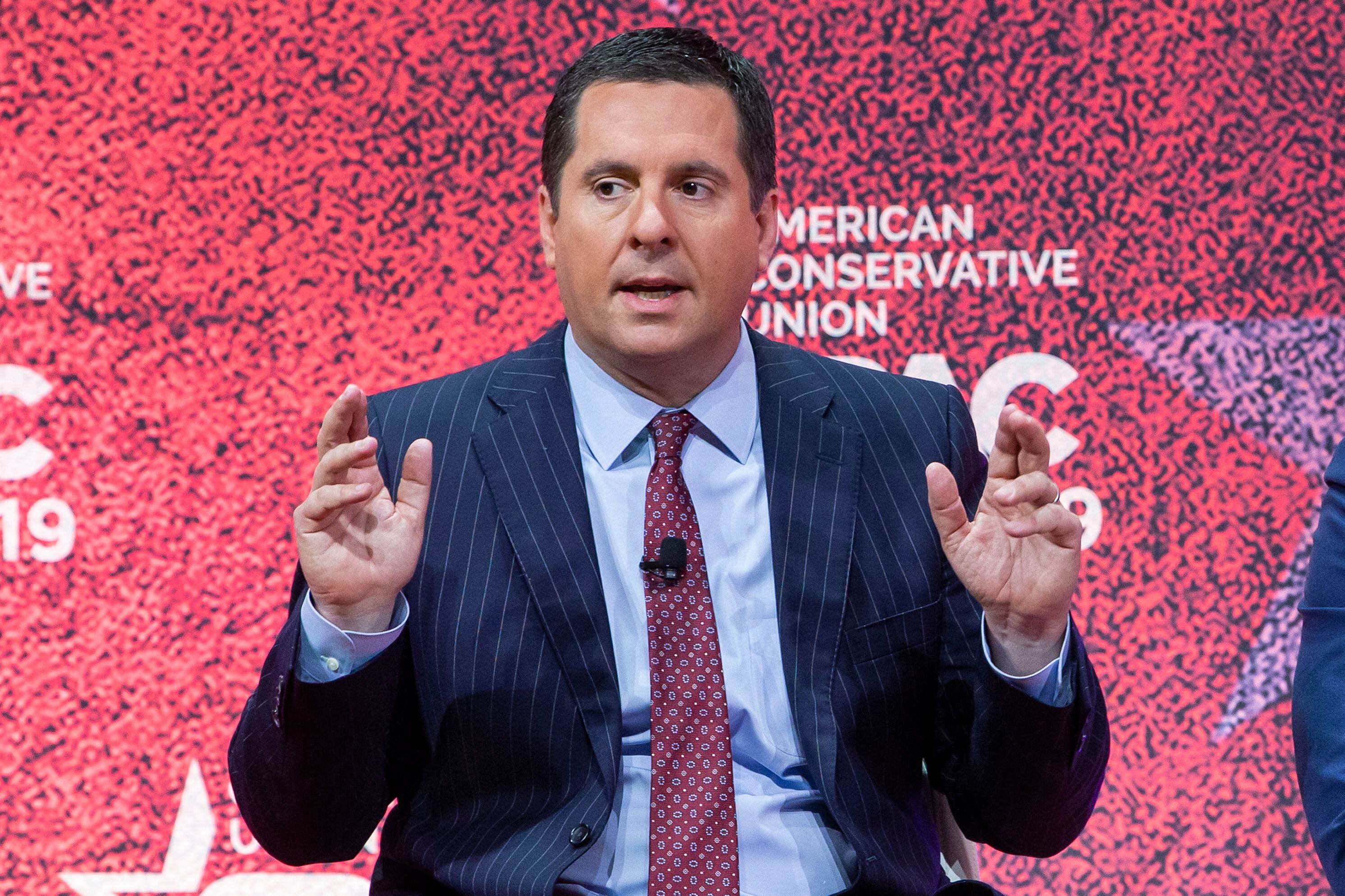
There's a phenomenon on the internet called the "Streisand Effect," whereby a person's attempt to suppress information ends up widely publicizing that very same information. It was named after a 2003 incident when Barbra Streisand tried to keep images of her Malibu mansion off the web and inadvertently drew massive amounts of attention to it. And it's why Devin Nunes' mom was trending on Twitter Tuesday morning.
Nunes, the Republican congressman from California, said he was filing a lawsuit against Twitter and three specific Twitter users, seeking $250 million in damages. Nunes argues that the users defamed him and that Twitter “knowingly acted as a vessel for opposition research" and allowed defamatory statements against prominent conservatives to spread.
Two of the users named in the suit, which has not been yet been filed but was obtained by some news outlets, go by the usernames "Devin Nunes' Mom" and "Devin Nunes Cow." The former account was suspended, while the latter has spent the last two years calling Nunes names like "udder-ly worthless" and a "treasonous cowpoke."
The cow had about 1,200 followers before the lawsuit made headlines. It now counts 89,000 followers as of midday Tuesday.
Speaking to Fox News Monday night, Nunes called those accounts part of an "orchestrated effort" to target him for his allegiance to President Trump and his investigation, as the former chair of the House Intelligence Committee, into Hillary Clinton's 2016 campaign. He called the suit "the first of many."
The lawsuit seeks to tie those obvious parody accounts to a larger issue that has become a grievance among some conservatives on Twitter, in which they claim that the social network actively censors their tweets through "shadow banning" their accounts to make them harder to find. Twitter has denied those allegations.
As a public official, Nunes' lawsuit would have to show "actual malice," the standard set by the landmark Supreme Court case NY Times v. Sullivan to prove libel against public figures. Hyperbole and satire are generally protected as free speech, and similar lawsuits have failed in the courts. The Sullivan decision recently generated headlines when conservative Justice Clarence Thomas publicly called for it to be reconsidered.
While Nunes' lawsuit may seem doomed legally, it did have the effect, unintended or not, of gaining him publicity, which has in the past burnished conservatives' reputations in the eyes of their boss.
Two years ago, Nunes seemed to have a different perspective on litigation: he was a co-sponsor of the "Discouraging Frivolous Lawsuits Act."
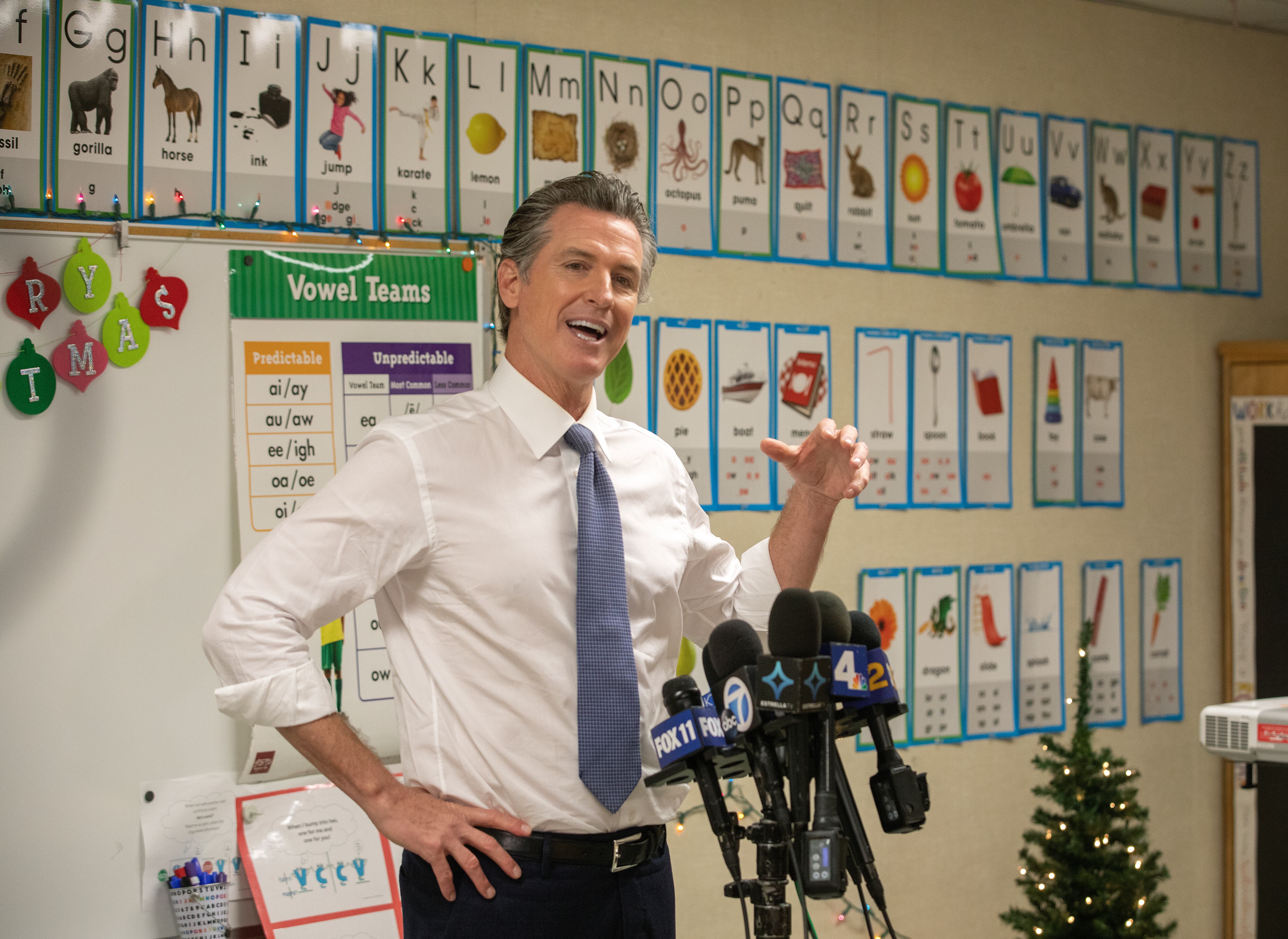
Emily Hoeven, newsletter editor at CalMatters, joins Cheddar News to discuss California Governor Gavin Newsom's gun law modeled after Texas's abortion law.
Chuck Rocha, host of 'Nuestro' podcast and opinion contributor at The New York Times, joins Cheddar News to discuss why Democrats are losing Hispanic voters.
More businesses are requiring workers to return to the office, but there is concern that many employees in the middle class, especially women and people of color, need remote work options for reasons including childcare and financial security. Joan Williams, director of the Center for WorkLife Law at the University of California, joined Cheddar to discuss why office mandates could be detrimental to the middle class. She noted that while companies claim a return to offices would help foster more collaboration and efficiency, reports show that they are successfully able to do their jobs from home.
The U.S. postal service has confirmed that it secretly developed and tested a blockchain-based mobile voting system ahead of the 2020 election. Susan Greenhalgh, senior advisor on election security, Free Speech for People, joins Cheddar News to discuss the cybersecurity complications of a mobile voting system.
The U.S. Supreme Court ruled to allow the controversial Texas abortion law to remain in effect, banning abortion at six weeks and allowing any private citizen to sue a person or doctor aiding or abetting someone seeking an abortion. Outraged at this decision, California Governor Gavin Newsom is working to draft a proposal in line with the law as it relates to guns. Shawn Hubler, California correspondent at the New York Times, joins Cheddar News to discuss.
Even as tech giant Google implements a vaccination mandate, charging its employees to declare their vaccine status within a time frame or risk dismissal, the federal government is tangled up in the court system trying to impose one of its own. Cindy Cohn, the executive director of the Electronic Frontier Foundation, and Harry Nelson, founder and managing partner of Nelson Hardiman LLP, joined Cheddar to debate the ethics, efficacy, and legality surrounding the issue. While Cohn noted that she thinks the federal mandate might be legally sound, her organization is also concerned with a separate question of privacy. "At EFF what we're most interested in is the digital surveillance that's going along with some of these attempts to try to track and confirm whether people are vaccinated or not," she said.