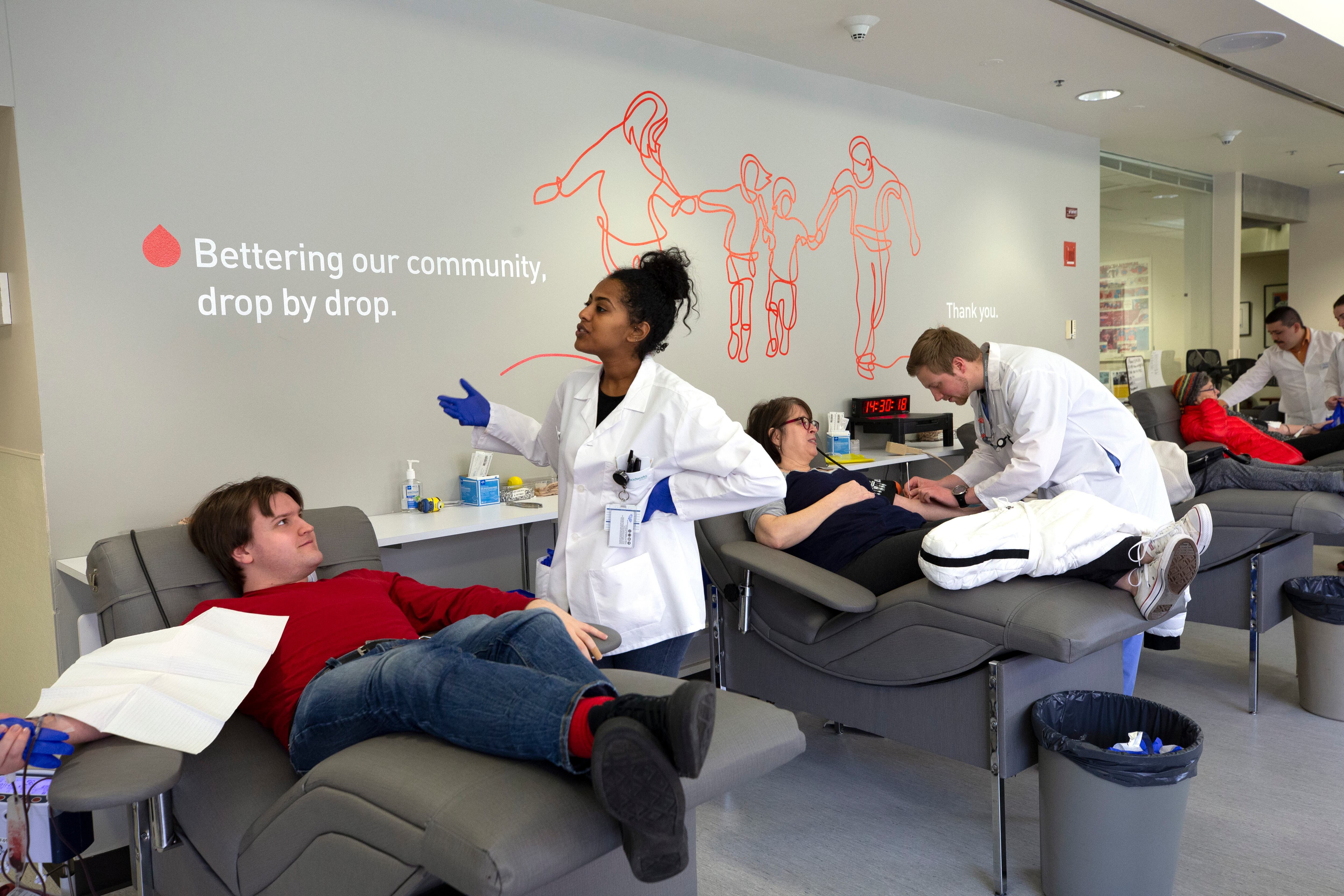
Alex Vance (L) speaks with medical assistant Lydia Rezene as he donates blood at Bloodworks Northwest on March 17, 2020 in Seattle, Washington. Schools provide 25 percent of local blood donations and their closing due to the coronavirus (COVID-19) outbreak has officials worried the region could see a shortage. (Photo by Karen Ducey/Getty Images)
Americans capable, willing, and able to donate blood are encouraged to do so during an era of social distancing.
"Social distancing doesn't have to mean social disengagement," U.S. Surgeon General Dr. Jerome Adams said during the Coronavirus Task Force briefing on Thursday, warning of blood shortages.
American Red Cross Senior Vice President Paul Sullivan told Cheddar he's concerned about an already low blood supply in the U.S., compounded by a recent wave of coronavirus-inspired blood drive cancellations, numbering more than 5,000 drives resulting in some 170,000 fewer donations.
Sullivan said he still plans to continue donating.
However, the Red Cross is changing its normal precautions in response to coronavirus concerns. Sullivan told Cheddar those new precautions include temperature checks before entering the donation space and changing gloves between each collection.
Surgeon General Adams also explained beds are six feet apart and staff members are disinfecting surfaces more often.
"So give blood today. You'll feel good about it, and you'll be helping your country and community during this crisis. And you might even save a life," he said.
Red blood cells only have a shelf life of 42 days and platelets just 5 days, so blood donations must continue in order to continue vital medical procedures to keep people alive.
"As this progresses, the way it will challenge our healthcare system … it will be just that — it will be very challenging," Sullivan warned. "No one gets a transfusion if they don't need it. We don't want to put the medical community in a situation where they have to pick who gets blood and who doesn't."
Steve Blank, adjunct professor at Stanford University and founding faculty at Gordian Knot Center for National Security Innovation, joins Cheddar News to discuss technology's role in modern war.
On this episode of ChedHER: Lissy Hu, CEO and Founder of CarePort, powered by WellSky, breaks down how to avoid 'mom guilt' at work; Katie Hotze, Founder and CEO of Grocery Shopii, explains how she's creating a platform that allows for personalized meal planning and recipes into a grocer's eCommerce platform; Nicole Wegman, Founder and CEO of Ring Concierge, talks how she's creating luxury designs for women, by women.
We are entering yet a new era of work across corporate America. Lissy Hu, CEO and Founder of CarePort, powered by WellSky, joins ChedHER to discuss what this new era means for working mothers, and how to avoid 'mom guilt' at work.
Londoners are facing travel chaos after around 10,000 transport workers walked off their jobs for the second day this week, leaving almost all of the capital’s subway lines suspended or severely disrupted.
The luxury jewelry industry is heavily male-dominated. Nicole Wegman, Founder and CEO of Ring Concierge, joins ChedHER to discuss how she's creating luxury designs for women, by women and how social media has played a major role in building her business.
Independent artists were caught off-guard and the Epic acquisition of Bandcamp quickly sparked fears it could ruin what many saw as their last best hope of getting paid online for their work.
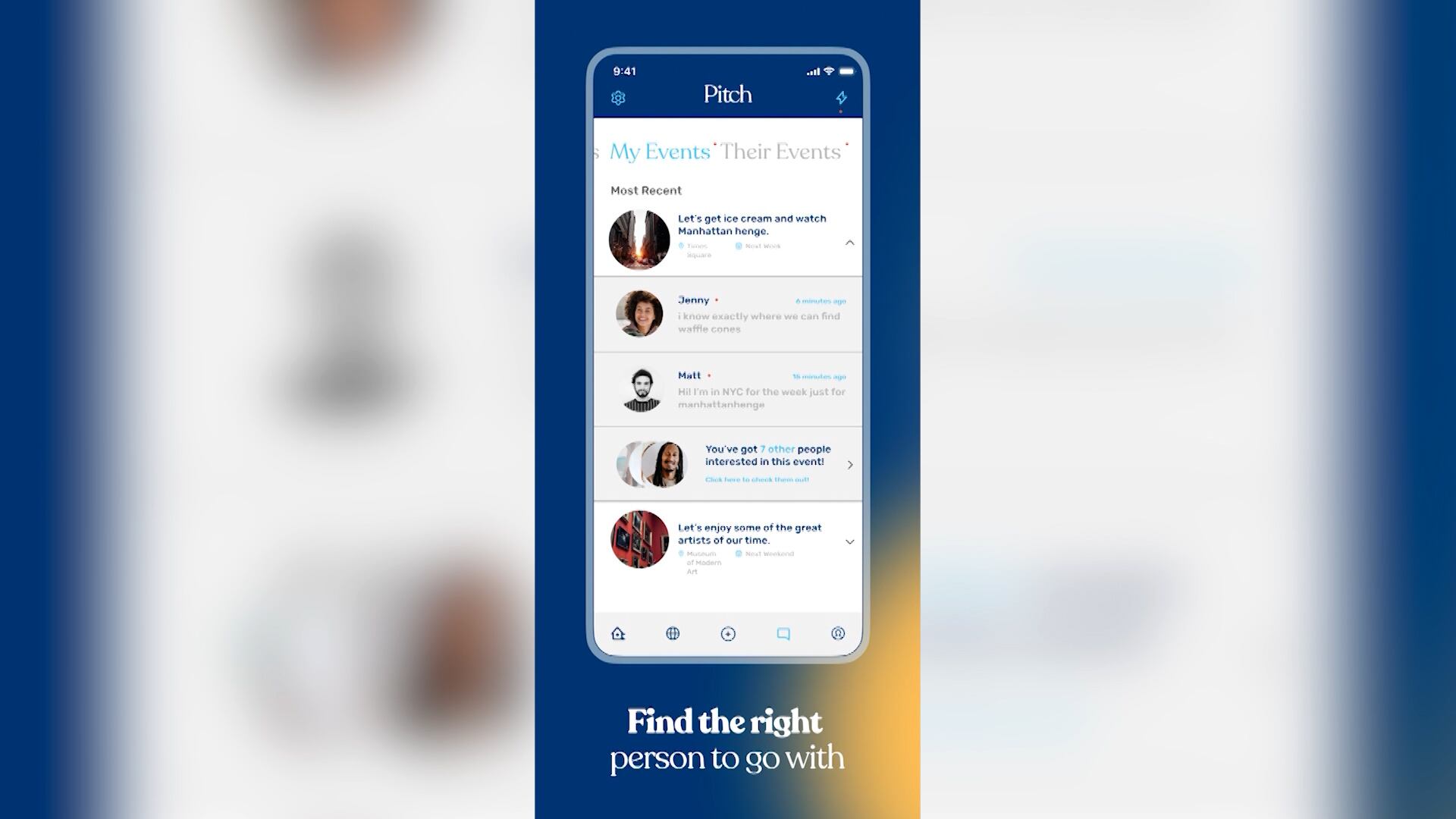
Trying to meet people online has become a predictable routine. Now, one app is switching it up by allowing users to swipe right on plans and outings rather than faces. Pitch Social co-founders Daniel Antonio and Ryan Snowden joins Between Bells to talk about their app.
Playboy released its fourth quarter and full year 2021 results, reporting an annual revenue of $247 million, up 67 percent year-over-year. The venerable lifestyle and entertainment brand had a whirlwind of a year — going public for a second time, completing three acquisitions, and growing its workforce to more than 1,100 employees, all while dealing with ongoing supply chain issues and other COVID-related challenges. CEO Ben Kohn joined Cheddar's Opening Bell to discuss the long pivot away from its legacy print product to digital. "It gives us a truly competitive advantage, especially when you think of this world we live in today with the changes to iOS last year, what you saw happen with Facebook, the lack of performance marketing," he said. "We now have an organic audience in partnership with our creators that we can market other products and services to as well."