*By Christian Smith*
Midterm races in Georgia represent a test of Democrats' strategy to win back states from President Trump in 2020 and counter his conservative populism with their own unabashedly progressive appeal.
"When you talk to Democratic strategists, Georgia really is right at the top of that list," said Eric Boehm, a reporter at Reason. "Democrats are looking at Georgia as one of those places where they can make inroads against that electoral map that President Donald Trump won."
On Tuesday, Stacey Abrams won Georgia's Democratic primary for governor, becoming the first black woman to be nominated for governor by a major political party. With more than 75 percent of the vote, Abrams, a former statehouse leader, defeated another former state rep in the Battle of the Staceys ー Stacey Evans.
Abrams will face the winner of a Republican runoff between Georgia's Lt. Gov. Casey Cagle and Secretary of State Brian Kemp scheduled for July 24.
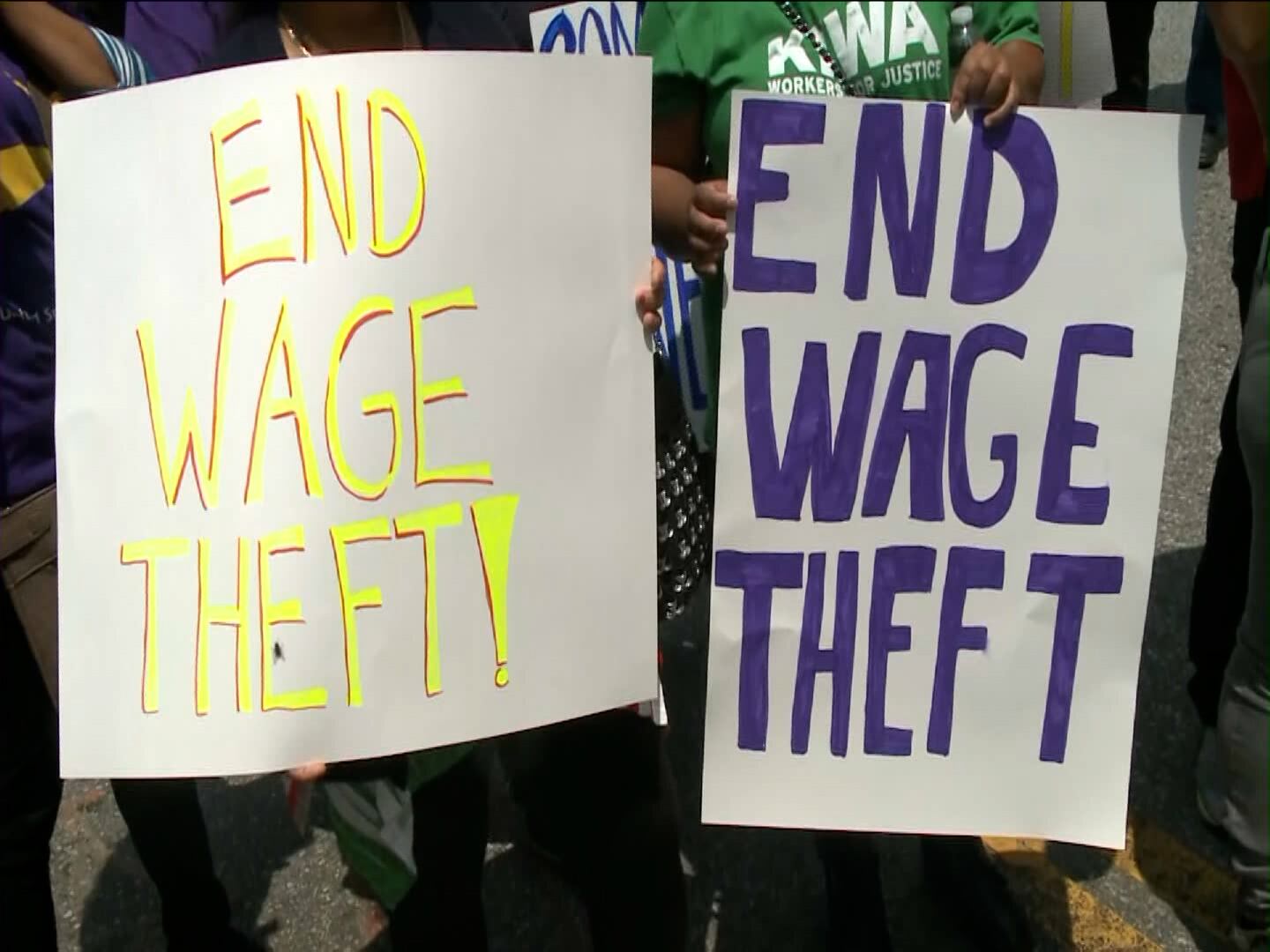
During her primary campaign, Abrams signaled she would not water down her progressive message in an attempt to court white conservatives away from Republicans. She has said she would raise the minimum wage, use Affordable Care Act funding to expand Medicaid, and do away with cash bail. The success or failure of her strategy could change the way Democrats approach Trump voters in 2020.
The midterm battles may have grown more difficult for Democrats recently. For the first time in the midterm election cycle, American voters are more likely to vote for the Republican candidate in their district than the Democrat according to a new [Reuters poll](http://polling.reuters.com/#!response/TM1212Y17/type/smallest/filters/PD1:1/dates/20180101-20180517/collapsed/true).
If elected, the 44-year-old Abrams would become the first black woman elected governor in the United States, and only the third black governor elected by popular vote after Douglas Wilder in Virginia in 1990, and Massachusetts's Deval Patrick in 2007.
Pinckney Pinchback became governor of Louisiana in 1872 after serving as lieutenant governor, and David Paterson was elevated from lieutenant governor in New York in 2008, but neither was elected governor.
For full interview, [click here](https://cheddar.com/videos/southern-democrats-nominate-historic-group-of-women-in-primaries).
The average city in California has a 38% higher cost of living than the average American city, according to a cost of living index. For many, the general minimum wage of $15/hour just doesn't cut it. Anti-poverty activist Joe Sanberg wants to get the minimum wage changed to $18/hour. He joins Cheddar News to discuss the Living Wage Act of 2022.
Liana Guzmán, CEO of FOLX Health, joins Cheddar News to discuss the company launching billboards across the country in response to anti-LGBTQ+ legislation.
President Biden has announced an additional $800 million in military assistance to Ukraine, including artillery, armored personnel carriers, and helicopters. It comes as Russian forces appear to be preparing for a new, aggressive offensive in the eastern part of Ukraine. Paul McLeary, defense reporter for Politico, joined Cheddar to discuss this new round of aid and what it means for the U.S. commitment to arming the embattled country.
Catching you up on what you need to know on April 18, 2022, with Russian missile attacks on the Ukrainian city of Lviv killing seven, mass shootings in South Carolina and Pittsburgh, Lucky Charms cereal under official investigation by the FDA, and more.
Activism is growing around the country in response to school boards banning books from shelves that focus on sexuality, gender, identity, or race. Jen Cousins, co-founder of The Florida Freedom to Read Project, joins Cheddar News to discuss.
As the Russian invasion of Ukraine intensifies, President Biden has announced a ban on importing Russian oil, gas, and energy. To discuss how this ban will impact the war and Americans, Amir Handjani, non-resident fellow at Quincy Institute, joins Cheddar News.
Thousands of protesters around the world are expressing their solidarity with Ukraine against Russia's invasion.
Jason Beardsley, national executive director of the Association of the U.S. Navy and national security expert, joins Cheddar News to discuss.
As gas prices surge amid the Russian invasion of Ukraine, other nations could potentially transition faster to using clean energy than previously expected. Philip K. Verleger, a senior fellow at the Niskanen Center, joined Cheddar News to explain how this could be a possibility in the near future. "Part of the reason I think we have this invasion and the tantrum that's being thrown by Russia, terrible tantrum, is because the Russians were trying to slow down the transition," he said. "Ironically they speeded it up."