By Nicholas Riccardi
Democrats had plenty of good news to celebrate in Tuesday’s off-year elections and more evidence that they can win races centered on the national debate over abortion.
Abortion rights supporters won an Ohio ballot measure and the Democratic governor of beet-red Kentucky held onto his office by campaigning on reproductive rights and painting his opponent as extremist. A Democrat won an open seat on the Pennsylvania Supreme Court after campaigning on his pledge to uphold abortion rights. And Democrats took full control of the Virginia statehouse, blocking Republicans from being able to pass new abortion restrictions and delivering a defeat to Gov. Glenn Youngkin that may douse any buzz about a late entry into the GOP presidential primary.
The victories won't be enough to make Democrats feel secure heading into next year’s presidential election. The off-year elections have major implications in all of those states and provide a snapshot of American politics heading into 2024. But two big names — Joe Biden and Donald Trump — weren't on the ballot this time. How Americans view them will be a huge factor in shaping next year's race.
Here are some key results from Tuesday’s voting.
ABORTION REMAINS POTENT FOR DEMOCRATS
Democrats notched two early wins Tuesday night in Kentucky and Ohio, states that voted for Trump in 2020. In both states, abortion was the main campaign issue.
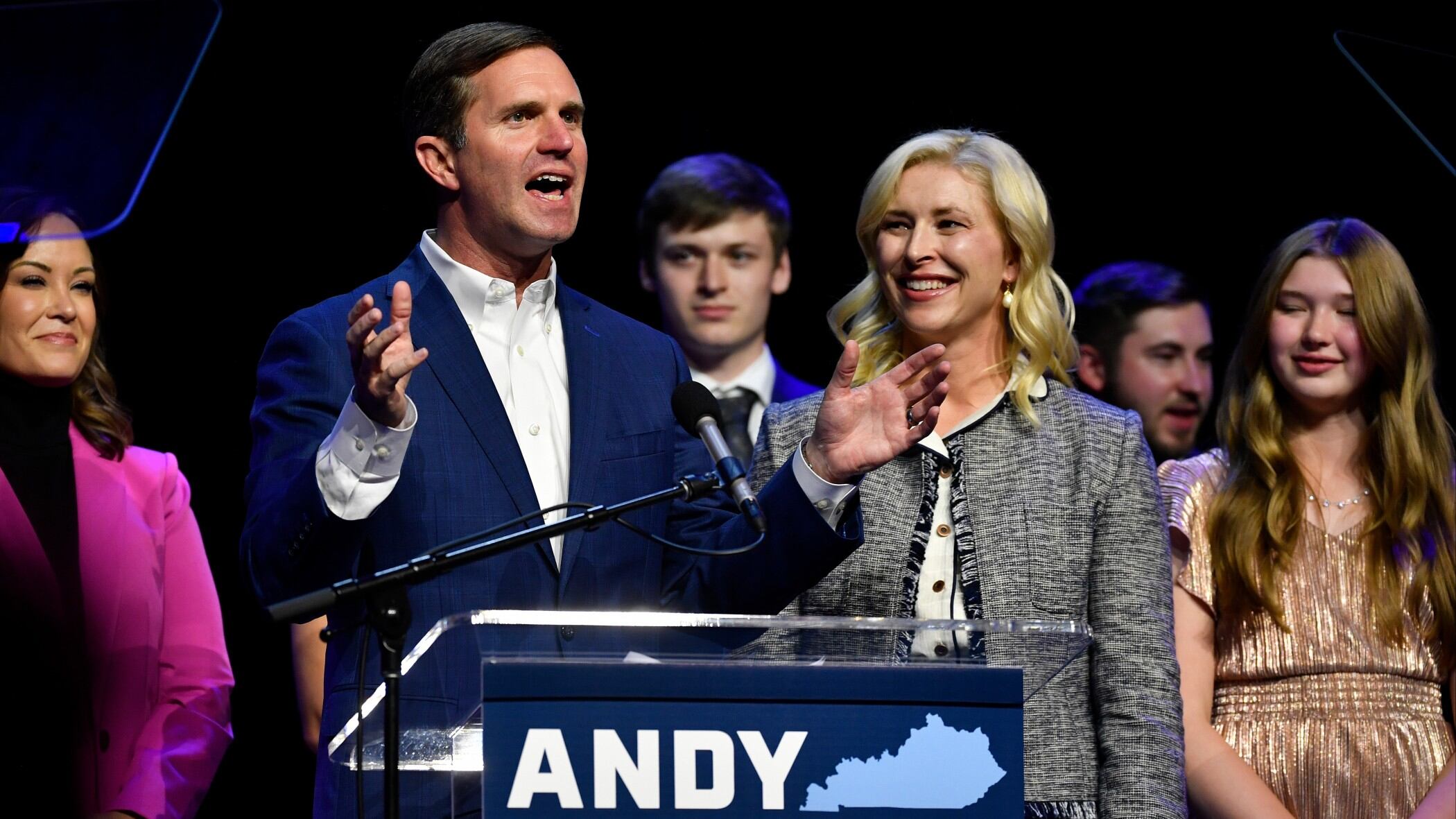
Kentucky Gov. Andy Beshear was reelected in a state that Trump had won by 26 percentage points. Beshear had criticized the abortion views of his Republican challenger, Attorney General Daniel Cameron, in debates and television ads. One Beshear ad featured a woman who miscarried after being raped by her stepfather at age 12 expressing disbelief at Cameron's opposition to abortion in cases of rape and incest.
In Ohio, a ballot measure preserving abortion rights passed in a state that Trump won by eight percentage points in 2020. Republicans had already tried to derail the measure by calling an unusual August referendum to make it harder to pass ballot measures, an initiative that was roundly rejected by Ohio voters.
Later Tuesday, Dan McCaffery won an open seat on Pennsylvania's Supreme Court after positioning himself as a defender of abortion rights. And in Virginia, Democrats held the state Senate and flipped control of the Virginia House of Delegates from the GOP.
The outcomes suggest a transformed political landscape since a conservative majority of the U.S. Supreme Court overturned a federal right to an abortion last year. Abortion rights measures have passed in a plethora of states as some other Republican-run states have instituted new bans on the procedure.
Abortion rights may not be a potent enough issue to swing an election on its own. Several GOP governors who supported new bans cruised to reelection last year, including Ohio’s Mike DeWine, Florida’s Ron DeSantis and Texas’ Greg Abbott.
But abortion was the key issue across the country on Tuesday. And that should worry Republicans in competitive races next year.
GOOD NIGHT FOR DEMOCRATS, BUT MAYBE NOT FOR 2024
It was a good night for Democrats following a series of wins in special elections and comes after a stronger performance in last year's midterms, which are usually crushing for the party in power in Washington.
But none of the races were an up-or-down decision on the incumbent president, Biden. And none featured Trump on the ballot or his ability to turbocharge turnout of infrequent voters.
Democrats have performed well in recent special elections and did better than expected in 2022. It increasingly seems like the party starts from a position of strength. But it's not clear that translates to its 80-year-old president, who faces widespread skepticism about his job performance and whether he is too old to serve a second term.
We'll have to wait until 2024 to see how Biden fares.
YOUNGKIN FALLS SHORT
Glenn Youngkin burst on the political scene in 2021, winning an upset victory to become the Republican governor of Virginia, a state Biden won handily the previous year. Putting a moderate, suburban dad spin on modern Republicanism, Youngkin generated buzz that he could even make a late, surprise entry into the GOP presidential primary after this month’s elections.
Instead, Youngkin said he would focus on the 2023 legislative elections and winning full Republican control over Virginia government. Things did not go the way he hoped.
Youngkin raised tens of millions of dollars for Republicans to defend their majority in Virginia’s House of Delegates and win control of the Senate, which Democrats narrowly held in 2021. Among the things the legislature could do with that majority, he said, was pass a 15-week abortion ban he favored.
Youngkin didn’t really have a path forward in the presidential primary — his window to get on the ballot has already closed in some states. Virginia has an unusual single-term limit for governors, making Youngkin’s political future even more of a question.
Whatever he does, he’ll have to explain 2023. And he'll face unified Democratic control of the statehouse for the rest of his term.
DEMOCRATS' HEARTBREAK HOTEL
It was a good night for Democrats, but it could only go so far.
The party invested heavily in an unlikely place: Mississippi, where Brandon Presley, best known as Elvis Presley’s second cousin, was challenging Republican Gov. Tate Reeves.
The party hoped that Presley’s celebrity and political skills, coupled with the change in a centuries-old provision originally designed to keep Black candidates from winning statewide races, could spell an unlikely victory. But it was not to be.
Reeves won the race. There are limited lessons to draw from a party falling short in a state its 2020 presidential candidate lost by 17 points, except one of the oldest — you can’t win ’em all.
HISTORIC FIRSTS
Political candidates broke barriers in a handful of wins Tuesday.
Former Biden White House aide Gabe Amo will become the first Black member of Congress from Rhode Island after winning the special election in that state’s first congressional district.
The son of West African immigrants, Amo emerged from a 12-candidate September primary to succeed retiring Rep. David Cicilline. On Tuesday, Amo defeated Republican Gerry Leonard, a Marine veteran, in the heavily Democratic district.
And Philadelphia will have its first female mayor after Democrat Cherelle Parker defeated Republican David Oh in the overwhelmingly Democratic city.