By John Hanna and Margaret Stafford

Officials in Missouri's largest city are moving to declare it a sanctuary for people seeking or providing gender-affirming care, defying state officials who are intent on banning it for minors and restricting it for adults.

A Kansas City Council committee approved such a resolution Wednesday. The full council will now consider it Thursday. The council members acted as the Republican-controlled Missouri Legislature gave final approval to a bill banning gender-affirming care for transgender minors, sending it to GOP Gov. Mike Parson, who is expected to sign it into law. At least 16 other states have enacted laws restricting or banning such care for minors.

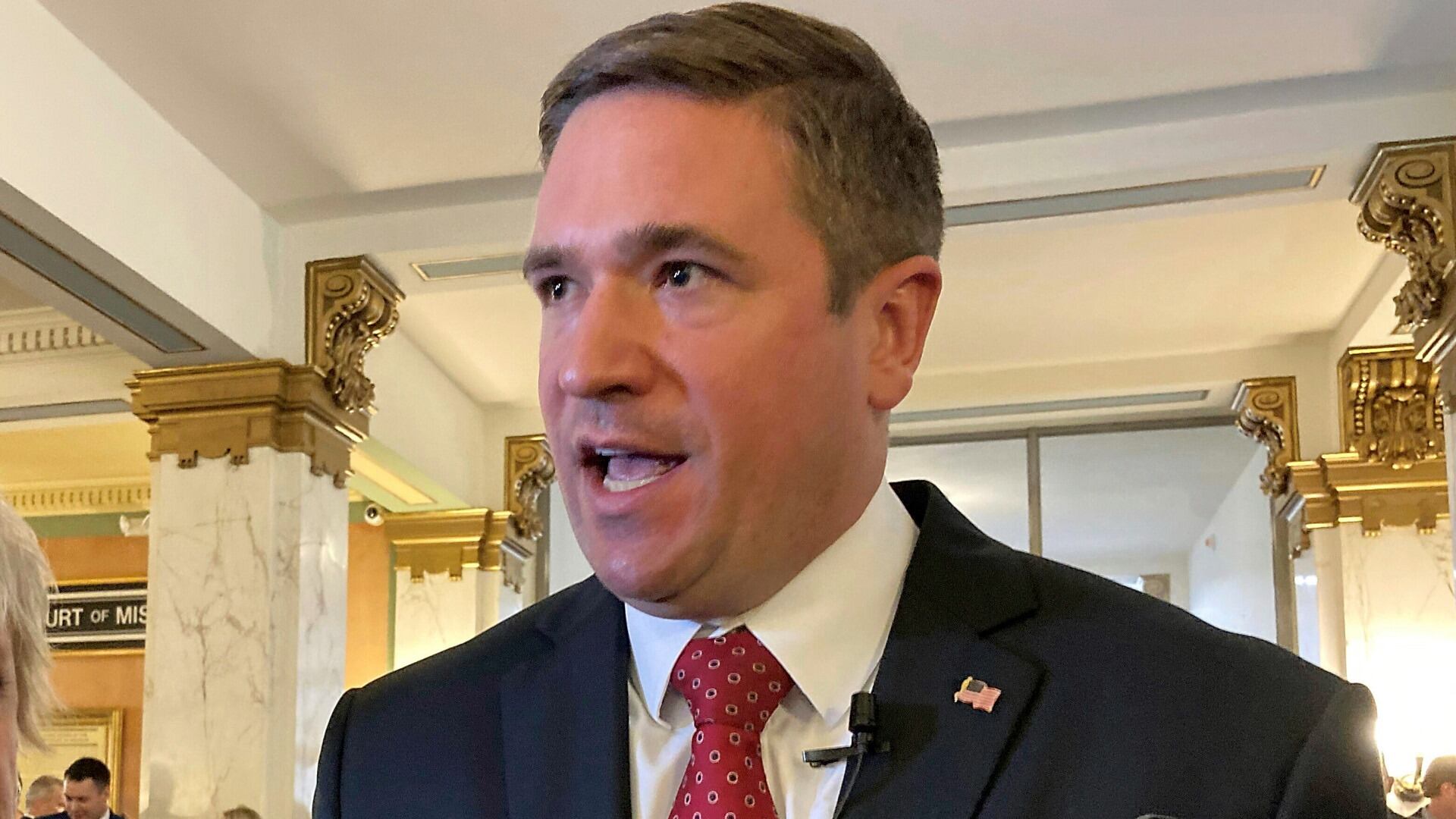
The resolution also comes as a judge considers a proposed emergency rule from Republican state Attorney General Andrew Bailey that would require adults and children to undergo more than a year of therapy and fulfill other requirements before they could receive gender-affirming treatment.

“This resolution is an entrance into a conversation and shows a commitment where trans people's presence in Kansas City is valued,” Merrique Jenson, a transgender woman and founder of Transformations KC, a nonprofit that advocates for trans women of color, told the council committee. “It would minimize the legal violence toward trans people in accessing gender-affirming care.”

The resolution, approved by the Transportation, Infrastructure and Operations Committee after being proposed by LGTBQ advocates, says the city will not prosecute or fine any person or organization that seeks, provides, receives or helps someone receive gender-affirming care such as as puberty blockers, hormones or surgery.

It also says if the state passes a law or resolution that imposes criminal or civil punishments, fines, or professional sanctions in such cases, personnel in Missouri's largest city will make enforcing those requirements “their lowest priority.”

During the committee's debate, council members agreed that Kansas City should be welcoming, but council member Heather Hall questioned whether the issue was “a city conversation,” adding, “This is us getting out of our lane.”

Council member Melissa Robinson had questions about how being a sanctuary city would “play out” and worried about “the damage that comes back to the city” from the state.

But she backed the resolution after saying, “I do believe in good trouble, and this might just be one of those lines of good trouble.”

Kansas City's proposal is coming from a Democratic-leaning city in a state with a Republican governor and GOP-controlled Legislature. In Texas, the state capital of Austin declared last year that it should be considered a sanctuary for transgender youth and their families, and Harris County, home to Houston, declared it wouldn't pursue cases against parents over gender-affirming care.

California,Minnesota and Washington have declared themselves sanctuary states for gender-affirming care, as have the cities of Chicago; Minneapolis, Minnesota; and West Hollywood, California.

Republican state lawmakers across the U.S. who've attacked gender-affirming care as part of a larger effort to roll back LGBTQ+ rights have argued that they're protecting children from decisions they may later regret. But gender-affirming care for minors has been available in the U.S. for more than a decade and is endorsed by major medical associations.

The resolution also says city personnel will not arrest or detain anyone sought by another jurisdiction for seeking gender-affirming care, respond to requests for information from other jurisdictions, or collect any civil penalties in such cases.

Supporters noted that Kansas City's police force is controlled by a state-appointed Board of Police Commissioners and any possible criminal charges in gender-affirming cases would be filed by the county prosecutor rather than city prosecutors — both of which could make enforcing the resolution problematic.

___

Hanna reported from Topeka, Kansas.

Share:
More In Politics
US tariffs are having an uneven effect on holiday prices and purchases
Many U.S. consumers say they’ve noticed higher than usual prices for holiday gifts in recent months, according to a a December poll from The Associated Press-NORC Center for Public Affairs Research. A contributing factor is the unusually high import taxes the Trump administration put on foreign goods. While the worst-case consumer impact that many economists foresaw from the administration’s trade policies hasn’t materialized, some popular gift items have been affected more than others. Most toys and electronics sold in the U.S. come from China. So do most holiday decorations. Jewelry prices have risen due to the cost of gold.
Serbia organized crime prosecutors charge minister, others in connection with Kushner-linked project
Serbia’s prosecutor for organized crime has charged a government minister and three others with abuse of position and falsifying of documents related to a luxury real estate project linked to U.S. President Donald Trump’s son-in-law Jared Kushner. The charges came on Monday. The investigation centers on a controversy over a a bombed-out military complex in central Belgrade that was a protected cultural heritage zone but that is facing redevelopment as a luxury compound by a company linked to Kushner. The $500 million proposal to build a high-rise hotel, offices and shops at the site has met fierce opposition from experts at home and abroad. Selakovic and others allegedly illegally lifted the protection status for the site by falsifying documentation.
Trump signs executive order to block state AI regulations
President Donald Trump has signed an executive order to block states from regulating artificial intelligence. He argues that heavy regulations could stifle the industry, especially given competition from China. Trump says the U.S. needs a unified approach to AI regulation to avoid complications from state-by-state rules. The order directs the administration to draw up a list of problematic regulations for the Attorney General to challenge. States with laws could lose access to broadband funding, according to the text of the order. Some states have already passed AI laws focusing on transparency and limiting data collection.
New York Times, after Trump post, says it won’t be deterred from writing about his health
The New York Times and President Donald Trump are fighting again. The news outlet said Wednesday it won't be deterred by Trump's “false and inflammatory language” from writing about the 79-year-old president's health. The Times has done a handful of stories on that topic recently, including an opinion column that said Trump is “starting to give President Joe Biden vibes.” In a Truth Social post, Trump said it might be treasonous for outlets like the Times to do “FAKE” reports about his health and "we should do something about it.” The Republican president already has a pending lawsuit against the newspaper for its past reports on his finances.
Trump approves sale of more advanced Nvidia computer chips used in AI to China
President Donald Trump says he will allow Nvidia to sell its H200 computer chip used in the development of artificial intelligence to “approved customers” in China. Trump said Monday on his social media site that he had informed China’s leader Xi Jinping and “President Xi responded positively!” There had been concerns about allowing advanced computer chips into China as it could help them to compete against the U.S. in building out AI capabilities. But there has also been a desire to develop the AI ecosystem with American companies such as chipmaker Nvidia.
Swing district Republicans brace for political fallout if health care subsidies expire
House Republicans in key battleground districts are working to contain the political fallout expected when thousands of their constituents face higher bills for health insurance coverage obtained through the Affordable Care Act. For a critical sliver of the GOP majority, the impending expiration of the enhanced premium tax credits after Dec. 31 could be a major political liability as they potentially face midterm headwinds in a 2026 election critical to President Donald Trump’s agenda. For Democrats, the party’s strategy for capturing the House majority revolves around pinning higher bills for groceries, health insurance and utilities on Republicans.
Load More