By Terence Chea
Even Christmas trees aren’t immune to the pandemic-induced shortages and inflation plaguing the economy.
Extreme weather and supply chain disruptions have reduced supplies of both real and artificial trees this season. American shoppers should expect to have fewer choices and pay up to 30% more for both types this Christmas, industry officials said.
“It’s a double whammy — weather and supply chain problems are really hampering the industry,” said Jami Warner, executive director of the American Christmas Tree Association, an industry trade group. “Growers have been hard hit by floods, fires, smoke, drought, extreme weather conditions.”
Record-breaking heat and wildfires in late June took a heavy toll on Christmas tree farms in Oregon and Washington, two of the nation’s largest growers.
Warner could not provide an estimate of how many fewer trees there will be this year but because it takes up to 10 years to grow, the crop loss will be felt for many seasons to come.
The shortage of truck drivers is making it harder and more expensive to transport live trees from farms to stores and tree lots.
Warner’s advice: “Shop early. If you see something you like, buy it.”
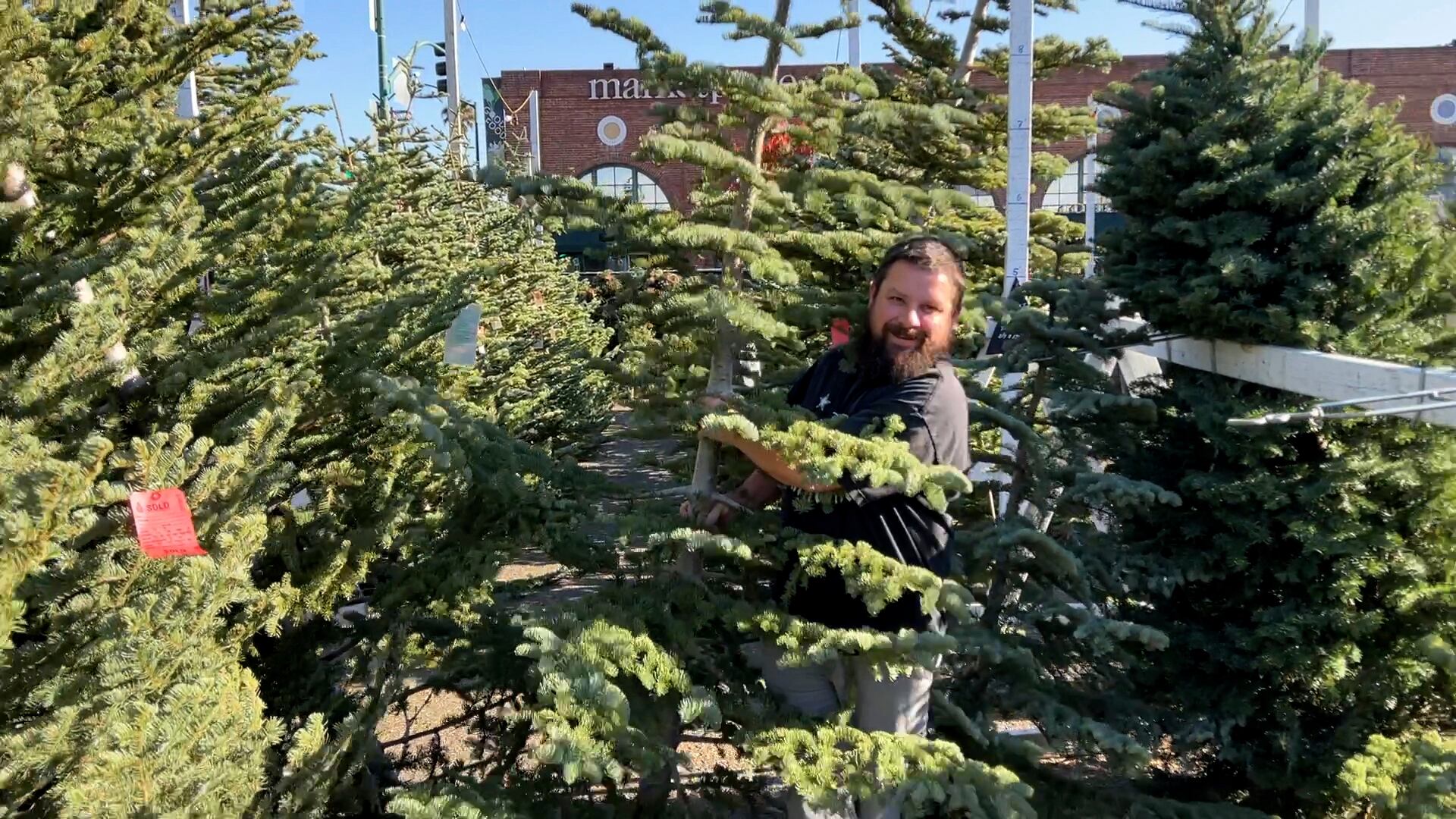
At Crystal River Christmas Trees, owner Dale Pine and his nephew Stacy Valenzuela struggled to get enough trees to sell at their tree lot in Alameda. Many of its suppliers in Oregon lost trees in the triple-digit heat wave.
“It was looking pretty grim for a while,” Valenzuela said. “Every single day you’re on the phone checking, ‘Hey, you got anything? If you do, send it my way.’ So a lot of work to get these trees on the ground this year.”
Crystal River had to raise prices this year because the costs of trees, labor and truck delivery have all gone up, Valenzuela said.
Alameda resident Ian Steplowski came to Crystal River lot to buy a Silvertip tree with his wife and two young kids the day after Thanksgiving.
“We’re having shortages of everything and of course it had to take Christmas trees,” Steplowski said. “Definitely noticing everything’s a bit more expensive this year already.”
Teri Schaffert heard about the shortage of real trees this year, so she decided to buy an artificial tree for the first time. Almost a week before Thanksgiving, she went to shop at the Burlington showroom of Balsam Hill, which primarily sells its artificial trees online.
“I came in early because I heard in the news that there’s not going to be enough fresh Christmas trees,” said Schaffert, who lives in nearby San Mateo. Her husband isn’t happy about the change. “What else can we do? I have to get ready for the future because I love Christmas. I love to decorate.”
But the artificial tree industry is struggling with its own supply troubles as clogged ports and the lack of truckers delay shipments and raise costs, said Caroline Tuan, Balsam Hill’s chief operating officer. The company’s trees are about 20% more expensive this year and there is less variety.
“We have to bring our products over from our factories (in China), and that has been very challenging,” Tuan said. “All of that has impacted us, which means that we have fewer trees to sell as an industry.”
Worries about drought and drought led David Cruise and his wife to the Balsam Hill showroom to buy their first artificial tree this year.
“In the grand scheme of climate change here in California, this is really the way to go,” said Cruise, who lives in Brentwood. “The sooner everybody gets on board with the artificial tree, the sooner everybody’s going to enjoy it.”