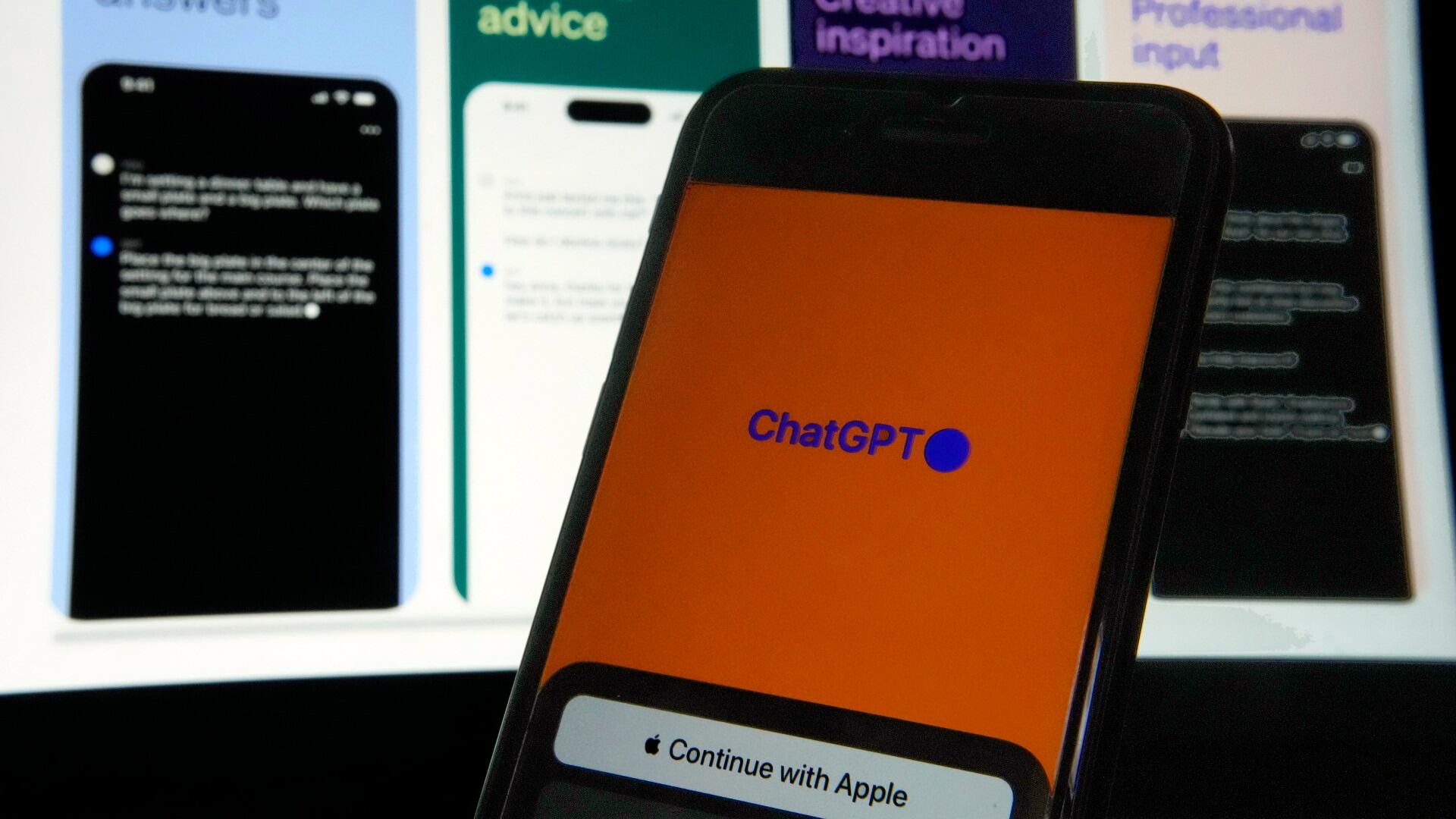
ChatGPT-maker OpenAI and The Associated Press said Thursday that they've made a deal for the artificial intelligence company to license AP's archive of news stories.
“The arrangement sees OpenAI licensing part of AP’s text archive, while AP will leverage OpenAI’s technology and product expertise,” the two organizations said in a joint statement.
The price of the deal was not disclosed.
OpenAI and other technology companies must ingest large troves of written works, such as books, news articles and social media chatter, to improve their AI systems known as large language models. Last year's release of ChatGPT has sparked a boom in “generative AI” products that can create new passages of text, images and other media.
The tools have raised concerns about their propensity to spout falsehoods that are hard to notice because of the system’s strong command of grammar and human language. They also have raised questions about to what extent news organizations and others whose writing, artwork, music or other work was used to “train” the AI models should be compensated.
Along with news organizations, book authors have sought compensation for their works being used to train AI systems. More than 4,000 writers --- among them Nora Roberts, Margaret Atwood, Louise Erdrich and Jodi Picoult — signed a letter late last month to the CEOs of OpenAI, Google, Microsoft, Meta and other AI developers accusing them of exploitative practices in building chatbots that “mimic and regurgitate” their language, style and ideas. Some novelists and the comedian Sarah Silverman have also sued OpenAI for copyright infringement.
“We are pleased that OpenAI recognizes that fact-based, nonpartisan news content is essential to this evolving technology, and that they respect the value of our intellectual property,” said a written statement from Kristin Heitmann, AP senior vice president and chief revenue officer. “AP firmly supports a framework that will ensure intellectual property is protected and content creators are fairly compensated for their work.”
The two companies said they are also examining “potential use cases for generative AI in news products and services,” though didn't give specifics. OpenAI and AP both "believe in the responsible creation and use of these AI systems,” the statement said.
The AP doesn't currently use any generative AI in its news stories, but has used other forms of AI for nearly a decade, including to automate corporate earnings reports and recap some sporting events. It also runs a program that helps local news organizations incorporate AI into their operations, and recently launched an AI-powered image archive search.