President Joe Biden is hoping to get the bipartisan infrastructure deal on track by highlighting its expected economic benefits, stressing its $973 billion would include the largest investment in transportation in nearly a century and millions of jobs would be created.
White House officials issued an internal memo highlighting the impact on jobs and growth ahead of Biden leaving Tuesday for Wisconsin to make his case directly to voters. The memo, obtained by The Associated Press, notes that the total is four times the size of the infrastructure investment made a dozen years ago in response to the Great Recession and the biggest infrastructure package since Franklin Roosevelt's New Deal.
It also emphasizes an analysis suggesting that 90% of the jobs generated by the spending could go to workers without college degrees, a key shift as a majority of net job gains before the pandemic went to college graduates.
“This is a blue-collar blueprint to rebuild America,” the memo says.
Potential economic gains were a shared incentive for the group of Democratic and Republican senators who agreed to the deal on Thursday. But the process briefly fell into disarray as Biden suggested the deal would be held up until he also received a separate package for infrastructure, jobs and education that would be determined solely by Democrats through the budget reconciliation process.
Biden said Saturday that this was not a veto threat and by Monday the package appeared back on track.
White House Press Secretary Jen Psaki said Monday that Biden is “eager” for both bills to be approved by Congress and is going to “work his heart out” to make it happen.
“The president intends to sign both pieces of legislation into law,” Psaki said at her daily briefing.
Approval of both bills by Congress remains a long haul with this summer's initial votes expected in July. Senate Republican Leader Mitch McConnell questioned the legislative process ahead and mounted fresh obstacles speaking Monday in Kentucky.
McConnell said he has not yet decided if he will support the bipartisan package, but he wants Biden to pressure House Speaker Nancy Pelosi and Senate Democratic leader Chuck Schumer to say they will allow the bipartisan arrangement to pass without mandating that the much larger and broader follow-up bill be in place.
“I appreciate the president saying that he’s willing to deal with infrastructure separately, But he doesn’t control the Congress,” McConnell said at a press conference in Louisville.
The two bills had always been expected to move in tandem, and that is likely to continue as Biden drops his veto threat but reaches across the aisle for the nearly $1 trillion bipartisan package and as well as his own broader package. The Democratic leaders are pressing ahead on the broader bill, which includes Biden's families and climate change proposals as well as their own investments in Medicare, swelling to some $6 trillion.
The Democratic leaders did not immediately respond to McConnell's remarks.
The prospect of additional economic gains might be a way to garner public support and soothe partisan tensions. Biden also faces pressure from Democrats such as New York Rep. Alexandria Ocasio-Cortez, who told NBC's “Meet the Press” that the spending isn't as huge as it might seem because the sums are spread out over multiple years.
The eight-page White House memo comes from Brian Deese, director of the National Economic Council, and senior adviser Anita Dunn. It indicates that the $110 billion for roads and bridges would help relieve traffic and congestion that costs the economy over $160 billion annually. The memo justifies the $48.5 billion planned for public transit by citing studies that link light rail and buses to increased earnings and employment for workers. It defends the $66 billion for repairs and upgrades for rail lines by saying that current delays and disruptions weigh on growth.
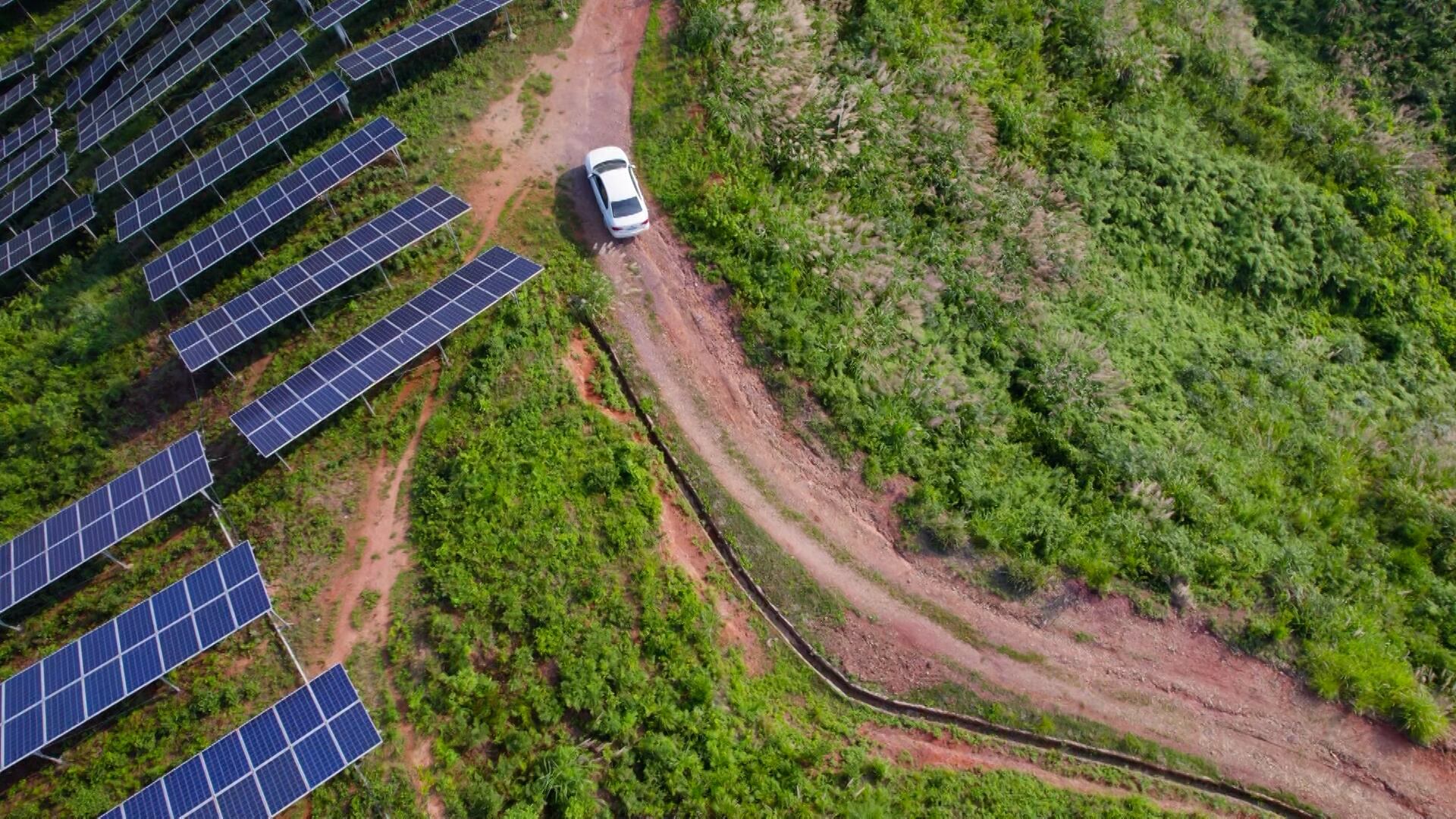
The bipartisan agreement also would help nurture the market for electric vehicles, improve broadband access, repair water lines and create resilience against damage from extreme weather events.
Associated Press writer Lisa Mascaro in Washington and Bruce Schreiner in Louisville, Ky. contributed to this report.
As gas prices surge amid the Russian invasion of Ukraine, other nations could potentially transition faster to using clean energy than previously expected. Philip K. Verleger, a senior fellow at the Niskanen Center, joined Cheddar News to explain how this could be a possibility in the near future. "Part of the reason I think we have this invasion and the tantrum that's being thrown by Russia, terrible tantrum, is because the Russians were trying to slow down the transition," he said. "Ironically they speeded it up."
Following the invasion of Ukraine, a multitude of Western companies have paused doing business with Russia. PepsiCo, Coca-Cola, McDonald's, and Starbucks are the most recent companies to temporarily cease operations in Russia. Dean of Miami Herbert Business School at the University of Miami, John Quelch, joined Cheddar News to discuss what message this sends to Russia and the Russian consumer. “I would not underestimate the collective strength of all of these multinational companies, essentially coming together to make their collective statement in support of the political statements that have come out of Washington," he said.
The war in Ukraine continues to reveal heartbreaking gut-wrenching stories. The war in itself is not only devastating but also expensive. Experts estimate that Russia is draining nearly $20 million dollars each day to continue occupying and invading Ukraine. All this could force the country to turn to cryptocurrencies. It's a major turn for the country that briefly considered outlined digital assets entirely, but it could also have serious implications for cryptos. Managing Director at Quantum Fintech Group, Harry Yeh, joined Cheddar to discuss more.
President Biden announced a ban on Russian oil and natural gas imports to the U.S. in response to its invasion of Ukraine, a move he warned could lead to an even greater surge in gas prices. The ban is prompting a conversation about the current oil production levels in the U.S. and whether or not the industry can ramp up production to soften the blow to American families at the gas pump. Clark Williams-Derry, Energy Finance Analyst with the Institute for Energy Economics and Financial Analysis, breaks down the state of the U.S. oil industry and how the ban might impact production levels here at home.
PepsiCo, Coca-Cola, McDonald’s, and Starbucks are the latest American food brands to have halted business operations in Russia after having faced scrutiny and criticism for originally failing to do so amid the country's invasion of Ukraine.
As Russia intensifies its war on Ukraine, President Biden announced a ban on oil imported from the aggressor nation. Critics of Russia have said this would be the best way to force Putin to pull back, but curbs on Russian oil exports are expected to send already skyrocketing oil and gas prices even higher, further impacting consumers, businesses, financial markets, and the global economy. Leslie Beyer, CEO of the Energy Workforce and Technology Council, joined Cheddar News' Closing Bell to discuss. "It's certainly going to increase pricing, but it is the right thing to do," she said. "The industry itself has already pulled out of the significant portion of its operations in Russia."
Sports Betting in the U.S. is booming. According to industry experts, we could see another boom this year as more states move towards statewide legalization of sports wagering. While this comes as huge news for fans, there are some very real concerns as to whether or not sports betting potentially poses a threat to public health. Senior Clinician at the Caron Treatment Centers, Eric Webber, joined Cheddar to discuss more.
The Biden administration has made gender policy a core part of how it governs. The president established the first Gender Policy Council. It's on the same level as the National Security Council, Domestic Policy Council and National Economic Council, putting the interests of women and other underserved groups at the table for the most important policy discussions.
Cheddar News sat down with Jennifer Klein, executive director and co-chair of the White House Gender Policy Council, to discuss the council's work and its significance during Women's History Month.
State Representative Jessica González, Vice Chair of the Texas House LGBTQ Caucus, joins Cheddar News to discuss the latest Texas anti-transgender directive.