By Stephen Groves, Zeke Miller and Josh Boak
President Joe Biden will meet in person Monday with House Speaker Kevin McCarthy about averting an economy-wrecking federal default, and the Republican leader expressed cautious optimism about a possible debt ceiling compromise as Washington races to raise America’s borrowing limit before the funds could be depleted early next month.
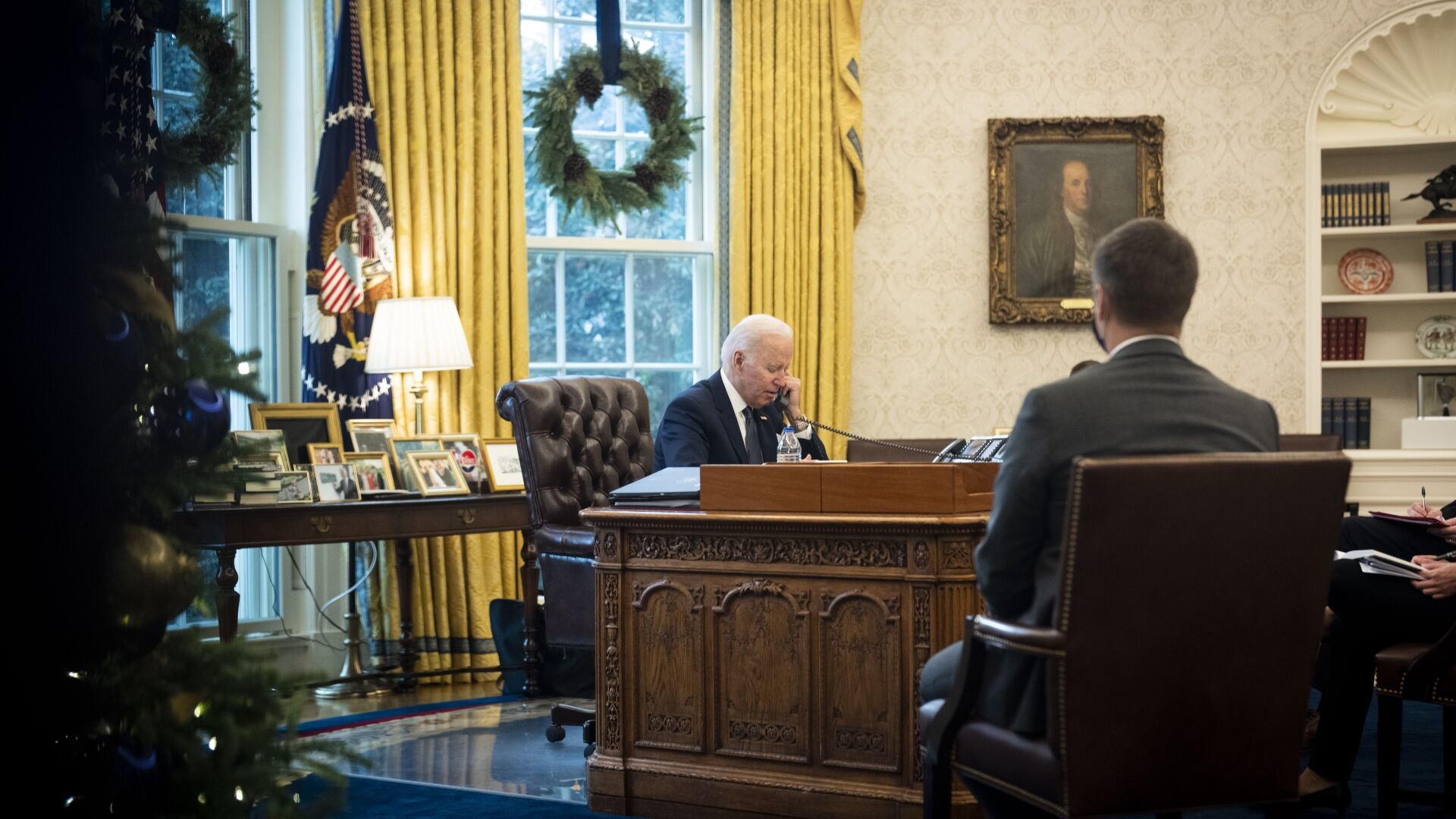
The leaders spoke by phone Sunday while the president was returning home on Air Force One after the Group of Seven summit in Japan. McCarthy, R-Calif., told reporters at the Capitol that the call was “productive" and that the on-again, off-again negotiations between his staff and White House representatives would resume in the evening.
Both sides have said progress was being made but that they remain far apart, and talks had lapsed for part of the weekend. Biden’s Treasury Department has said it could run out of cash as soon as June 1, and Treasury Secretary Janet Yellen said Sunday, “I think that that’s a hard deadline.”
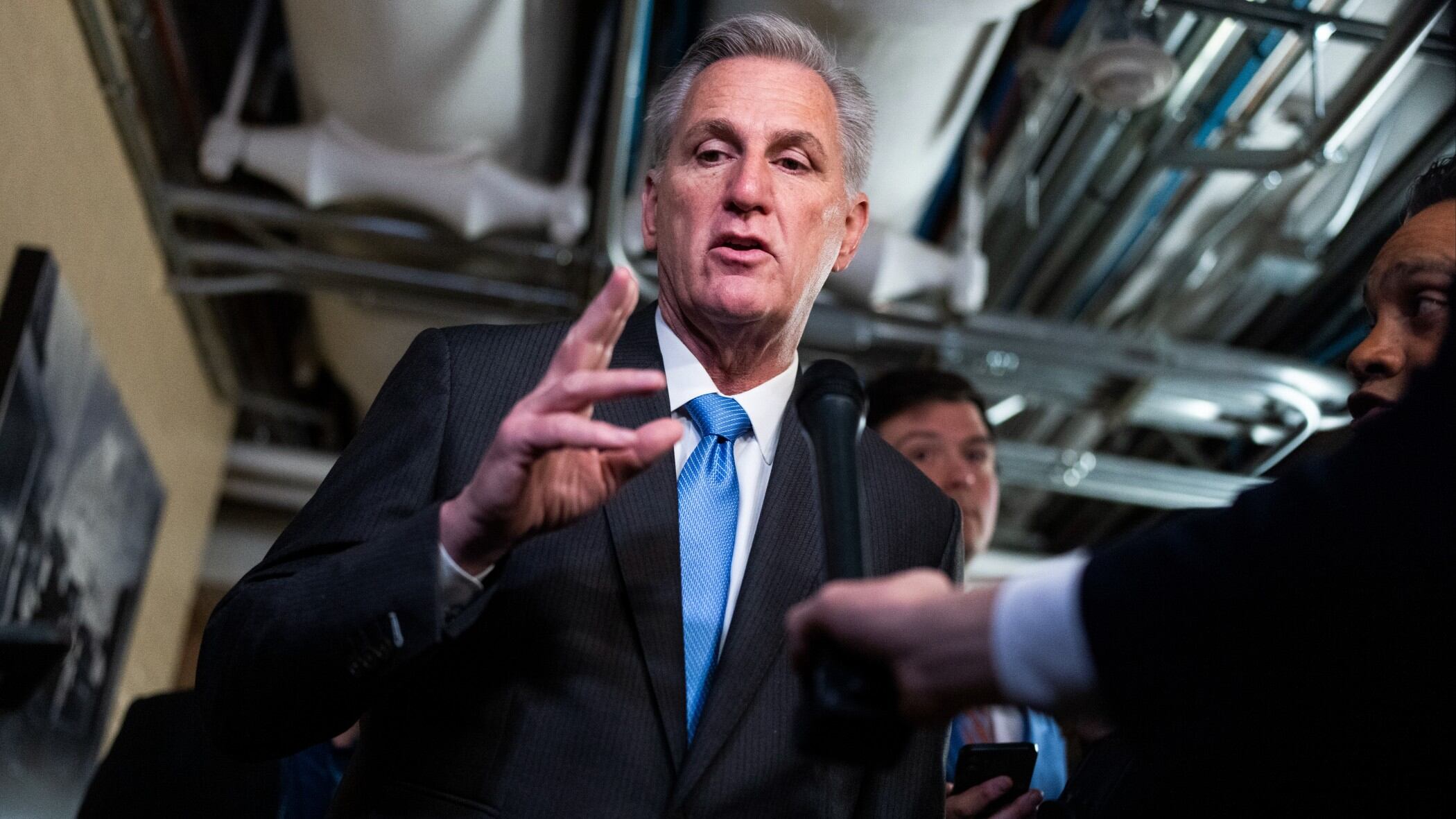
McCarthy said after his call with Biden that “I think we can solve some of these problems if he understands what we’re looking at." The speaker added, "But I’ve been very clear to him from the very beginning. We have to spend less money than we spent last year.”
McCarthy emerged from that conversation sounding upbeat and was careful not to criticize Biden's trip, as he had before, suggesting the president had used his time overseas to insist on Democratic positions that made compromise harder. He did caution, “There’s no agreement on anything.”
The speaker also gently praised the White House’s negotiating team, saying the sides may have “philosophical” disagreements, but could reach “common ground.”
“We’re looking at how do we have a victory for this country. How do we solve problems,” McCarthy said. He said he did not think the final legislation would remake the federal budget and the country's debt, but at least “put us on a path to change the behavior of this runaway spending.”
The White House confirmed the Monday meeting and late Sunday talks but did not elaborate on the leaders' call.
Earlier, Biden used his concluding news conference in Hiroshima, Japan to warn House Republicans that they must move off their “extreme positions” over raising the debt limit and that there would be no agreement to avoid a catastrophic default only on their terms.
Biden made clear that “it's time for Republicans to accept that there is no deal to be made solely, solely, on their partisan terms.” He said he had done his part in attempting to raise the borrowing limit so the government can keep paying its bills, by agreeing to significant cuts in spending. “Now it’s time for the other side to move from their extreme position."
Biden had been scheduled to travel from Hiroshima to Papua New Guinea and Australia, but cut short his trip in light of the strained negotiations with Capitol Hill.
Even with a new wave of tax revenue expected soon, perhaps giving both sides more time to negotiate, Yellen said on NBC’s “Meet the Press” that "the odds of reaching June 15, while being able to pay all of our bills, is quite low.”
GOP lawmakers are holding tight to demands for sharp spending cuts, rejecting the alternatives proposed by the White House for reducing deficits.
Republicans want work requirements on the Medicaid health care program, though the Biden administration has countered that millions of people could lose coverage. The GOP additionally introduced new cuts to food aid by restricting states’ ability to waive work requirements in places with high joblessness. That idea, when floated under President Donald Trump, was estimated to cause 700,000 people to lose their food benefits.
GOP lawmakers are also seeking cuts in IRS money and asking the White House to accept parts of their proposed immigration overhaul.
The White House has countered by keeping defense and nondefense spending flat next year, which would save $90 billion in the 2024 budget year and $1 trillion over 10 years.
“I think that we can reach an agreement,” Biden said, though he added this about Republicans: "I can’t guarantee that they wouldn’t force a default by doing something outrageous.”
Republicans had also rejected White House proposals to raise revenues in order to further lower deficits. Among the proposals the GOP objects to are policies that would enable Medicare to pay less for prescription drugs and the closing of a dozen tax loopholes. Republicans have refused to roll back the Trump-era tax breaks on corporations and wealthy households as Biden’s own budget has proposed.
Biden, nonetheless, insisted that “revenue is not off the table.”
For months, Biden had refused to engage in talks over the debt limit, contending that Republicans in Congress were trying to use the borrowing limit vote as leverage to extract administration concessions on other policy priorities.
But with the June 1 potential deadline looming and Republicans putting their own legislation on the table, the White House launched talks on a budget deal that could accompany an increase in the debt limit.
Biden's decision to set up a call with McCarthy came after another start-stop day with no outward signs of progress. Food was brought to the negotiating room at the Capitol on Saturday morning, only to be carted away hours later. Talks, though, could resume later Sunday after the Biden-McCarthy conversation.
The president tried to assure leaders attending the meeting of the world’s most powerful democracies that the United States would not default. U.S. officials said leaders were concerned, but largely confident that Biden and American lawmakers would resolve the crisis.
The president, though, said he was ruling out the possibility of taking action on his own to avoid a default. Any such steps, including suggestions to invoke the 14th Amendment as a solution, would become tied up in the courts.
“That’s a question that I think is unresolved," Biden said, adding he hopes to try to get the judiciary to weigh in on the notion for the future.
Miller and Boak reported from Hiroshima, Japan. Associated Press writers Colleen Long and Will Weissert contributed to this report.