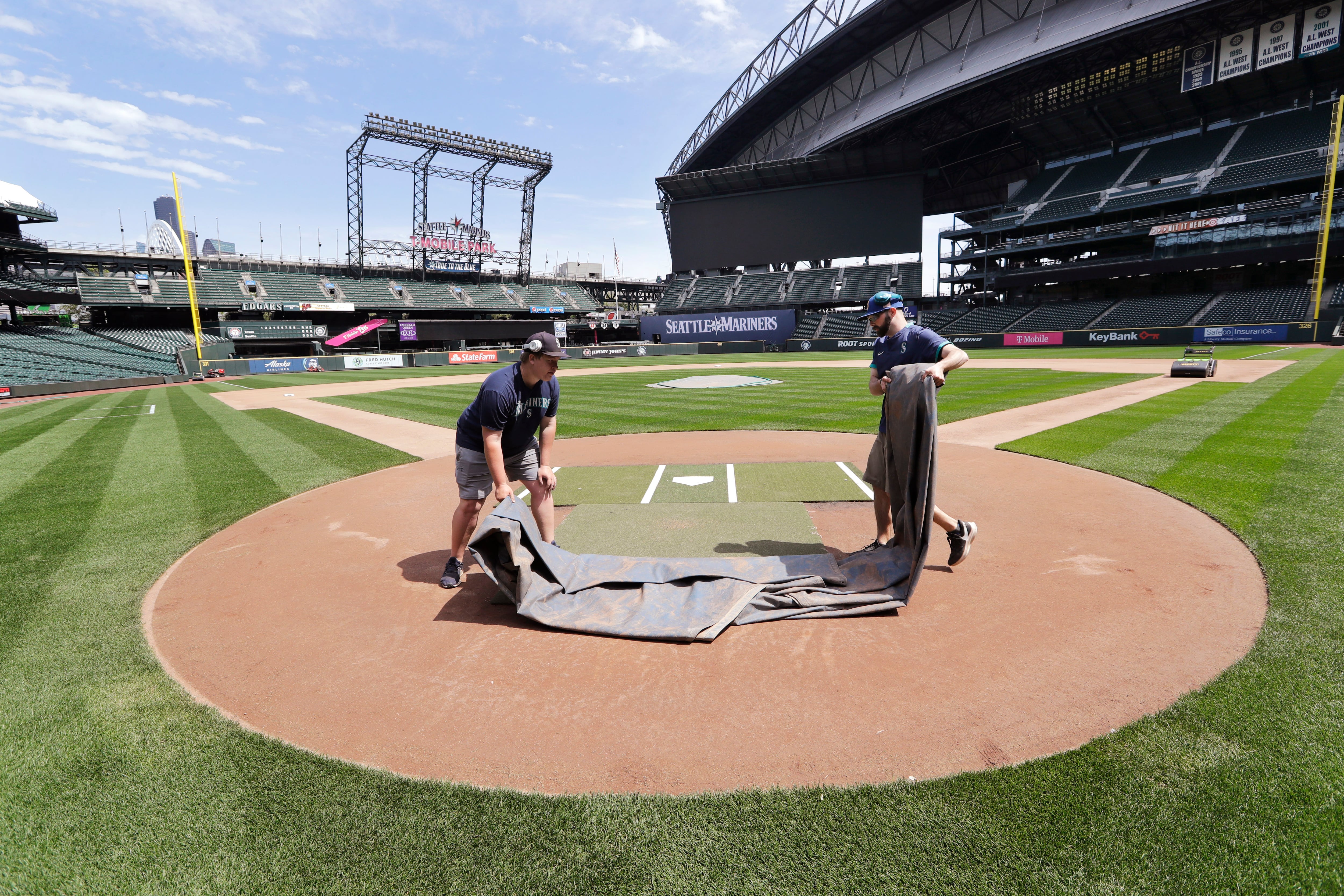
Grounds crew workers Jacob Weiderstrom, left, and Marcus Gignac pull a tarp off home plate as they continue to keep the Seattle Mariners' field in playing shape as the ballpark goes into its seventh week without baseball played because of the coronavirus outbreak Monday, May 11, 2020, in Seattle. (AP Photo/Elaine Thompson)
By Ronald Blum
The baseball players' association gave management a wide-ranging response Thursday to a 67-page proposed set of protocols for a season to be played during the coronavirus pandemic.
Management had presented the union and the 30 teams the proposed draft last Friday.
The union said Thursday it addressed: protections for high-risk players, access to pre- and postgame therapies, testing frequency, protocols for positive tests, in-stadium medical personnel, and sanitization procedures.
Players viewed many of the concepts in the original draft as over-the-top, such as arriving in uniform at the ballparks, a prohibition on them leaving hotels without team permission, and a ban on guests other than immediate family members. Players also objected to a ban on the use of showers and hydrotherapy.
The union wants more frequent testing than management's proposed “multiple times per week.”
MLB is expected to make an economic proposal to the union within a few days. MLB hopes to start the season by early July.
Fintech pioneer Tom Sosnoff discusses the evolution of retail investing, the rise of AI, and his new platform Lossdog aimed at the next generation of trading.
The FAA prepares to select cities for its eVTOL pilot program, marking a major step toward electric air taxis and the future of urban air mobility in the U.S.
Rising oil prices tied to the Iran conflict are driving up gas and airfare costs, creating new challenges for travelers heading into the spring break season.
The Supreme Court strikes down Trump-era tariffs, limiting presidential trade powers and raising questions about refunds, global trade, and business impact.
New research from GoDaddy and UCLA shows small businesses signal shifts in GDP, jobs, and digital growth earlier than traditional data or Wall Street trends.
GoFundMe launches Back in Business Fund with Paris Hilton to provide targeted grants helping women entrepreneurs recover and rebuild after natural disasters.