By Colleen Long, Susan Montoya Bryan and Hallie Golden
President Joe Biden told Native American nations gathered for a summit Wednesday that his administration was working to heal the wrongs of the past as he signed an executive order that seeks to make it easier for Indigenous peoples to access federal funding, and have greater autonomy over how to spend it.
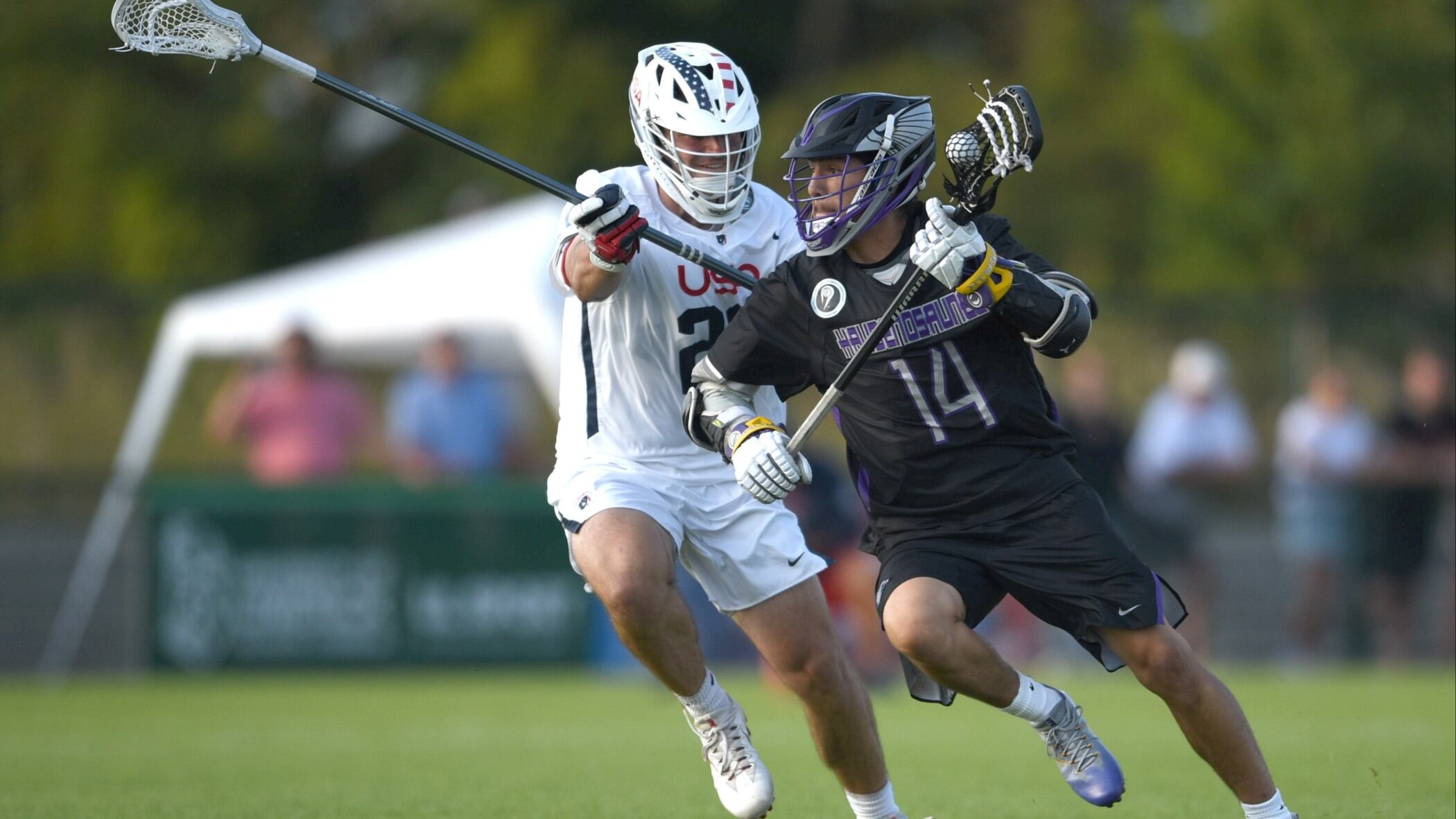
Biden also threw his support behind a request to allow Haudenosaunee Confederacy to compete under its own flag in the 2028 Olympics in lacrosse, a sport they invented.
Historically, federal policies attacked Native people's rights to self-governance and caused lasting economic damage. Biden said the actions at the summit were “key steps” that would help usher in an new era of tribal sovereignty. “A new era grounded in dignity and respect that recognizes your fundamental rights to govern and grow on your own terms,” he said.
“It’s hard work to heal the wrongs of the past and change the course, and move forward,” Biden said.
Yurok Tribal Council Member Phillip Williams described Biden’s speech as inspirational.
“It felt like our highest official in the land acknowledges the crimes of the past,” he said. “His contribution to society is to help to heal the tribal nations.”
Biden signed the order as members of his administration and tribal nation leaders stood behind him on stage at the Department of the Interior. The order in part creates a clearinghouse for Native American and Alaska native tribes to find and access grants and it requests that federal agencies ensure that funding is accessible and equitable. It also gives them more authority over how to spend the money.
That news was welcomed by Navajo Nation President Buu Nygren, who said the funding they get from the federal government to help the hundreds of thousands of people on their reservation that extends across Arizona, Utah and New Mexico, can be difficult to spend.
“There’s so much policies and things that are attached to it and requirements that are attached to it that sometimes it’s just overwhelming to try to get it done,” he said.
Tyson Johnston, self governance executive director for the Quinault Indian Nation in northwest Washington state, who is responsible for coordinating the relocation of their villages in the face of dangerous sea level rise, highlighted the importance of this type of autonomy when it comes to climate change.
In July, the Biden administration announced $120 million in grant funding for tribes in the U.S. to boost their resiliency to climate change.
“All of us are going to have different adaptation strategies and different priorities moving forward. So boxing us in and keeping us in kind of bureaucratic red tape is really not going to work if we want to continue to make meaningful change,” he said.
Biden hosted the summit in person last year and virtually the year before. This year, White House officials said, the goal was to provide an opportunity for tribal leaders to have more meaningful conversations directly with members of Biden’s Cabinet.
While the federal government has an obligation to consult with tribal governments, some Native American and Alaska Native leaders have complained that federal agencies often treat the process as a check-the-box practice despite efforts by Haaland to make changes.
From Nevada to Alaska, permitting decisions over mining projects, oil and gas development and the preservation of sacred areas, for example, have highlighted what some leaders say are shortcomings in the process.
The Democratic administration also announced more than 190 agreements that allow tribes to manage federal lands, waters and natural resources and a new study to help better interpret and tell the history of Native Americans, particularly during periods of federal reform.
“Yes, there are parts of our history that are painful, but there are also those that we celebrate and that show our resilience, strength and our contributions,” said Interior Secretary Deb Haaland, a member of the Pueblo of Laguna.
Biden said he was throwing his support behind the effort to allow the confederacy to play under its own flag at the Los Angeles Olympics. The International Olympic Committee would have to make an exception to a rule permitting only teams playing as part of an official national Olympic committee to compete in the Games. The Haudenosaunee have competed as their own team at a number of international events since 1990.
The Haudenosaunee Nationals Lacrosse Organization, established in 1983, is among the best in the world. The confederacy is made up of six different nations, the Mohawks, Oneidas, Onondagas, Cayugas, Senecas and Tuscarora Nation. It spans the border between the U.S. and Canada.
“Their circumstances are unique,” Biden said. “They should be granted an exception to field their own team at the Olympics.”
The Department of the Interior is also working on final revisions to a rule overhauling how human remains, funerary objects and sacred objects are repatriated. The new rules streamline the requirements for museums and federal agencies to identify possible items for repatriation.
Officials also announced that the White House Council on Native American Affairs, which is co-chaired by Haaland and Tanden, has published a guide outlining best practices and procedures for the management, treatment and protection of sacred sites. The document was recently finalized after taking into account feedback from tribal leaders.
In Nevada, Arlan Melendez, chairman of the Reno-Sparks Indian Colony, said Tuesday that promises about meaningful consultation haven't materialized as several tribes have fought to halt construction of one of the largest lithium mines in the world. The tribes say the mine is being built illegally near the sacred site of an 1865 massacre along the Nevada-Oregon line.
“Consultation has to happen in the early stages,” he said. “If you do consultation after the project is already rolling, it doesn’t do you so much good at that point. So we are little bit disappointed in them.”
Montoya Bryan reported from Albuquerque, New Mexico. Golden reported from Seattle. Associated Press writers Aamer Madhani in Washington and Scott Sonner in Reno, Nevada, contributed to this report.