By Danica Kirka and Jill Lawless
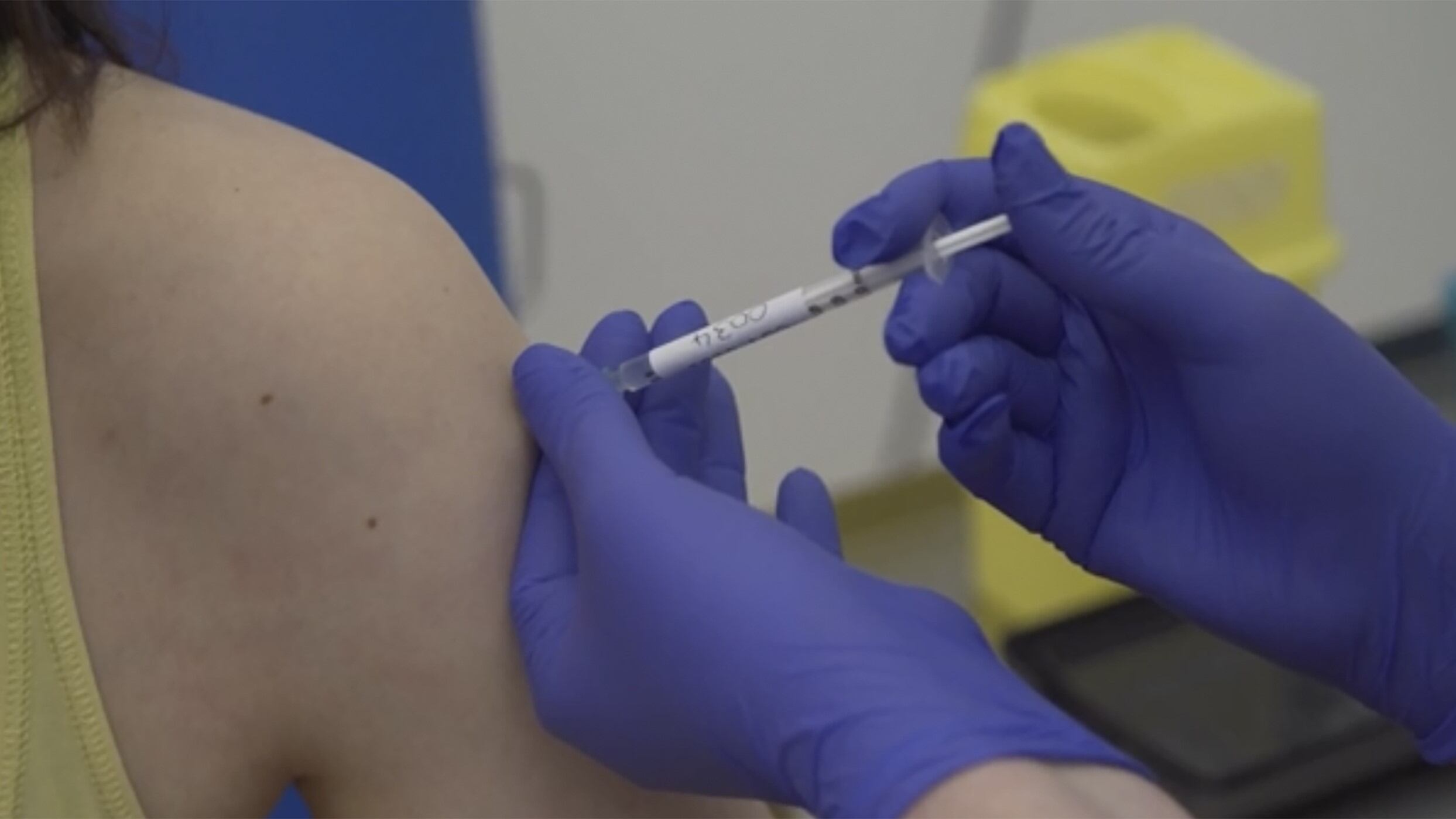
Pharmaceutical company AstraZeneca said Monday that late-stage trials showed its coronavirus vaccine was up to 90% effective, giving public health officials hope they may soon have access to a vaccine that is cheaper and easier to distribute than some of its rivals.
The results are based on interim analysis of trials in the U.K. and Brazil of a vaccine developed by Oxford University and manufactured by AstraZeneca. No hospitalizations or severe cases of COVID-19 were reported in those receiving the vaccine.
AstraZeneca is the third major drug company to report late-stage results for a potential COVID-19 vaccine as the world anxiously waits for scientific breakthroughs that will bring an end to a pandemic that has wrought economic devastation and resulted in nearly 1.4 million confirmed deaths.
Pfizer and Moderna last week reported preliminary results from late-stage trials showing their vaccines were almost 95% effective. But, unlike its rivals, the AstraZeneca vaccine doesn't have to be stored at ultra-cold temperatures, making it easier to distribute, especially in developing countries.
“I think these are really exciting results,” Dr. Andrew Pollard, chief investigator for the trial, said during a news conference. “Because the vaccine can be stored at fridge temperatures, it can be distributed around the world using the normal immunization distribution system. And so our goal … to make sure that we have a vaccine that was accessible everywhere, I think we’ve actually managed to do that.”
The Oxford-AstraZeneca vaccine is also cheaper. AstraZeneca, which has pledged it won’t make a profit on the vaccine during the pandemic, has reached agreements with governments and international health organizations that put its cost at about $2.50 a dose. Pfizer’s vaccine costs about $20 a dose, while Moderna's is $15 to $25, based on agreements the companies have struck to supply their vaccines to the U.S. government.
All three vaccines must be approved by regulators before they can be widely distributed.
Oxford researchers and AstraZeneca stressed that they aren't competing with other projects and that multiple vaccines will be needed to reach enough of the world's population and end the pandemic.
“We’re not thinking about vaccinations working in terms of one person at a time. We have to think about vaccinating communities, populations, reducing transmission within those populations, so that we really get on top of this pandemic,'' said Sarah Gilbert, a leader of the Oxford research team. “And that’s what it now looks like we’re going to have the ability to contribute to in a really big way.''
The results come as a second wave of COVID-19 hits many countries, once again shutting businesses, restricting social interaction, and pummeling the world economy.
AstraZeneca said it will immediately apply for early approval of the vaccine where possible, and it will seek an emergency use listing from the World Health Organization, so it can make the vaccine available in low-income countries.
The AstraZeneca trial looked at two different dosing regimens. A half-dose of the vaccine followed by a full dose at least one month later was 90% effective. Another approach, giving patients two full doses one month apart, was 62% effective. The combined results showed an average efficacy rate of 70%.
The vaccine uses a weakened version of a common cold virus that is combined with genetic material for the characteristic spike protein of the virus that causes COVID-19. After vaccination, the spike protein primes the immune system to attack the virus if it later infects the body.
The vaccine can be transported under “normal refrigerated conditions” of 2 to 8 degrees Celsius (36 to 46 degrees Fahrenheit), AstraZeneca said. By comparison, Pfizer plans to distribute its vaccine using specially designed “thermal shippers” that use dry ice to maintain temperatures of minus-70 degrees Celsius (minus-94 degrees Fahrenheit).
Peter Openshaw, professor of experimental medicine at Imperial College London, said the finding that a smaller initial dose is more effective than a larger one is good news because it may reduce costs and mean more people can be vaccinated.
“The report that an initial half-dose is better than a full dose seems counterintuitive for those of us thinking of vaccines as normal drugs: With drugs, we expect that higher doses have bigger effects, and more side-effects,” he said. “But the immune system does not work like that.”
The results reported Monday come from trials in the U.K. and Brazil that involved 23,000 people. Late-stage trials are also underway in the U.S., Japan, Russia, South Africa, Kenya, and Latin America, with further trials planned for other European and Asian countries.
AstraZeneca has been ramping up manufacturing capacity, so it can supply hundreds of millions of doses of the vaccine starting in January, Chief Executive Pascal Soriot said earlier this month.
Soriot said Monday that the Oxford vaccine’s simpler supply chain and AstraZeneca’s commitment to provide it on a nonprofit basis during the pandemic mean it will be affordable and available to people around the world.
“This vaccine’s efficacy and safety confirm that it will be highly effective against COVID-19 and will have an immediate impact on this public health emergency,’’ Soriot said.
British Health Secretary Matt Hancock said he felt “a great sense of relief” at the news from AstraZeneca.
Britain has ordered 100 million doses of the Oxford vaccine, and the government says several million doses can be produced before the end of the year if it is approved by regulators.
Just months ago, “the idea that by November we would have three vaccines, all of which have got high effectiveness … I would have given my eye teeth for,” Hancock said.
Updated on November 23, 2020 at 11:37 a.m. ET with the latest information.