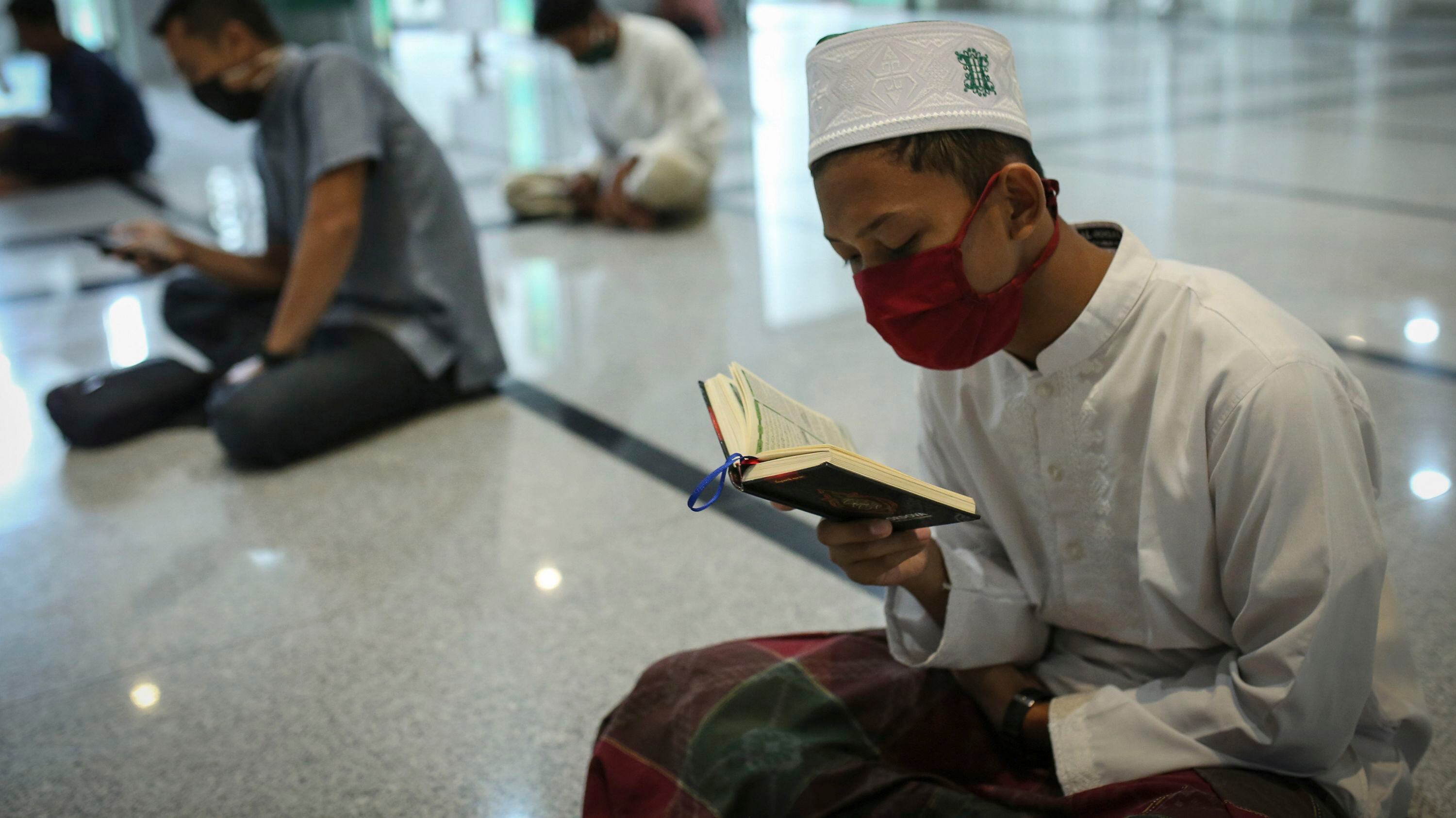
Millions of Muslims in Asia began Ramadan, Islam's holiest month, on Friday under the gloom of life with the coronavirus, which has forced extensive changes to traditions.
Ramadan is a time for Muslims to get closer to God, family, and society, but under the pandemic many have lost jobs, canceled plans to visit relatives, and can't break their daily fast with others. Muslims usually fast during the day and then congregate for night prayers and share communal meals.
In many places, mosques have been locked to deter the spread of the virus.
“This is too sad to be remembered in history,” said Belm Febriansyah, a resident of Indonesia’s capital, Jakarta.
Indonesia, the world’s most populous Muslim-majority nation, suspended passenger flights and rail services to restrict people from traveling to their hometowns. Authorities also banned private cars from leaving Jakarta.
Muslim-majority Malaysia extended its virus lockdown by two weeks, although its new cases have dropped significantly in recent days. Prime Minister Muhyiddin Yassin said on the eve of Ramadan that the people’s “jihad” against the pandemic has shown positive results but needs to continue to ensure the virus is fully contained.
Malaysia, along with neighboring Singapore and Brunei, banned popular Ramadan bazaars where food, drinks, and clothes are sold in congested open-air markets or roadside stalls.
Pakistan’s southern Sindh province banned prayers during Ramadan after the Pakistan Medical Association pleaded unsuccessfully with Prime Minister Imran Khan and the country’s religious leaders to reverse their refusal to close mosques countrywide.
Khan has left it to local clerics to implement government-ordered social distancing. Some clerics have called instead for followers to pack mosques and trust their faith to protect them.
Ramadan begins on Saturday in India and comes amid rising vilification of Muslims following accusations that a surge in virus cases resulted from a meeting of an Islamic missionary group.
In other developments in the Asia-Pacific region:
JAPANESE INMATES TO MAKE GOWNS: Inmates in Japan will join the fight against the coronavirus by making protective gowns for medical workers. Many hospitals have a shortage of medical gowns, putting medical workers at risk, Justice Ministry officials said Friday. They said gowns will be produced at 41 of the 75 prisons across Japan, with a target of 200,000 per month. Japan is also facing shortages of masks and other protective equipment.
— HONG KONG STUDENTS TAKE UNIVERSITY EXAMS: More than 52,000 students began university entrance exams with social distancing measures in place, after a month's delay due to the pandemic. The exams are stretched over a month and students and staff are required to wear surgical masks and sanitize their hands. Students have their temperature checked at the exam centers and must sign health declaration forms. Anyone with a high temperature will be refused entry. Desks are spaced at least a meter (3 feet) apart. Hong Kong has reported 1,036 cases with four deaths.
— DUTERTE THREATENS MARTIAL LAW: Philippine President Rodrigo Duterte angrily threatened to declare martial law after accusing communist rebels of killing two soldiers who were escorting food and cash deliveries during a coronavirus quarantine. “I’m warning everybody and putting the armed forces and the police on notice that I might declare martial law. There will be no turning back,” Duterte said. The Philippines has reported more than 7,100 cases and 477 deaths from the virus. Many believe the actual toll is higher given limited testing.
— MASKS FOR VETERANS: South Korea will strap electronic wristbands on people who ignore home quarantine orders in its latest use of tracking technology to control its outbreak. Vice Health Minister Kim Gang-lip said those who refuse will be quarantined in shelters where they will be asked to pay for accommodation. Around 46,300 people are under self-quarantine. South Korea also said its mask supply has stabilized and it will send 1 million masks to foreign veterans of the 1950-53 Korean War. It banned mask exports in early March and has rationed the national supply. South Korea reported six more cases but no new deaths, bringing its total to 10,703 with 240 fatalities.
— MYANMAR EXTENDS FLIGHT BAN: Myanmar is extending a suspension of commercial passenger flight arrivals, ban on most large gatherings and lockdown of virus-hit neighborhoods through May 15. The state-run newspaper Global New Light of Myanmar also said a nighttime curfew in Yangon, the commercial capital, could end June 18. The Health Ministry announced seven new cases, bringing the official total to 139, including five deaths.
— INDIAN CASES SURGE: India recorded 1,680 new virus cases, driven by a surge in the central state of Maharashtra, bringing the total to 22,930. Officials in Mumbai, the state capital, plan to administer the anti-malarial drug hydroxychloroquine to some residents of the city’s crowded slums in an attempt to keep them from becoming sick. U.S. President Donald Trump has backed the unproven drug as a treatment for the virus, though it may cause heart rhythm problems. Mumbai health official Dr. Daksha Shah said the details of the program are “under process.”
— CHINA REPORTS NO DEATHS: China reported no new virus deaths for the ninth straight day, and just six new cases. Two of those were brought from overseas. Hospitals are still treating 915 patients, 57 listed as serious. The official death toll from the pandemic first detected in the central Chinese city of Wuhan late last year remains at 4,632 among 82,804 total cases.
— CHINA DEFENDS WHO: China says U.S. attacks on the World Health Organization have “no factual basis" and are unpopular. Foreign ministry spokesman Geng Shuang said at a daily briefing that WHO has “actively performed its duty and played an important role in helping all countries to tackle the epidemic." Geng said the U.S. has a legal obligation to support WHO, and its refusal to provide funding will “seriously endanger global anti-epidemic cooperation.” President Donald Trump has ordered a suspension of U.S. funding for WHO over what he says is its ineffective role in dealing with the pandemic.