By Jennifer Peltz and Michael R. Sisak
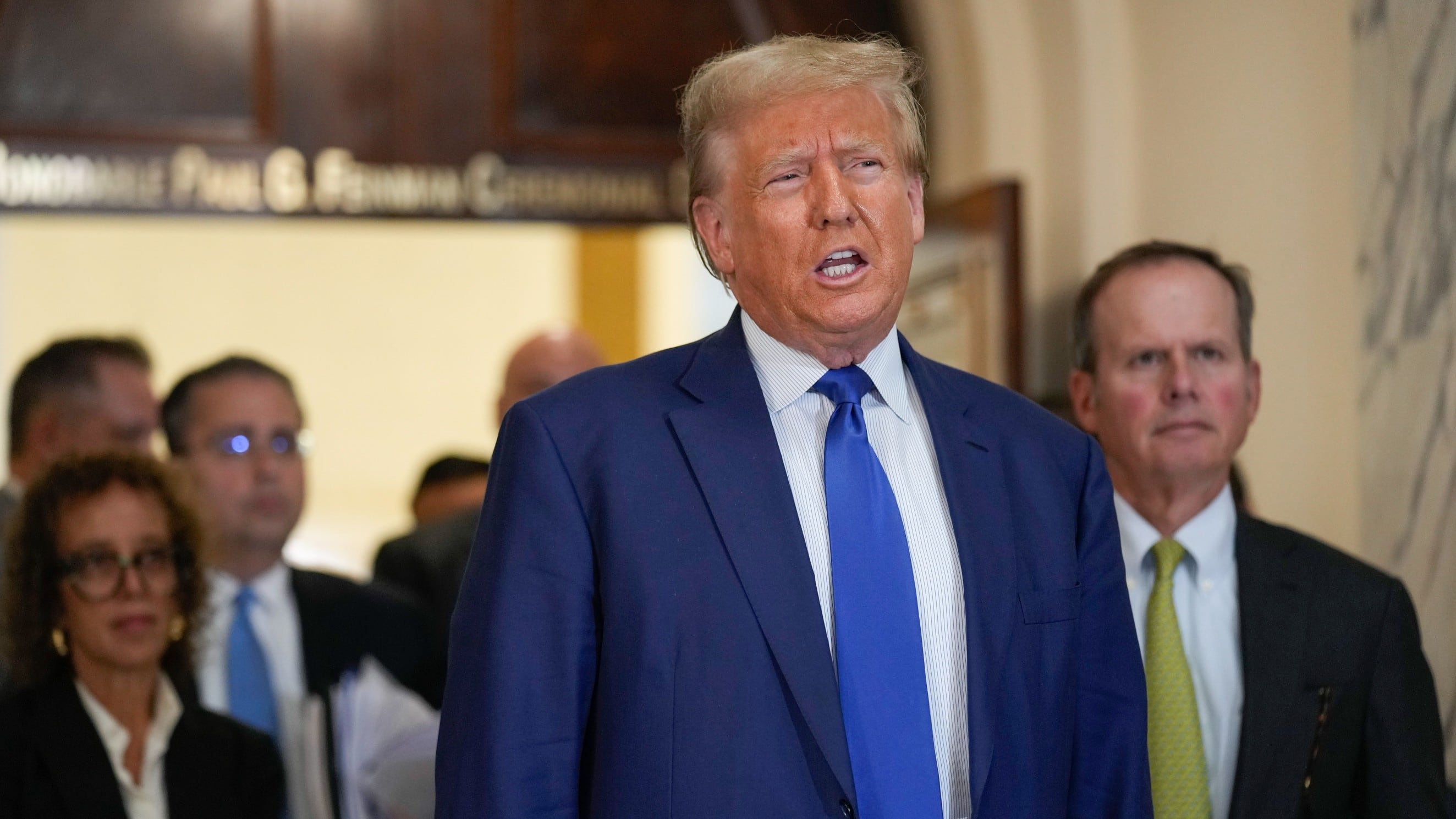
A New York appeals court Thursday reinstated a gag order that barred Donald Trump from commenting about court personnel after the former president repeatedly disparaged a law clerk in his New York civil fraud trial.
The one-sentence decision came two weeks after an individual appellate judge put the gag order on hold while the appeals process played out.
Trial judge Arthur Engoron, who imposed the restriction, said he now planned to enforce it “rigorously and vigorously.”
Trump attorney Christopher Kise called it “a tragic day for the rule of law.” Steven Cheung, a spokesperson for Trump's 2024 presidential campaign, complained that the gag order was “nothing but attempted election interference, which is failing terribly.”
Engoron imposed the gag order Oct. 3 after Trump posted a derogatory comment about the judge’s law clerk to social media. The post, which included a baseless allegation about the clerk's personal life, came the second day of the trial in New York Attorney General Letitia James’ lawsuit.
James' lawsuit alleges Trump exaggerated his wealth on financial statements used to secure loans and make deals. Trump denies any wrongdoing. The Republican 2024 front-runner contends the lawsuit is a political attack instigated by James and furthered by Engoron, both Democrats.
Over the trial's first few weeks, Engoron fined Trump $15,000 for violating the gag order. The judge expanded the order — which initially covered only parties in the case — to include lawyers after Trump's attorneys questioned clerk Allison Greenfield’s prominent role on the bench. She sits alongside the judge, exchanging notes and advising him during testimony.
Trump’s lawyers sued Engoron, challenging his gag order as an abuse of power.
State lawyers supported the restriction, saying it was a reasonable step to protect Engoron's staff. An attorney for the court system tied Trump’s comments to an uptick in nasty calls and messages directed at the judge and law clerk.
A court security captain wrote in a sworn statement last week that Greenfield has been receiving 20-30 calls per day to her personal cell phone and 30-50 messages per day on social media, LinkedIn and two personal email addresses.
The captain reported that Greenfield received enough harassing voicemails to fill a transcript with 275 single-spaced pages, and that about half the harassing and disparaging messages to her were antisemitic.
Trump’s lawyers then argued that while messages and calls were “vile and reprehensible,” he shouldn’t be muzzled because of other people's bad behavior. Trump never called for violence against Greenfield, nor did he or his lawyers ever encourage or condone harassment and threats, the attorneys wrote in a court filing.
They argued that the gag order infringed on his free speech rights.
“As the front-runner for the 2024 Republican presidential nomination and as a citizen on trial, President Trump is well within his rights to comment on what he perceives as bias,” Trump’s lawyers wrote.
While the gag order was suspended, Trump posted about Greenfield as recently as Wednesday, referring to the judge's “very disturbed and angry law clerk."
In recent days, Trump also assailed the judge’s family, citing critical social media posts about him that he asserted came from Engoron’s wife. Court system spokesperson Al Baker said Thursday that they did not.
Engoron ruled before the trial that Trump and other defendants engaged in fraud, and he ordered that a receiver take control of some of Trump’s properties, putting their future oversight in question. An appeals court has put that order on hold for now.
The trial concerns remaining claims of conspiracy, insurance fraud and falsifying business records. James is seeking more than $300 million in penalties and a ban on Trump doing business in New York.
Trump is due to testify, for a second time, Dec. 11. All testimony is expected to wrap up shortly afterward.
Then the two sides are due to submit filings and make their closing arguments in January, under a schedule sketched out Thursday.
The verdict in the non-jury case will be up to Engoron, who said he he hopes to reach a decision by the end of January.
Associated Press writer Jake Offenhartz contributed.
Updated at 5:15 a.m. Dec. 1 with new information.