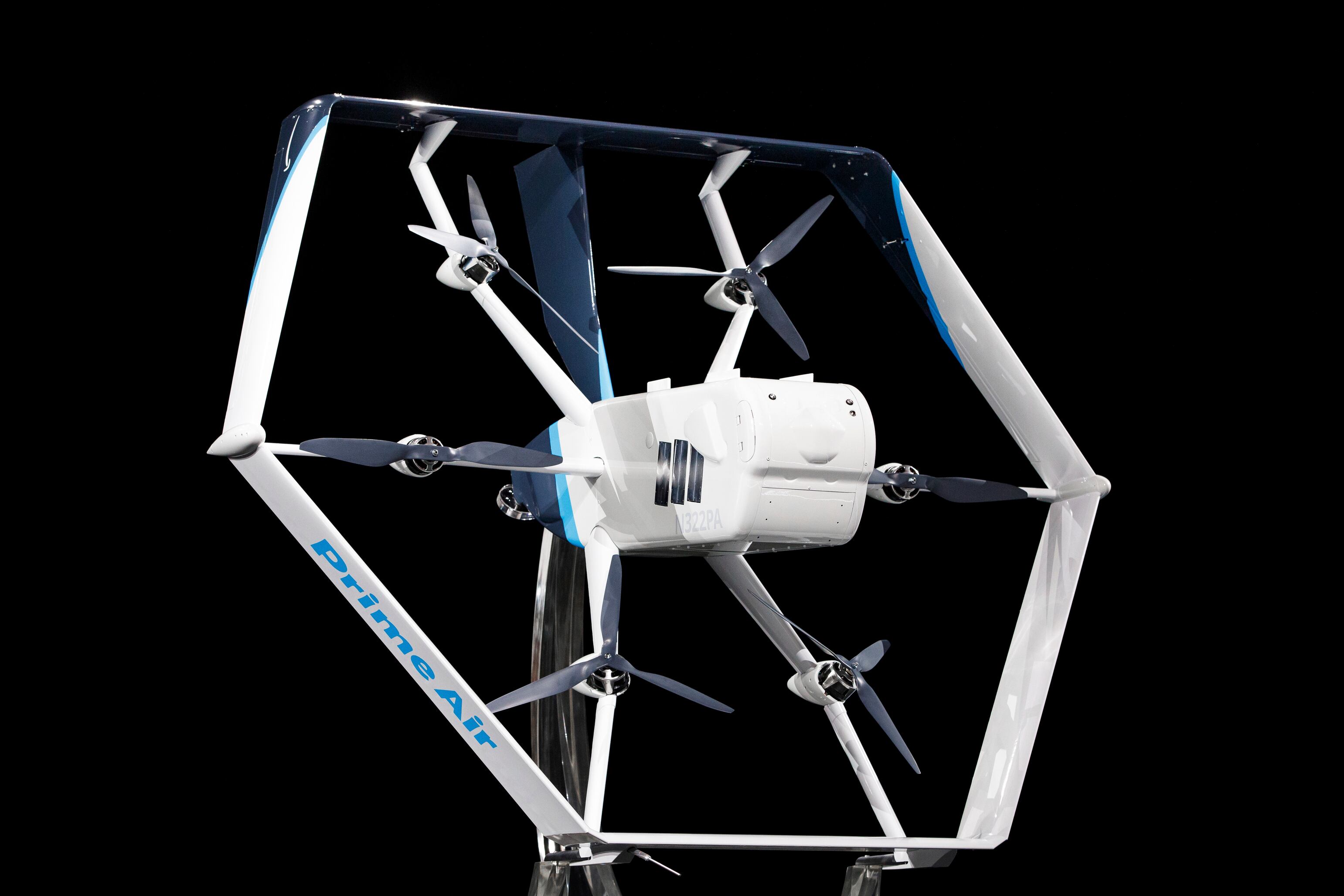
This undated image provided by Amazon shows one of the company's delivery drones. Amazon won approval to deliver packages by drones from the Federal Aviation Administration, the agency said Monday, Aug. 31, 2020. (Jordan Stead/Amazon via AP, File)
By Joseph Pisani
Getting an Amazon package delivered from the sky is closer to becoming a reality.
The Federal Aviation Administration said Monday it had granted Amazon approval to deliver packages by drones.
Amazon said that the approval is an "important step," but added that it is still testing and flying the drones. It did not say when it expected drones to make deliveries to shoppers.
The online shopping giant has been working on drone delivery for years, but it has been slowed by regulatory hurdles. Back in December 2013, Amazon CEO and founder Jeff Bezos said in a TV interview that drones would be flying to customer's homes within five years.
Last year, Amazon unveiled self-piloting drones that are fully electric, can carry 5 pounds of goods, and are designed to deliver items in 30 minutes by dropping them in a backyard. At the time, an Amazon executive said deliveries to shoppers would be happening "within months," but more than 14 months have passed since then.
Seattle-based Amazon is the third drone delivery service to win flight approval, the FAA said. Delivery company UPS and a company owned by search giant Google won approval last year.
Angelo Zino, Senior Vice President and Technology Equity Research Analyst at CFRA, breaks down Big Tech earnings, AI spending, and what's next for the Mag 7.
Big Tech is pouring billions into AI. Ray Wang, CEO of Constellation Research, explains what Meta and Microsoft's earnings reveal about those investments.
Morningstar equity analyst Nicolas Owens explains Boeing's latest earnings, deliveries, rising fuel costs, and what they mean for airlines and investors.
The 2026 FIFA World Cup is more than just a tournament. With over 6.5 million fans expected to attend, it's become one of the world's largest economic events.
Variety Senior TV Editor Brian Steinberg breaks down media mergers, streaming, cord-cutting, and the biggest trends reshaping the future of television.