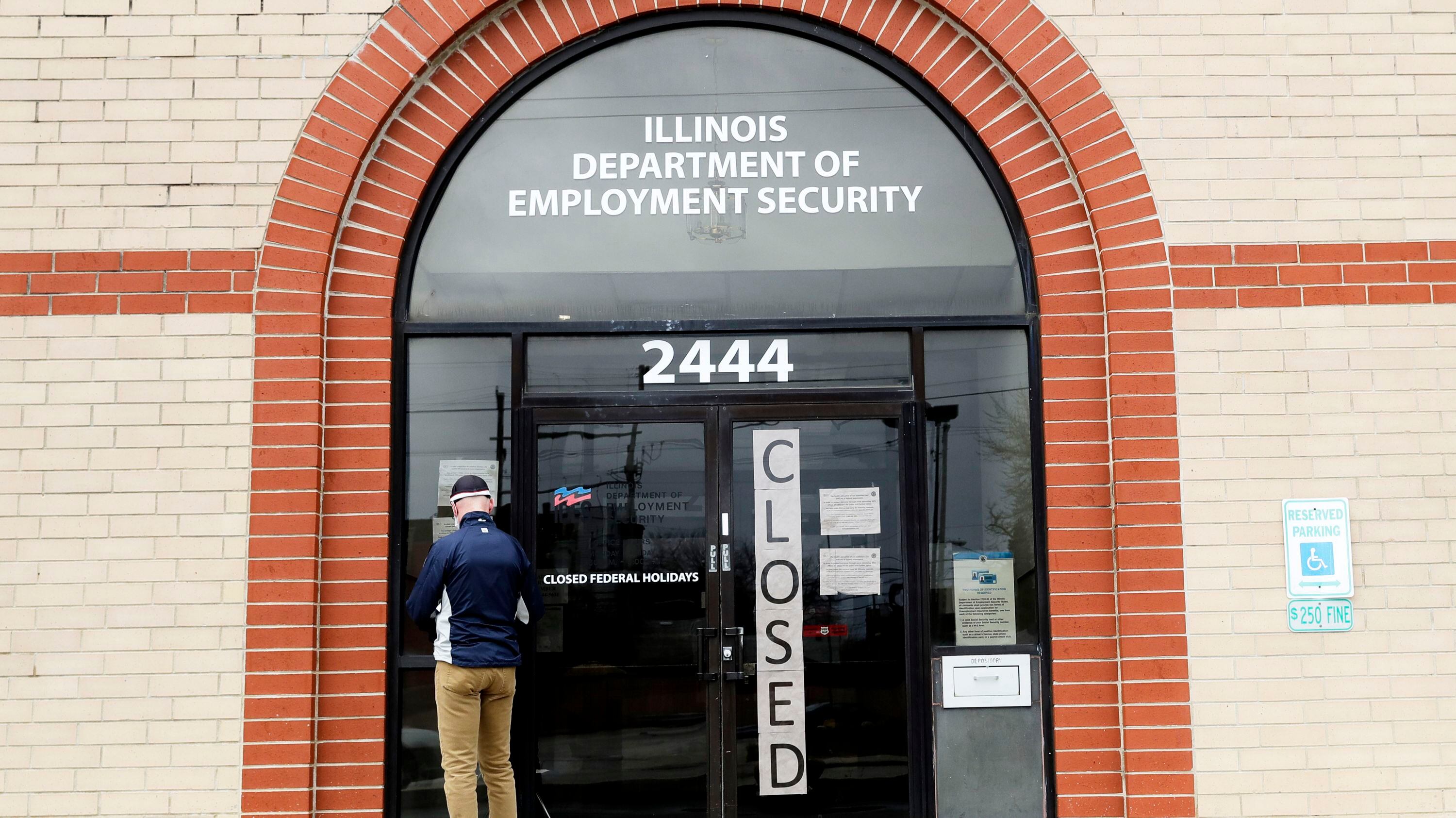
A man checks information in front of Illinois Department of Employment Security in Chicago, Thursday, April 30, 2020. Another 3.8 million people filed claims for jobless benefits last week, according to the Labor Department. While that's down from the previous week's 4.4 million, a staggering 30.3 million have applied for unemployment in the six weeks since the coronavirus began taking a wrecking ball to the U.S. job market. (AP Photo/Nam Y. Huh)
By Josh Boak
U.S. businesses cut an unprecedented 20.2 million jobs in April, an epic collapse with coronavirus outbreak closing the offices, factories, schools, construction sites, and stores that propel the U.S. economy.
The Wednesday report from payroll company ADP showed the tragic depth and scale of job losses that left no part of the world's largest economy unscathed. The losses will likely continue through May, with a recovery in hiring likely to begin in the months that follow, said Mark Zandi, chief economist at Moody's Analytics.
"This is one for the record books," Zandi said. "The good news is that we're at the apex of the job loss."
Even though Zandi expects hiring to resume in June as states ease lockdowns, he cautioned that it will be a "slog" over several years to recover all the jobs lost in April.
The private industry report comes two days ahead of the official monthly job figures from the U.S. Labor Department. Economists believe the Friday report will reveal unemployment in the U.S. stands at a shocking 16%, up from 4.4% in March.
According to ADP, the leisure and hospitality sector shed 8.6 million workers last month. Trade, transportation, and utilities let 3.4 million people go. Construction firms cut nearly 2.5 million jobs, while manufacturers let go of roughly 1.7 million people. The health care sector cut 1 million jobs, but education services eked out a gain of 28,000 as colleges and universities do not appear to have forced significant layoffs that could come later this year.
More than half of April's job losses came from smaller companies with 500 workers or fewer. But larger employers cut 8.9 million jobs. Polling by The Associated Press and NORC Center for Public Affairs Research indicates that nearly eight in 10 households that suffered job losses expect to return to their previous employer.

President Donald Trump says he will allow Nvidia to sell its H200 computer chip used in the development of artificial intelligence to “approved customers” in China. Trump said Monday on his social media site that he had informed China’s leader Xi Jinping and “President Xi responded positively!” There had been concerns about allowing advanced computer chips into China as it could help them to compete against the U.S. in building out AI capabilities. But there has also been a desire to develop the AI ecosystem with American companies such as chipmaker Nvidia.
U.S. sports betting is booming as NFL and college football fuel massive activity. BetMGM CEO Adam Greenblatt breaks down trends, growth, and what’s next.
President Donald Trump says a deal struck by Netflix last week to buy Warner Bros. Discovery “could be a problem” because of the size of the combined market share. The Republican president says he will be involved in the decision about whether federal regulators should approve the deal. Trump commented Sunday when he was asked about the deal as he walked the red carpet at the Kennedy Center Honors. The $72 billion deal would bring together two of the biggest players in television and film and potentially reshape the entertainment industry.
Disney's changes to a program for disabled visitors are facing challenges in federal court and through a shareholder proposal. The Disability Access Service program, which allows disabled visitors to skip long lines, was overhauled last year. Disney now mostly limits the program to those with developmental disabilities like autism who have difficulty waiting in lines. The changes have sparked criticism from some disability advocates. A shareholder proposal submitted by disability advocates calls for an independent review of Disney's disability policies. Disney plans to block this proposal, claiming it's misleading. It's the latest struggle by Disney to accommodate disabled visitors while stopping past abuses by some theme park guests.
With a merger this big, creators, studios, and theaters all face uncertain futures. Here’s what experts are worried about and what good could come from it.
With disengagement rising and hybrid work shifting, 'Everybody Matters' author Bob Chapman explains why treating people well could define the future of work.
We sat down with Ali Furman, U.S. Consumer Markets Industry Leader at consulting firm PwC to ask what trends she garnered from the initial data this year.


