Losses widened at Bed Bath & Beyond as a tangled global supply chain continued to squeeze sales and the home goods chain lowered expectations for its final fiscal quarter, and also its full-year revenue.
At the opening bell, however, shares of the company that have been grouped with other meme stocks of beaten down companies, soared more than 10%.
The Union, New Jersey, company lost $276.4 million, or $2.78 per share, for the three months ended Nov. 27. The per-share losses adjusted for restructuring costs and other items was 25 cents, much worse than the break-even quarter industry analysts had projected, according to Zacks Investment Research.
The company last year lost $75 million in the quarter, or 61 cents per share.
Revenue was $1.88 billion, down sharply from $2.62 billion and also short of the $1.96 billion that Wall Street was looking for.
Bed Bath & Beyond said that it struggled to get everything on shelves that shoppers wanted amid ongoing issues tied to backups in the supply chain as the U.S. economy emerges from the worst of the pandemic.
Those constraints resulted in an estimated $100 million impact on the quarter and an even higher impact in December, said CEO Mark Tritton in a prepared statement.
Comparable sales, which includes stores and digital, declined 7% in the third quarter.
For the current quarter ending in February, Bed Bath & Beyond said it now expects revenue in the range of $2.1 billion. Analysts surveyed by Zacks had expected revenue of $2.28 billion.
The company now anticipates full-year revenue of $7.9 billion. Its prior outlook was for revenue between $8.1 billion and $8.3 billion. Analysts polled by FactSet predict revenue of $8.14 billion.
Before the opening bell Thursday, shares in Bed Bath & Beyond Inc. tumbled 9% after quarterly numbers were released, but within minutes reversed course and took off.
This year, large groups of individual investors bought up shares of companies that have struggled, or meme stocks, like GameStop and AMC Entertainment, causing institutional investors like hedge funds to lose billions.
Bed Bath & Beyond, while not gaining the same level of attention as those other meme stocks, spiked nonetheless. Shares that could be had for less than $20 in early January, more than doubled in price by the end of the month.
It was not clear what led to the reversal in the price of shares early Thursday.
The global oil benchmark has crossed the $100 per barrel mark for the first time since 2014. Oil prices have surged nearly 10 percent since Russia's invasion of Ukraine. Russia is the number two oil producer in the world, and it comes at a time when global oil supplies have already been constrained over the course of the past year. Rob Thummel, portfolio manager at Tortoise, joined Cheddar Movers to discuss.
Russia's economy is falling on hard times as businesses throughout the world continue to shut out the country after its invasion of Ukraine. Cheddar News was joined by Christine McDaniel, Senior Research Fellow at the Mercatus Center, to learn more about the situation.
Tech companies such as Google, Apple, and Twitter are the latest to announce back-to-office plans. Google has asked its employees to return starting on April 4th. Heidi Brooks, senior lecturer in organizational behavior at Yale University School of Management, joins Cheddar News to discuss.
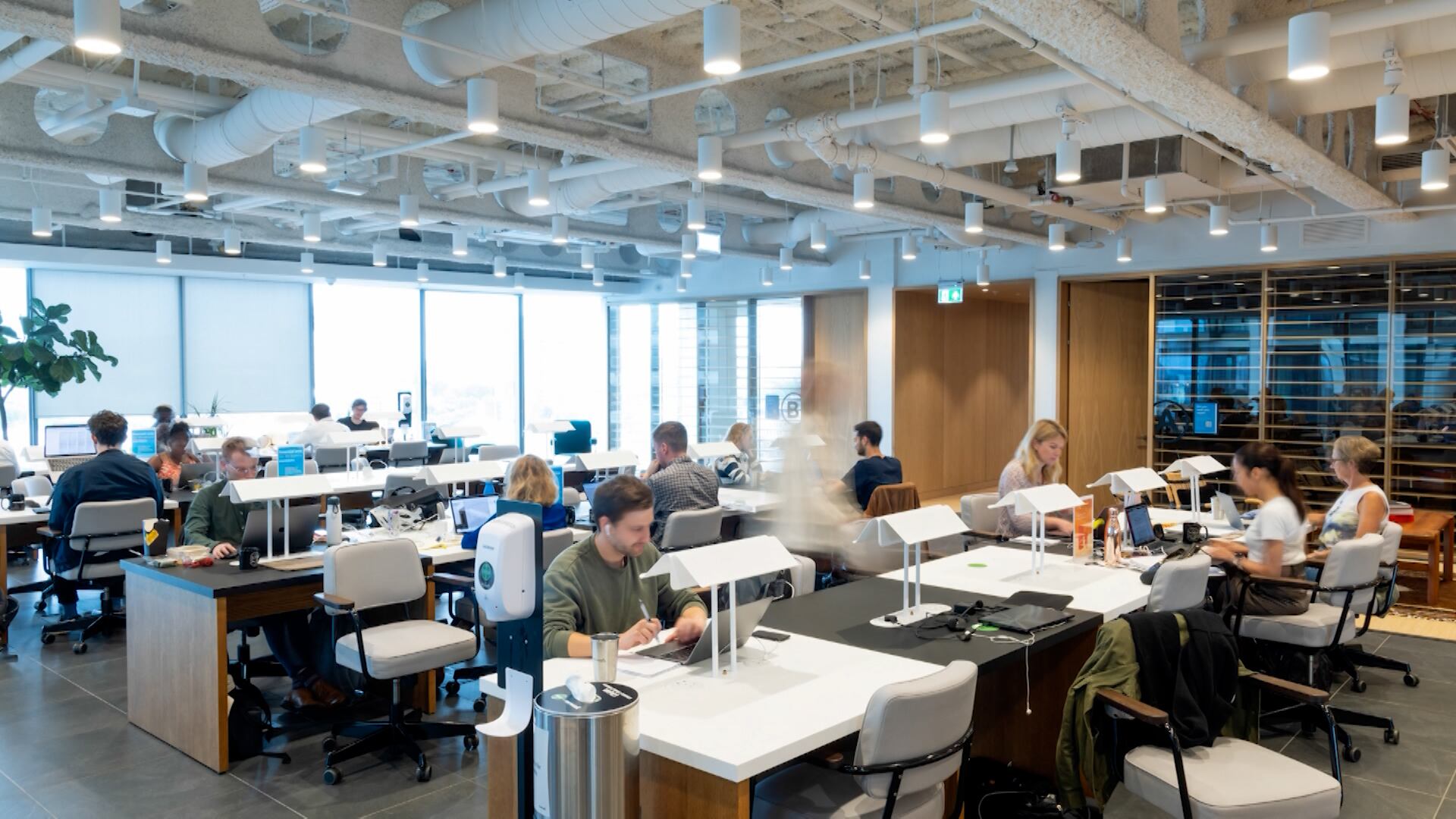
Businesses face more challenges for building a positive work environment as offices reopen. Workplace tech platform Envoy's At Work Report showed that hybrid work is currently in vogue, featuring focused work in both the office and at home. Annette Reavis, chief people officer for Envoy, joined Cheddar to discuss how employers can smooth the rough edges for their returning employees. "It is about hybrid though, it's really important for the future that we change our mindset from five days a week," she said. "Those are days of the past to working hybrids. So when you're in the office, you're focused, you're working cross-functionally."
Following the invasion of Ukraine, a multitude of Western companies have paused doing business with Russia. PepsiCo, Coca-Cola, McDonald's, and Starbucks are the most recent companies to temporarily cease operations in Russia. Dean of Miami Herbert Business School at the University of Miami, John Quelch, joined Cheddar News to discuss what message this sends to Russia and the Russian consumer. “I would not underestimate the collective strength of all of these multinational companies, essentially coming together to make their collective statement in support of the political statements that have come out of Washington," he said.
Cristyl Kimbrough, real estate attorney and star of 'Ladies Who List: Atlanta,' joins Cheddar News to discuss her new show on OWN and breaking into Atlanta's luxury real estate space.
Carl Tobias, professor of law at the University of Richmond, joins Cheddar News to talk about how Johnson & Johnson funded experiments on mostly Black men comparing the effects of talc and asbestos on their skin.
Amazon unveiled its new mobile app called Amp as a direct competitor to Clubhouse, allowing people to host live radio shows. Although it is still in beta, users can join the waitlist from the iOS store.