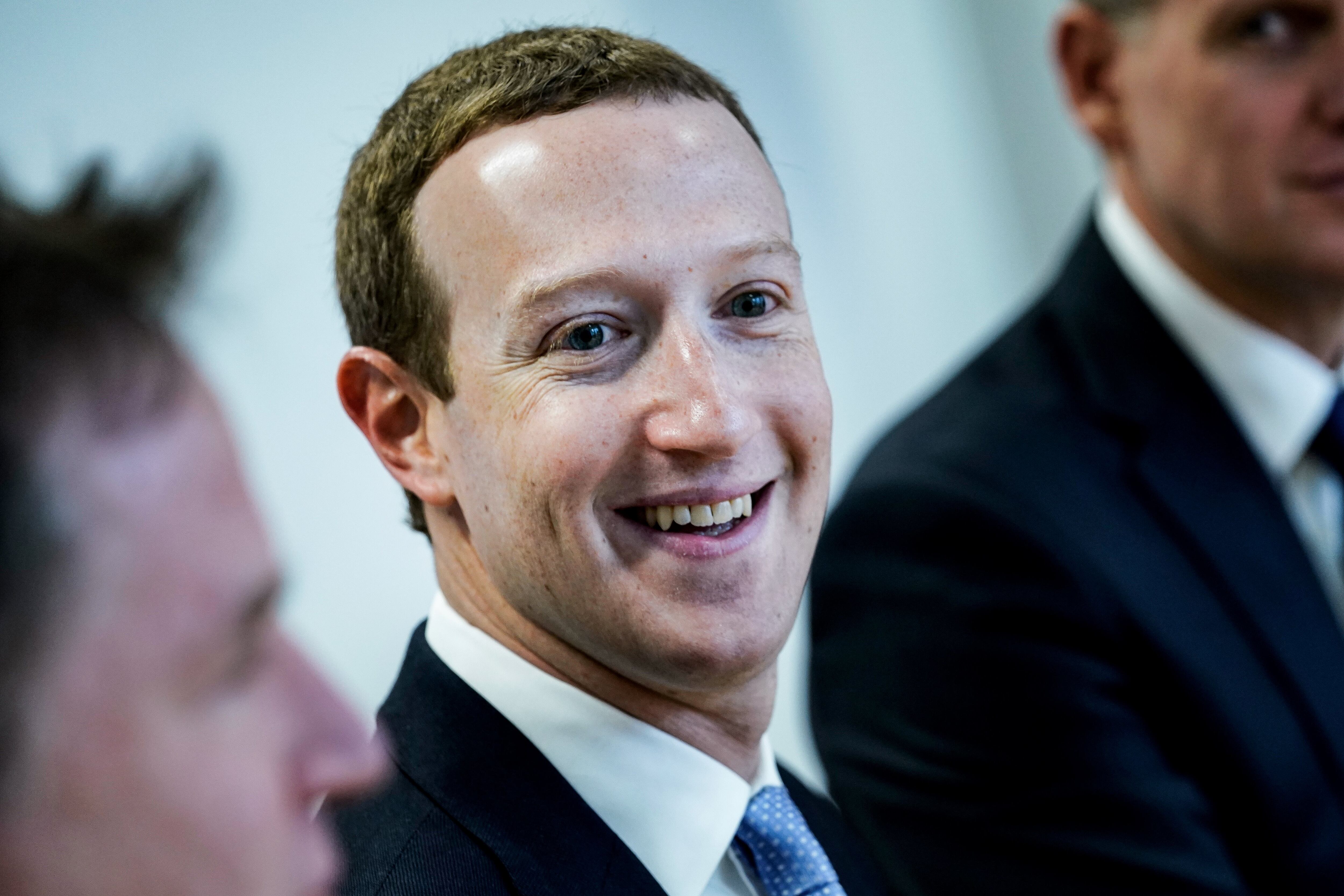
Founder and CEO of US online social media and social networking service Facebook Mark Zuckerberg. Photo by KENZO TRIBOUILLARD/AFP via Getty Images/FILE)
Mark Zuckerberg and his wife Priscilla Chan have donated $25 million through their foundation to a philanthropic effort organized by Bill Gates to explore new coronavirus treatments.
The Gates Foundation donated $50 million last week to what it’s calling the “COVID-19 Therapeutics Accelerator.” The initiative brings together life sciences companies to collaborate on the development of new vaccines, diagnostics, and treatments for COVID-19.
“The Therapeutics Accelerator will enable researchers to quickly determine whether or not existing drugs have a potential benefit against COVID-19,” Chan and Zuckerberg said in a press release. “We hope these coordinated efforts will help stop the spread of COVID-19 as well as provide shared, reusable strategies to respond to future pandemics.”
The two donations are the largest from tech billionaires since the coronavirus outbreak. Wellcome and Mastercard are supporting the effort as well.
The goal of the initiative is to either develop a new drug or adapt an existing treatment that it could help distribute alongside partnering pharmaceutical companies.
The 15 companies participating in the project kicked off the effort by sharing their proprietary libraries of molecular compounds that have some history of being tested with COVID-19.
The lineup includes big names in biotech such as Johnson & Johnson, Merck, Pfizer, Sanofi, and Bristol-Myers Squibb.
Banks are calling on Apple to lower fees for processing payments. The current model allows the tech giant to collect 0.15 percent on each transaction processed through Apple Pay.
Blue Bear Capital, a venture and growth equity firm focusing on AI-powered solutions for the world’s energy, infrastructure, and climate challenges, recently announced it has raised $150 million dollars in new funding. Ernst Sack, Partner at Blue Bear Capital, joins Cheddar Climate the vision his company has when it comes to combating climate change.
Tinder is working to keep users on the platform for longer periods by introducing its own in-app currency. Users can collect coins by staying active on the dating app or purchasing them. The currency can then be used on features like Super Likes or Boosts.
The Drone Racing League kicked off its 2021-2022 world championship season this week. Spanning across 14 different locations over the course of the year, 12 of the world's best drone pilots will be racing against each other to bring home the title. Drone racing has grown in popularity over the past year, with the Drone Racing League seeing an uptick of nearly 200 percent average viewership, 90 percent in virtual drone racing participation and 60 percent fanbase growth over social media. Rachel Jacobson, President of the Drone Racing League, discusses the future of the sport and why she thinks drone racing will soon be on par with traditional sports.