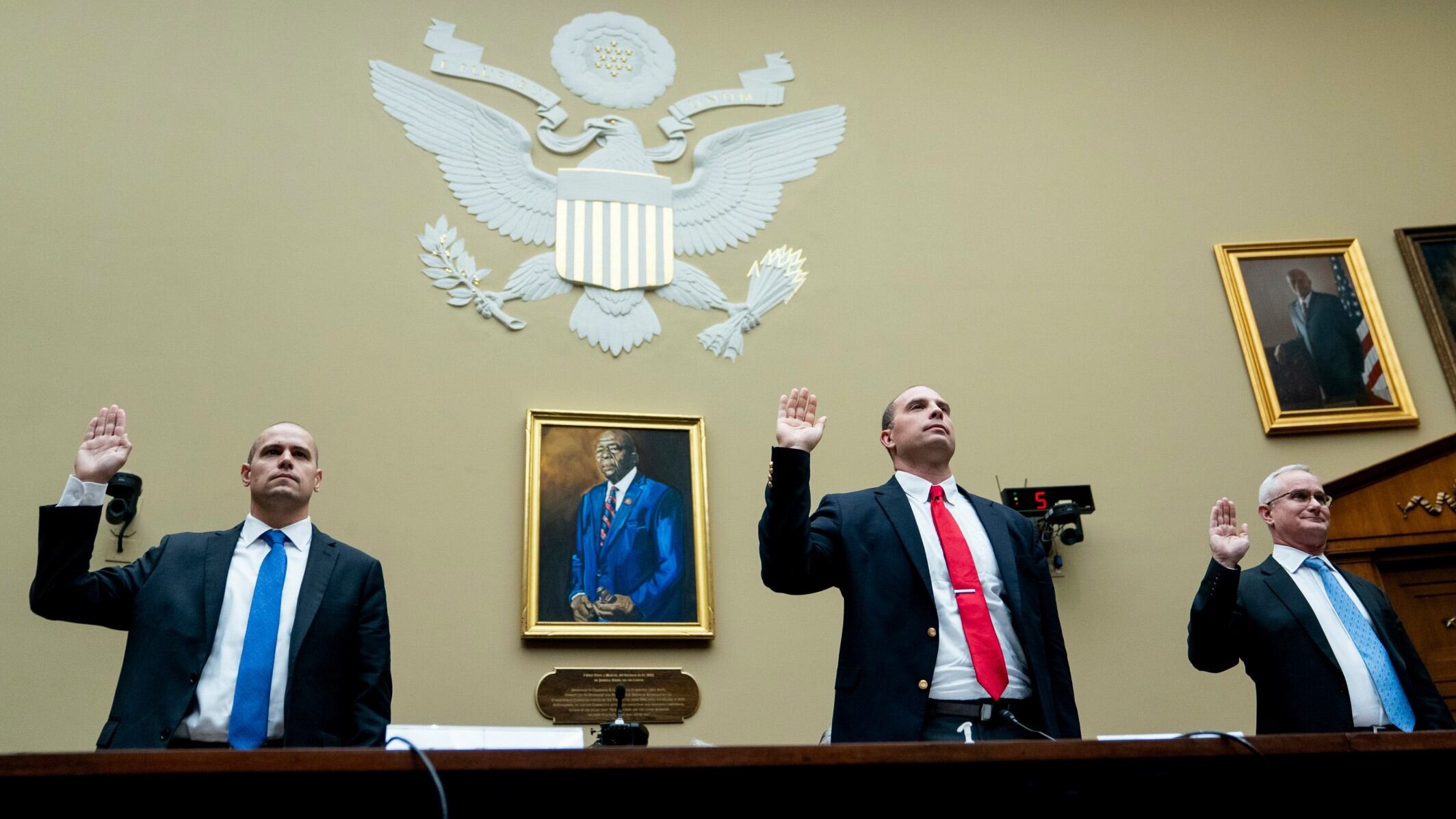
Ryan Graves, Americans for Safe Aerospace Executive Director, from left, U.S. Air Force (Ret.) Maj. David Grusch, and U.S. Navy (Ret.) Cmdr. David Fravor, are sworn in during a House Oversight and Accountability subcommittee hearing on UFOs, Wednesday, July 26, 2023, on Capitol Hill in Washington. (AP Photo/Nathan Howard)
By Nomaan Merchant
The U.S. is concealing a longstanding program that retrieves and reverse engineers unidentified flying objects, a former Air Force intelligence officer testified Wednesday to Congress. The Pentagon has denied his claims.
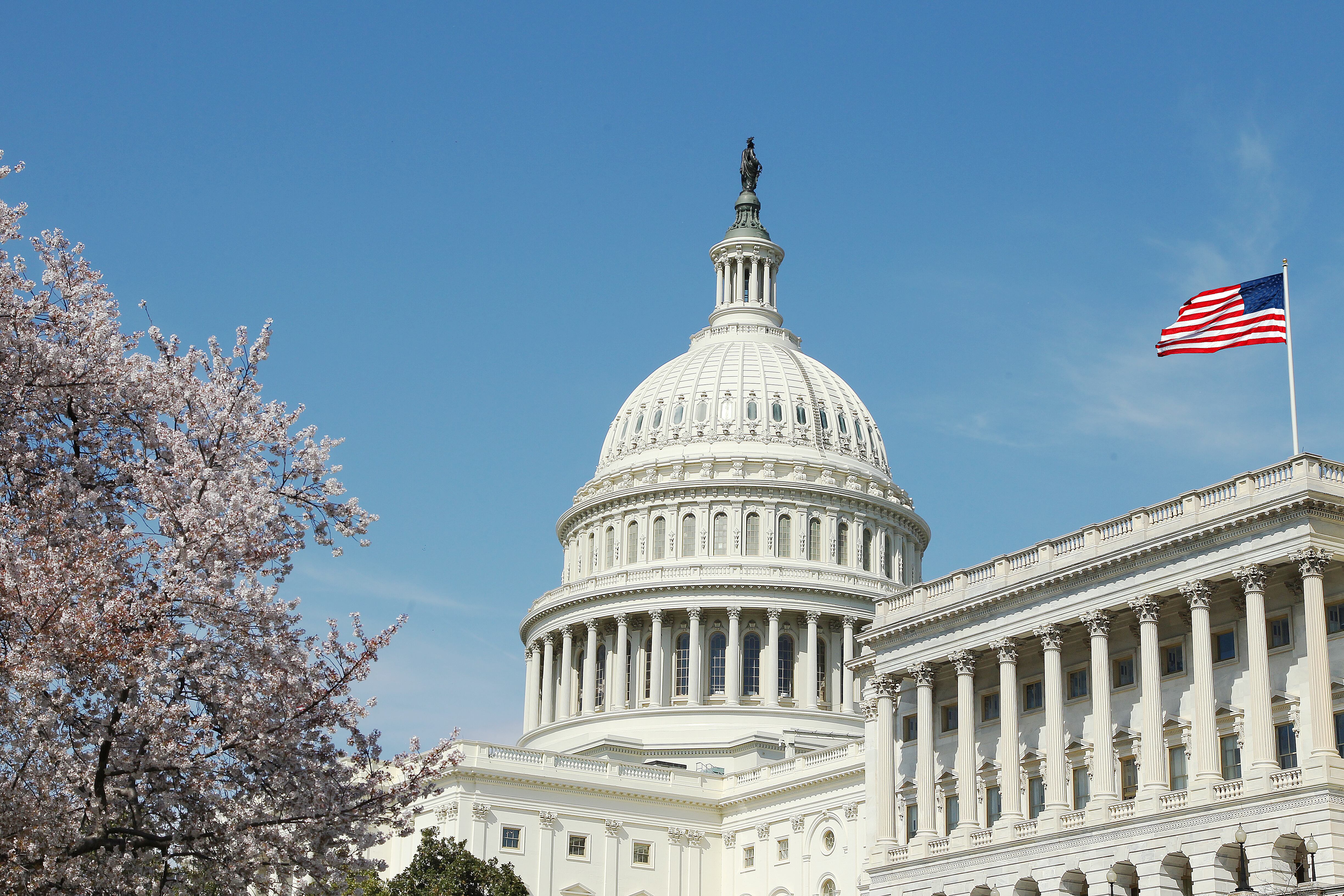
Retired Maj. David Grusch's highly anticipated testimony before a House Oversight subcommittee was Congress' latest foray into the world of UAPs — or “unidentified aerial phenomena," which is the official term the U.S. government uses instead of UFOs. While the study of mysterious aircraft or objects often evokes talk of aliens and “little green men,” Democrats and Republicans in recent years have pushed for more research as a national security matter due to concerns that sightings observed by pilots may be tied to U.S. adversaries.
Grusch said he was asked in 2019 by the head of a government task force on UAPs to identify all highly classified programs relating to the task force's mission. At the time, Grusch was detailed to the National Reconnaissance Office, the agency that operates U.S. spy satellites.
“I was informed in the course of my official duties of a multi-decade UAP crash retrieval and reverse engineering program to which I was denied access,” he said.
Asked whether the U.S. government had information about extraterrestrial life, Grusch said the U.S. likely has been aware of “non-human” activity since the 1930s.
The Pentagon has denied Grusch's claims of a coverup. In a statement, Defense Department spokeswoman Sue Gough said investigators have not discovered “any verifiable information to substantiate claims that any programs regarding the possession or reverse-engineering of extraterrestrial materials have existed in the past or exist currently.” The statement did not address UFOs that are not suspected of being extraterrestrial objects.
Grusch says he became a government whistleblower after his discovery and has faced retaliation for coming forward. He declined to be more specific about the retaliatory tactics, citing an ongoing investigation.
“It was very brutal and very unfortunate, some of the tactics they used to hurt me both professionally and personally,” he said.
Rep. Glenn Grothman, R-Wis., chaired the panel's hearing and joked to a packed audience, “Welcome to the most exciting subcommittee in Congress this week.”
There was bipartisan interest in Grusch’s claims and a more sober tone than other recent hearings featuring whistleblowers celebrated by Republicans and criticized by Democrats. Lawmakers in both parties asked Grusch about his study of UFOs and the consequences he faced and how they could find out more about the government’s UAP programs.
“I take it that you’re arguing what we need is real transparency and reporting systems so we can get some clarity on what’s going on out there,” said Rep. Jamie Raskin, D-Md.
Some lawmakers criticized the Pentagon for not providing more details in a classified briefing or releasing images that could be shown to the public. In previous hearings, Pentagon officials showed a video taken from an F-18 military plane that showed an image of one balloon-like shape.
Pentagon officials in December said they had received “several hundreds” of new reports since launching a renewed effort to investigate reports of UFOs.
At that point, “we have not seen anything, and we’re still very early on, that would lead us to believe that any of the objects that we have seen are of alien origin,” said Ronald Moultrie, the undersecretary of defense for intelligence and security. “Any unauthorized system in our airspace we deem as a threat to safety.”
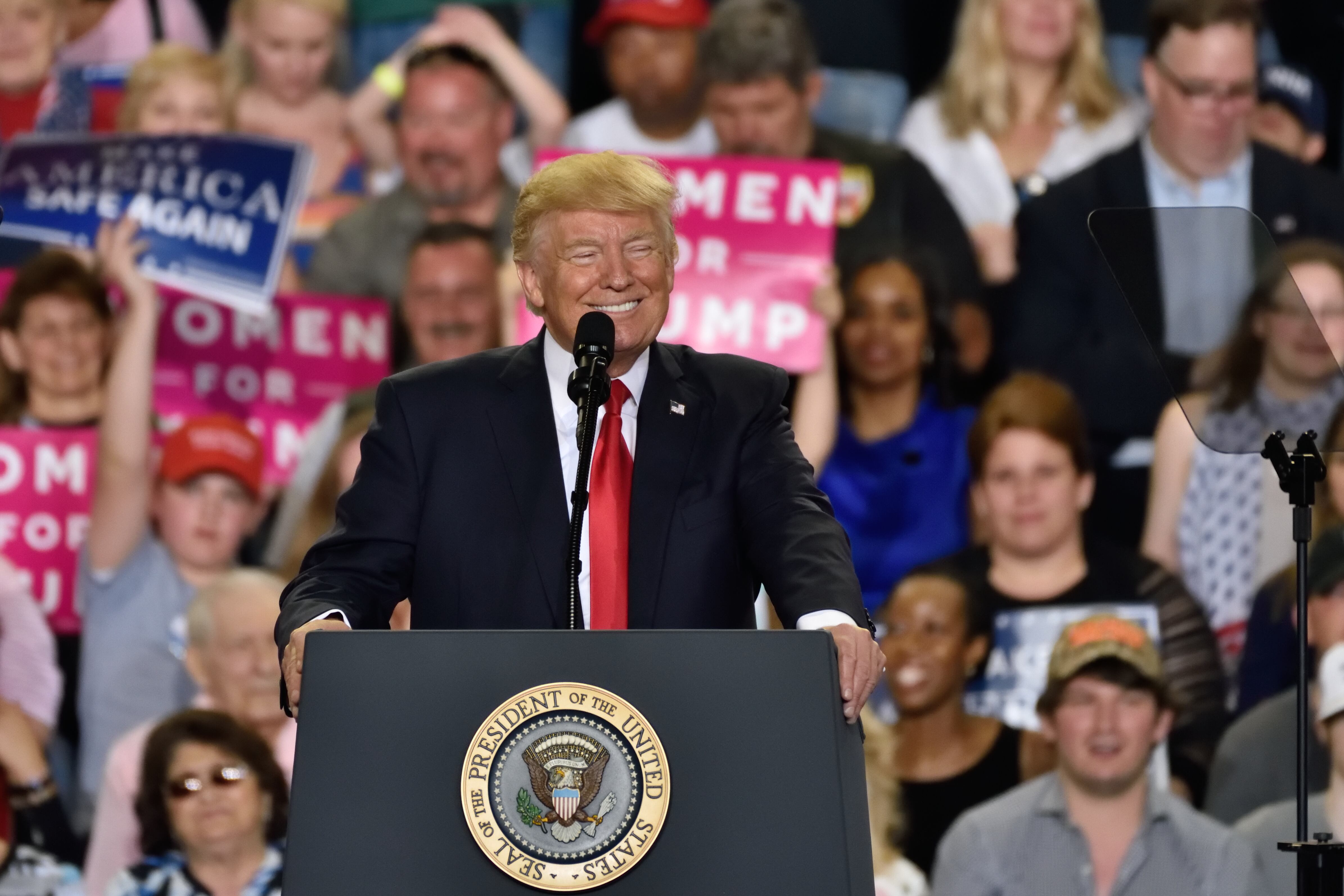
A planned summit between North Korean leader Kim Jong Un and President Donald Trump is in jeopardy. In a statement this morning, North Korea's foreign minister said the country has no interest in a "one-sided discussion" on its nuclear program. On Tuesday, North Korea also canceled planned talks with South Korea.
Starting today, Amazon Prime members will receive exclusive discounts at Whole Foods. Customers will now get 10% off hundreds of sale items in stores and will also get access to rotating weekly specials. The perks are only available in Florida as of today but will be rolled out nationwide starting this summer.
Chris Carter and James Peisker, co-founders of Porter Road, join us to talk about their expansion into the digital landscape. Porter Road is a whole animal butcher shop based in Nashville, but the founders recently decided to take their business online.
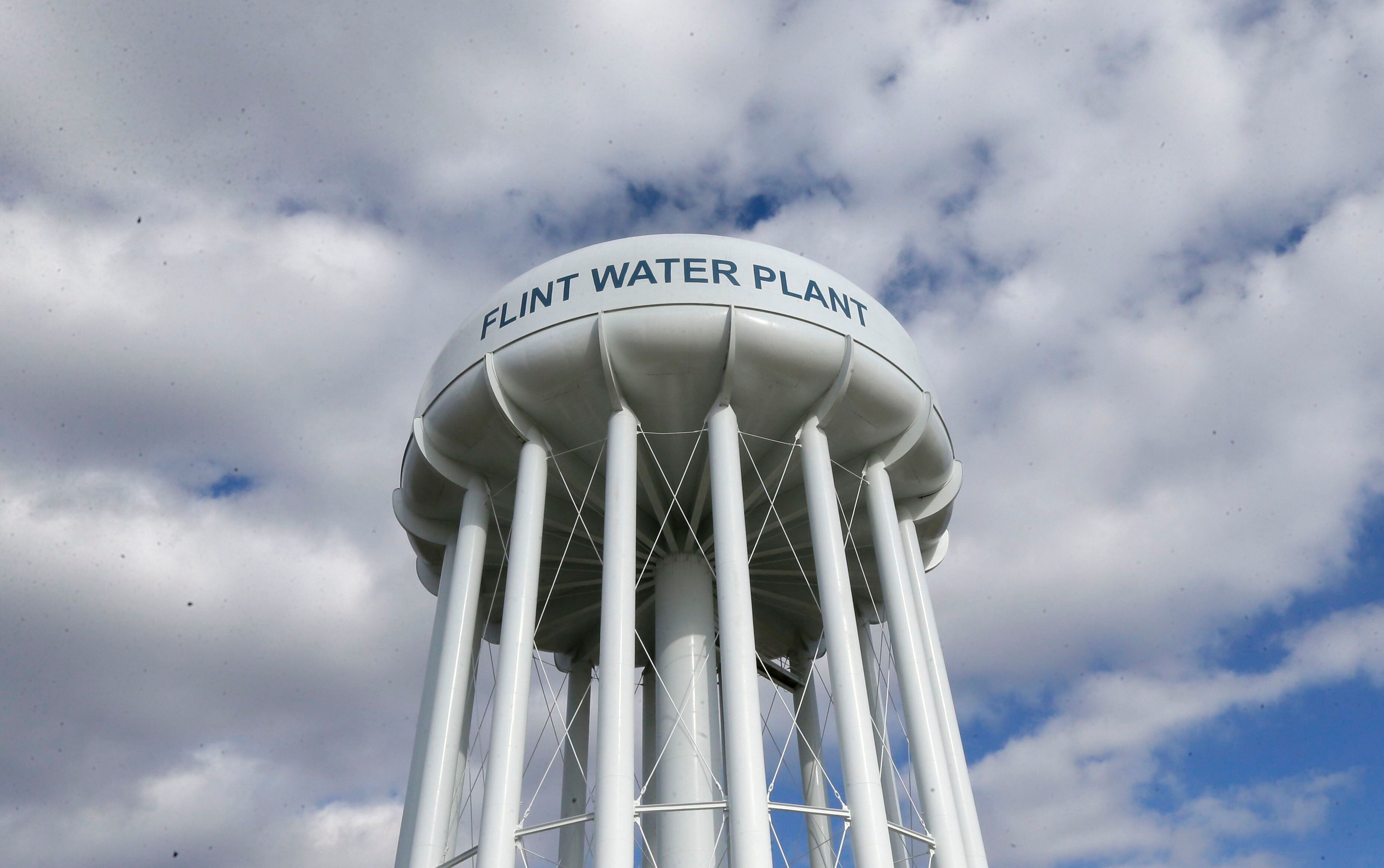
Mayor Karen Weaver is exploring legal action against the state of Michigan for its decision to stop providing the city with free bottled water three years after unhealthy amounts of lead were discovered in Flint's water supplies. "When you had the biggest hand in poisoning a city and making this crisis happen, you ought to have some moral, some ethical responsibility to seeing us through this crisis," said Weaver.
The Seattle City Council passed a new law that will require companies making more than $20 million a year to pay a 'head tax.' Amazon and other Seattle-based companies will pay a tax of 14 cents per employee per hour worked, which comes out to roughly $275 per employee each year. The tax will raise money for affordable housing since home prices have risen recently in Seattle. In response, Amazon's vice president said this move "forces us to question our growth here." A Starbucks exec criticized the city for spending "without reforming and fail[ing] without accountability."
A number of top Tesla executives have left the company in the past few months. Aaron Cole, managing editor at Motor Authority, joins us to discuss whether investors should be worried that this 'drain brain' will have negative consequences for the electric carmaker. The company is ramping up production to meet its ambitious Model 3 targets.
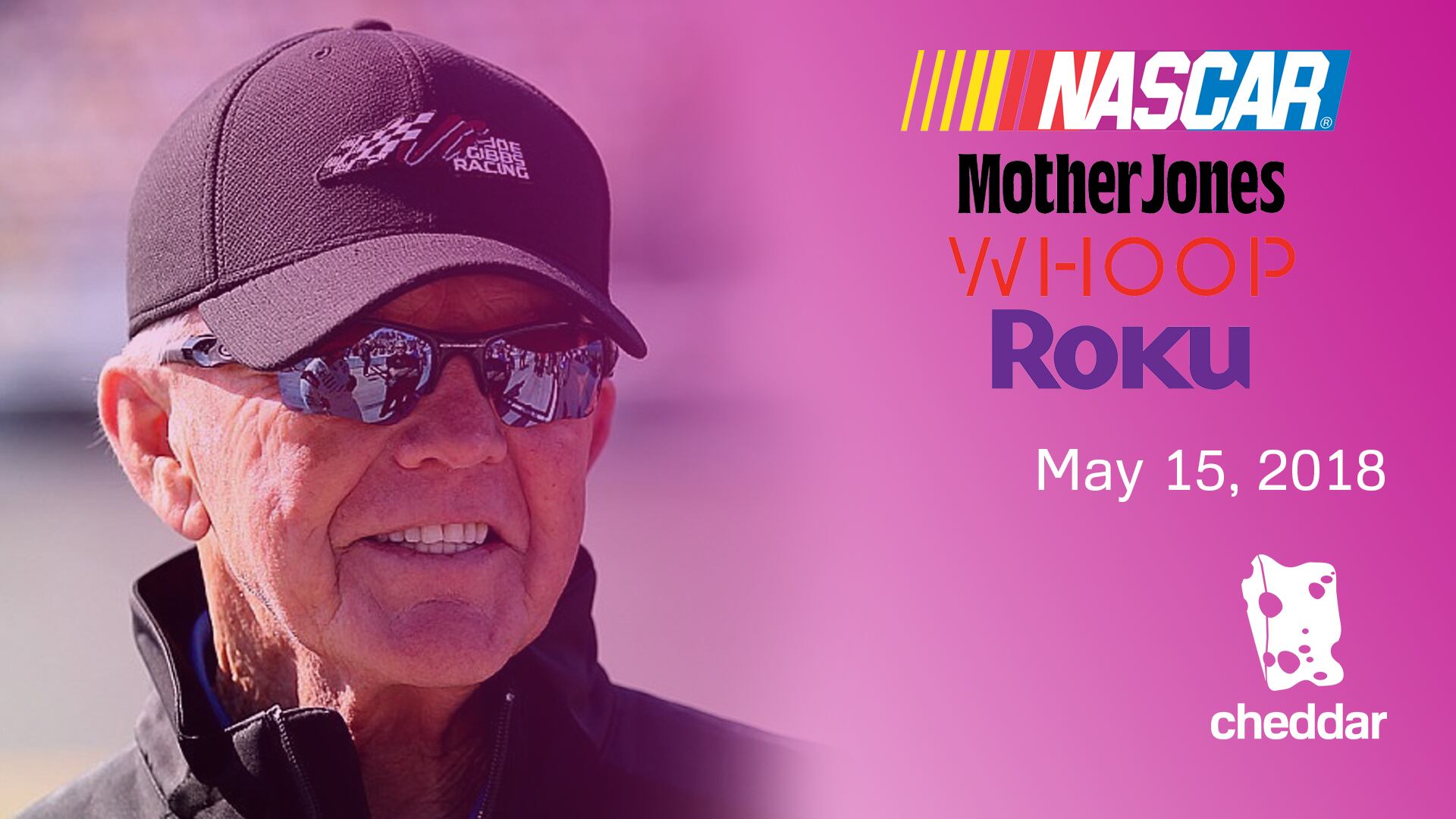
Cheddar's Brad Smith speaks with Joe Gibbs, Pro Football Hall of Famer and owner of Joe Gibbs Racing, at a special event outside the New York Stock Exchange celebrating Stanley Black & Decker's 175th anniversary. Gibbs talks about how NASCAR is focusing on expanding its digital outreach to reach a younger audience. He also weighs in on the Supreme Court's decision to reverse a ban on sports gambling.
The Supreme Court decision to effectively lift the ban on sports betting in most of the U.S. will create a vast, competitive market for online bookmakers, says Jason Robins, the CEO and co-founder of the fantasy sports site DraftKings. He has positioned his company to quickly take advantage of the opportunity to get into the legal sports gambling business.
The tax overhaul and President Trump's tough stance on the world stage has left the Republican party in a strong position to hold on to its majority through the midterm elections in November, says the former press secretary to Vice President Mike Pence.
The Daily Show host says the dinner is "weird" because it creates an environment where "the press, and the people the press are reporting on, are all chummy-chummy." But he'll step up and take the mic...if President Trump personally asked him to host the annual dinner.
Richard Painter, a former ethics lawyer in the George W. Bush administration, is running for U.S. Senate in Minnesota as a Democrat because he says the Republican party has been hijacked by President Trump and his supporters. "No one is allowed to run for elected office at the federal level who does not really swear allegiance to Donald Trump," Painter says.
The coffee chain announced anyone who walks into a store can use the bathrooms, even if they didn't make a purchase. This is "the absolute right thing" to do, says communication and reputation strategist Deirdre Latour. Starbucks came under fire last month after arresting two black men accused of "loitering" at one of its stores.
The president laid out a plan that promised to bring down the costs of drugs. But it could amount to just minimal changes that don't end up pressuring drug makers enough to bring down prices, says Adriel Bettelheim, health care editor at Politico.
The state became the first in the U.S. to require almost all new homes to have solar panels, part of an effort to get half the state's electricity from renewable sources by 2030.