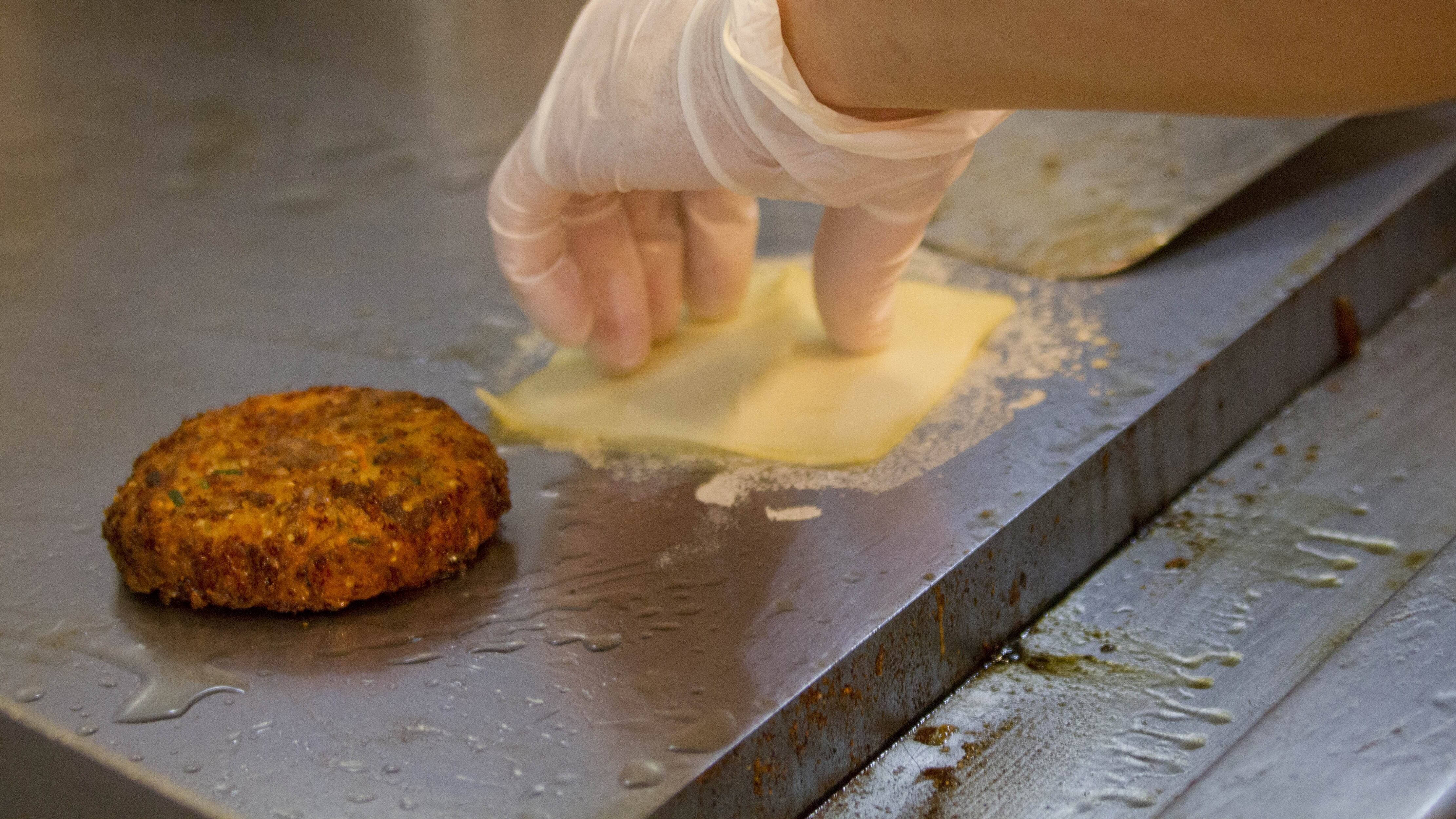
In this file photo from Tuesday, Jan. 27, 2015, a BurgerFi restaurant employee prepares to add cheese to a veggie burger as she grills an order at the Aventura, Fla., restaurant. (AP Photo/Wilfredo Lee)
Plant-based products that do not contain meat can continue to be labeled “sausages” or “burgers,” European lawmakers said Friday, when they rejected a proposal back by the meat industry to ban the terms.
In votes on issues relating to agricultural products, the European Parliament said that so-called veggie burgers, soy steaks and vegan sausages can continue to be sold as such in restaurants and shops across the union.
Europe’s largest farmers' association, Copa-Cogeca, had supported a ban, arguing that labeling vegetarian substitutes with designations bringing meat to mind was misleading for consumers.
On the opposite side of the debate, a group of 13 organizations including Greenpeace and WWF urged lawmakers to reject the proposed amendments, arguing that a ban would have not only exposed the EU “to ridicule," but also damaged its environmental credibility.
They said promoting a shift toward more plant-based diet is in line with the EU Commission's ambition to tackle global warming. Losing the ability to use the terms steak or sausage might make those plant-based products more obscure for consumers.
After the vote, the European Consumer Organization, an umbrella group bringing together consumers' associations, praised the MEPs for their “common sense."
“Consumers are in no way confused by a soy steak or chickpea-based sausage, so long as it is clearly labeled as vegetarian or vegan," the group said in a statement. “Terms such as ‘burger’ or ‘steak’ on plant-based items simply make it much easier for consumers to know how to integrate these products within a meal."
Together with Greenpeace, the group regretted that lawmakers accepted further restrictions on the naming of alternative products containing no dairy. Terms like ‘almond milk’ and ‘soy yogurt’ are already banned in Europe after the bloc's top court ruled in 2017 that purely plant-based products can't be marketed using terms such as milk, butter or cheese, which are reserved for animal products.
While it was a volatile week in tech as Meta experienced the biggest one-day drop in the history of the U.S. stock market, industry giant Amazon reported 40 percent growth — largely on the strength of the cloud. Dan Ives, managing director of equity research at Wedbush Securities, joined Cheddar News to break down how the e-commerce company stock managed to pop despite headwinds against its core retail business. "It's all about cloud because of sum of the parts, you could argue, amazon could be $3,500/$4,000 stock just based on cloud," he said. Ives also addressed the apparent the differing impact of Apple iOS changes on Facebook and Snapchat.
Following Ford's earnings miss, the stock price dropped despite a bullish outlook from the auto giant. Karl Brauer, an executive analyst with ISeeCars.com, joined Cheddar to break down why investors may not be sold on the carmaker because of the ongoing factor of supply constraints. "The product is not an issue. There's really good product coming from them, including the electric vehicle side, and the demand is not an issue. There's plenty of demand, but nobody really has a solid grasp on when we're going to get past the supply chain issue," said Brauer.
Image-sharing app Pinterest reported big beats on its Q4 earnings for the top and bottom lines. The social platform surprised investors after seeing a decline in users while earnings and revenue were much higher than expected.
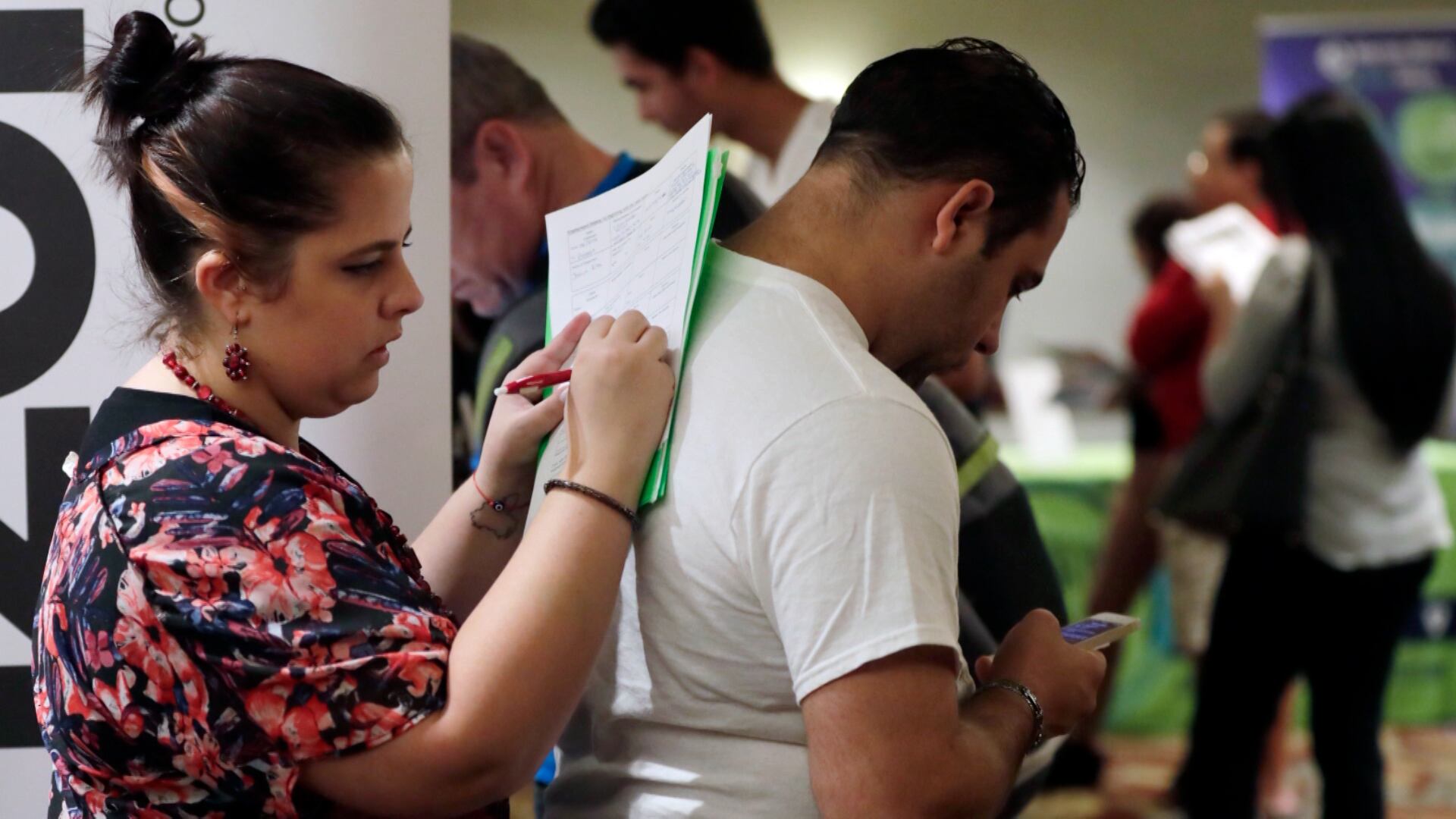
The Labor Department's January jobs report showed 467,000 jobs were added, compared to the 150,000 that were projected, a sign that employment is continuign to return to pre-pandemic levels. Lindsey Piegza, chief economist at investment bank Stifel, joined Cheddar to break down the report, noting the big gains but adding a note of caution. "Remember, even with this morning's stellar report, we're still millions below that level that we had reached prior to the onset of COVID-19," she said." Yes, we are recapturing jobs. We still have further ground that needs to be made before we can talk about reaching that previous peak." Piegza also discussed the role of the Federal Reserve going forward as the employment figures turn more positive.