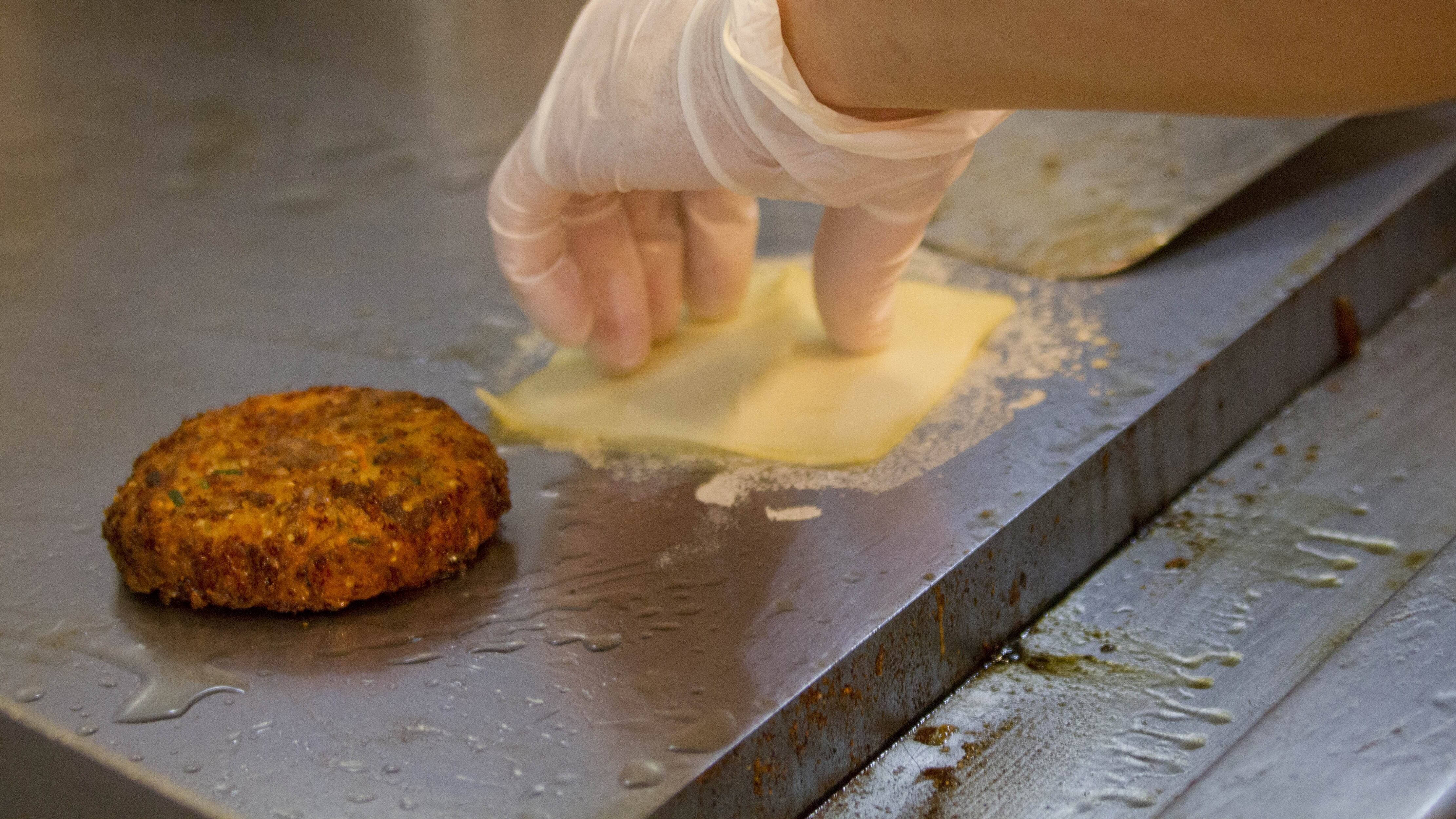
Plant-based products that do not contain meat can continue to be labeled “sausages” or “burgers,” European lawmakers said Friday, when they rejected a proposal back by the meat industry to ban the terms.

In votes on issues relating to agricultural products, the European Parliament said that so-called veggie burgers, soy steaks and vegan sausages can continue to be sold as such in restaurants and shops across the union.

Europe’s largest farmers' association, Copa-Cogeca, had supported a ban, arguing that labeling vegetarian substitutes with designations bringing meat to mind was misleading for consumers.

On the opposite side of the debate, a group of 13 organizations including Greenpeace and WWF urged lawmakers to reject the proposed amendments, arguing that a ban would have not only exposed the EU “to ridicule," but also damaged its environmental credibility.

They said promoting a shift toward more plant-based diet is in line with the EU Commission's ambition to tackle global warming. Losing the ability to use the terms steak or sausage might make those plant-based products more obscure for consumers.

After the vote, the European Consumer Organization, an umbrella group bringing together consumers' associations, praised the MEPs for their “common sense."

“Consumers are in no way confused by a soy steak or chickpea-based sausage, so long as it is clearly labeled as vegetarian or vegan," the group said in a statement. “Terms such as ‘burger’ or ‘steak’ on plant-based items simply make it much easier for consumers to know how to integrate these products within a meal."

Together with Greenpeace, the group regretted that lawmakers accepted further restrictions on the naming of alternative products containing no dairy. Terms like ‘almond milk’ and ‘soy yogurt’ are already banned in Europe after the bloc's top court ruled in 2017 that purely plant-based products can't be marketed using terms such as milk, butter or cheese, which are reserved for animal products.


Share:
More In Business
Snap's Gloomy Forecast May Be a Unique Case Among Social Media Platforms
Snap stock saw the worst day ever after a large drop in price on Tuesday following warnings of revenue and earnings slowdown. This trend caught on with other social and digital media stocks due to fears that brands heavily relying on advertising get hit with the same inflation struggles. However, some analysts note that Snap may be a unique case due to a rapid, possibly unsustainable, expansion leading to the current grim forecast.
Deep Dive Into Virtual and Augmented Reality Headsets
From Meta’s Oculus to PlayStation’s VR headsets, Cheddar News anchors Ken Bufa and Kristen Scholer cover the potential for this tech in Cheddar Connected as more heavy hitters like Apple look to take the stage.
AAA Predicts Pre-Pandemic Levels of Travel This Memorial Day Weekend
As the holiday weekend arrives, travelers are bracing themselves for higher gas prices amid the inflation surge, but Robert Sinclair, AAA spokesperson, joined Cheddar News to discuss how the higher costs likely won't hold people back this Memorial Day Weekend. “We're near pre-pandemic levels. Nearly 40 million people are traveling. And of that total, about 35 million will be driving to their destinations," he said.
Anja Health Raises $4.5 Million to Offer Parents Technology to Freeze Umbilical Cord's Stem Cells for Future Disease Treatment
Umbilical cord blood banking platform Anja Health raised $4.5 million dollars in a seed round led by Seven Seven Six, a venture capital firm founded by Reddit co-founder Alexis Ohanian. Anja Health offers a personalized, doctor-backed cord blood bank, which lets new parents freeze stem cells from their child's umbilical cord so they can be used to treat diseases in the future. It's a process Anja has called 'Hollywood's best-kept secret,' as celebrities like Kylie Jenner, Serena Williams, and more have all banked their umbilical cord blood. Kathryn Cross, the founder of Anja Health, joins Cheddar News' Closing Bell to discuss.
Load More