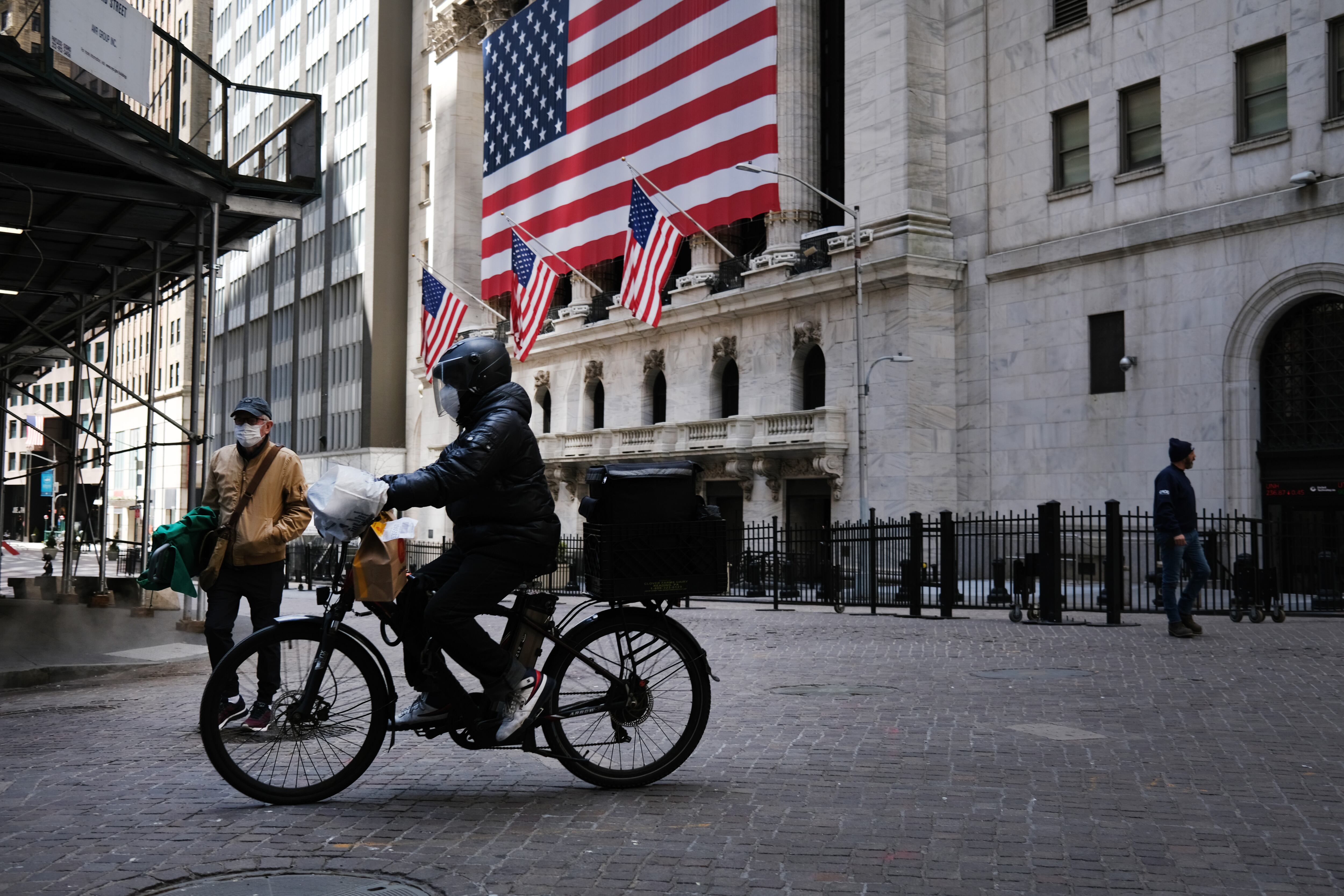
A person rides a bike down Wall Street on April 02, 2020 in New York City. Hospitals in New York City, which has been especially hard hit by the coronavirus, are facing shortages of beds, ventilators and protective equipment for medical staff. Currently, over 92,000 people in New York state have tested positive for COVID-19. (Photo by Spencer Platt/Getty Images)
By Stan Choe, Damian J. Troise, and Alex Veiga
Wall Street rallied Thursday for its first gain in three days after a sudden surge in oil prices revived beaten-down energy stocks. But, as has so often been the case in this year's market sell-off, it took a few U-turns to get there.
The price of crude spurted as much as 30% higher after President Donald Trump said he expects Russia and Saudi Arabia to back away from their price war, which erupted last month and helped drag U.S. oil to its lowest price in 18 years. The surge lifted energy stocks enough to pull the S&P 500 higher and outshine another dismal report showing that millions of Americans are joining the unemployment queue by the week.
But stocks and oil quickly pared much of their initial gains and then see-sawed through the day as markets weighed how seriously to take Trump’s statement, particularly after the Kremlin reportedly disputed part of his tweet, before climbing again to the close.
By the end of trading, the S&P 500 rose 2.3%, while U.S. oil was up $5.01, or 24.7%, after settling at $25.32 per barrel.
“Investors are just grasping at a positive straw here on a particular day," said Phil Orlando, chief equity market strategist at Federated Hermes. “The collapse in the energy market is creating a significant amount of additional pressure on the U.S. economy, not nearly as significant as the coronavirus, but significant nonetheless.”
The market’s focus has been on oil not just because its plunge to below $20 earlier this week from $60 at the start of the year has caused stocks in the industry to more than halve. Another worry is that heavily indebted oil companies will also be forced to default, which could cause more damage in the bond market where the total amount of debt has exploded.
Producers have been continuing to pull oil from the ground to maintain their market share, even as demand for energy cratered because of widespread stay-at-home orders and other economy-damaging restrictions caused by the coronavirus outbreak. Trump tweeted Thursday that he hopes and expects cuts in production are coming after talking with Saudi Crown Prince Mohammed bin Salman.
That helped energy stocks in the S&P 500 rally 9.1%, by far the biggest gain among the 11 sectors that make up the index. Schlumberger jumped 10.2%, EOG Resources rose 10.7% and Occidental Petroleum leaped 18.9%, though all three remain down between 50% and 70% for the year.
“This is a knee-jerk reaction more than anything else,” said Willie Delwiche, investment strategist at Baird. “I don’t think it changes much of the bigger picture for what we’re going through in terms of economic uncertainty and trying to wrap our minds around the extent of the weakness we’re going to see.”
The S&P 500 rose 56.40 to 2,526.90. The Dow Jones Industrial Average gained 469.93, or 2.2%, to 21,413.44, and the Nasdaq rose 126.73, or 1.7%, to 7,487.31.
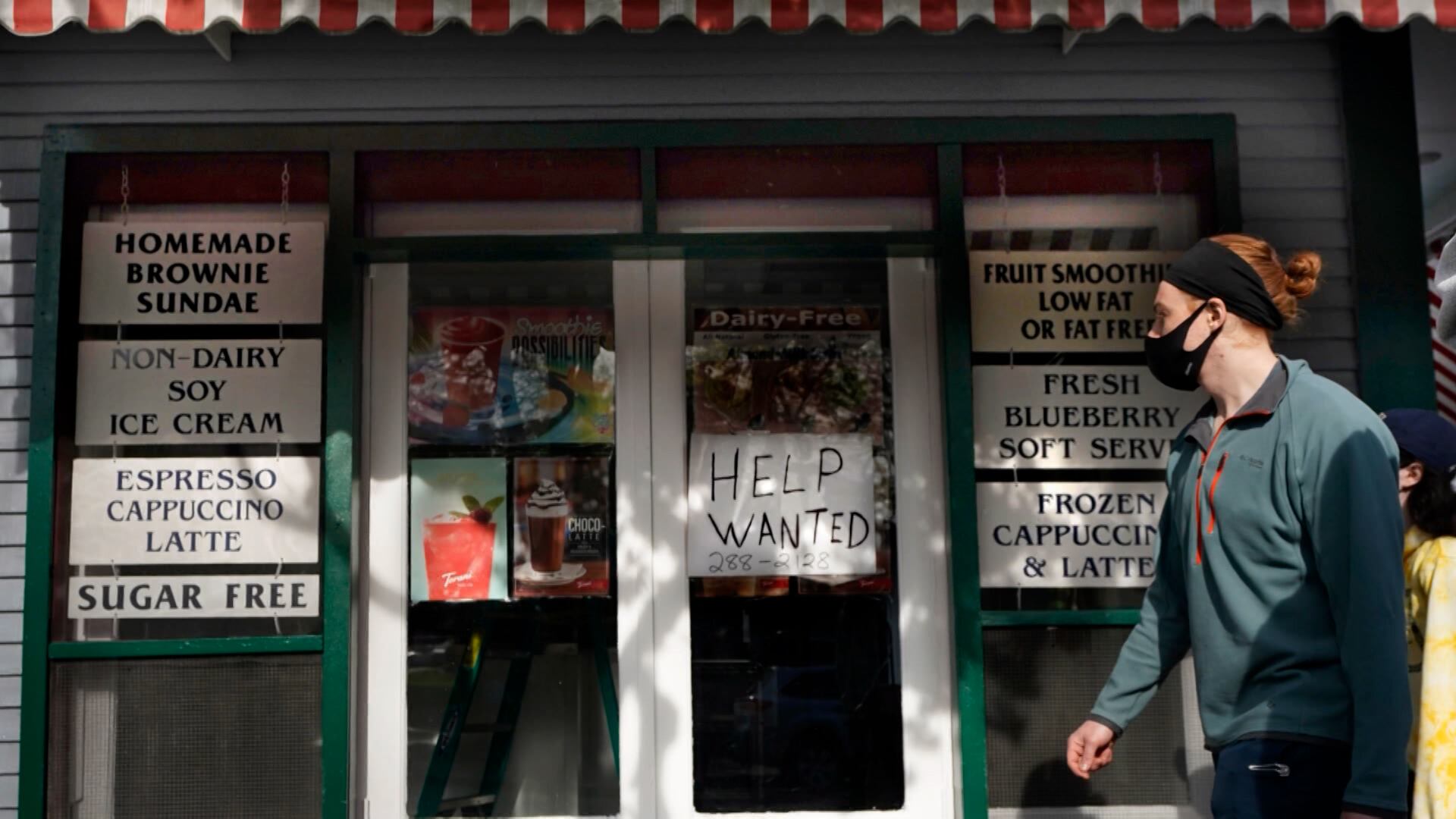
The S&P 500 was down as much as 0.6% earlier Thursday after the U.S. government reported that more than 6.6 million Americans applied for unemployment benefits last week. That’s double the prior week’s number, which itself was nearly five times the prior record set in 1982.
Roughly one of every 16 Americans in the workforce has applied for unemployment benefits in the last two weeks, and economists expect the number only to rise further. That has many investors bracing for what may be the worst recession of their lifetimes.
The number of confirmed cases worldwide has topped 1 million, led by the United States with more than 236,000, according to a tally by Johns Hopkins University.
For most people, the coronavirus causes mild or moderate symptoms, such as fever and cough that clear up in two to three weeks. For some, especially older adults and people with existing health problems, it can cause more severe illness, including pneumonia, and death.
More than 51,000 have died, but over 208,000 have recovered.
Many investors expect markets to remain incredibly volatile until the number of new infections peaks, Only that can clear the uncertainty about how bad the upcoming downturn will be and how long it will last.
The S&P 500 is still down nearly 22% for 2020 so far, and investors are preparing for companies to soon begin reporting weaker profits from year-ago levels. Earnings reporting season for the first quarter kicks off in earnest in two weeks.
“The duration and impact of this virus remains unknown and volatility will remain the norm and not the exception,” said Terry Sandven, chief equity strategist at U.S. Bank Wealth Management.
“It’s hard to envision the market moving meaningfully higher until you get some visibility of where earnings are going to go,” he said.
To help cushion the blow, Congress last week agreed on a $2.2 trillion economic aid package and the Federal Reserve promised to buy as many Treasurys as needed to keep credit markets running smoothly.
The Fed’s moves, in particular, have helped improve trading in markets that provide lending to governments, hospitals, companies and other vital areas of the economy, investors say.
Stocks closed lower on Friday as investors continue to worry over rate hikes. John Lynch, CIO of Comerica Wealth Management, joins Cheddar News' Closing Bell, where he says value is back in play with investors. Lynch also believes the market has overreacted to the latest Fed minutes, suggesting a bounce-back at some point.
Private equity firms in 2021 spent $401.71 billion in U.S. tech investments — doubling 2020's level of $196.34 billion. As tech becomes increasingly interwoven into our lives amid the pandemic, investors grow bullish on the sector, especially software-as-a-service companies. How will 2022 stack up to 2021, and is there potential for parts of the tech sector to sink this year? John Jannarone, Editor in Chief at IPO-Edge, joins Cheddar News' Closing Bell to discuss 2021's record year of deals, how potential interest rate hikes will impact tech investments in 2022, the fastest-growing IPOs, and more.
Bed Bath & Beyond delivered disappointing fiscal third-quarter results for 2022. Shares initially dove more than 9% in premarket trading on the news but finished the day up nearly 8%. Bed Bath & Beyond has been a meme-stock target for online investors in the past -- so was meme-stock mania a factor in the recent stock movement for the company? Jaime Rogozinski, the founder of the subreddit WallStreetBets, joins Cheddar News' Closing Bell for more, as his forum helped spark the meme stock phenomena. He also discussed some decentralized finance services and trends for the retail investor to watch for in 2022.
College athletes scored big in 2021 when they were finally allowed to begin earning money based off of their name, image, and likeness, known as NIL. But how can young athletes best manage their money so they can set themselves up for years of success? Nicole Pullen Ross, Head of Goldman Sachs Sports and Entertainment Solutions, joins Cheddar News' Closing Bell to discuss why financial management for college athletes is important, common pitfalls they could run into, and more.
December's jobs report was weaker than expected: the economy only added 199,000 nonfarm payrolls compared to an estimate of 422,000. However, the unemployment rate hit a new pandemic-era low of 3.9%, beating expectations. One thing to consider is the fact that the impact of the COVID-19 omicron variant is not factored into these results as the read is taken around the middle of the month. So — how might the variant impact job reports over the next few months? Mark Zandi, Chief Economist at Moody's Analytics, joins Cheddar News' Closing Bell to discuss December's jobs numbers, his 2022 labor market outlook, how COVID-19 will continue to impact the labor market, and more.
Digital medical care provider Pear Therapeutics rang the closing bell on the Nasdaq Friday and President and CEO Dr. Corey McCann, joined Cheddar to talk about how the company plans to grow the business of software-based therapeutics and how the first FDA authorized prescription digital therapeutics company will go about treating illnesses like insomnia and addiction. "These really are pieces of software. In many cases, they're apps and in the cases of our addiction products, these are based on something called cognitive behavioral therapy or CBT," he said. "These products change the patient's brain circuitry to help them be abstinent, to help them stay in treatment, and that's exactly what we see in randomized clinical trials and that's what we see in the real world." He also addressed the ongoing mental health crises brought on by the pandemic. **copy updated to remove IPO information as Pear Therapeutics went public in December**
Gamestop shares were up on The Wall Street Journal report that the video game retail company plans to enter the NFT and crypto space. Adam Hollander, the founder of Hungry Wolves NFT, joined Cheddar to break down how it could be a lifeline for the struggling meme stock darling. "They're not resigning themselves to becoming the next Blockbuster story, and so while people may not be buying as many video games in a retail environment anymore, NFTs, in particular, people are starting to expect more gaming utility on the backend — at least for a variety of projects — and I personally think its a very smart move for them to do this," Hollander told Cheddar.
On Saturday, New York will join neighboring New Jersey and Connecticut in authorizing mobile sports betting. Matt Kalish, president and co-founder of Draftkings North America, joined Cheddar to talk about the landmark change that is estimated to rake in $500 million in annual tax revenue on a potential billion-dollar market. Kalish also addressed the possibility that legalized sports betting in the Empire State could cannibalize his company's revenues in the bordering states. "It's pretty inconvenient, you know, to go across the border to make a bet. And people were doing it, but I think it really stifled a lot of the opportunity," he said. "So while there's some of that going on, I think really a tremendous amount, like a giant percent, of New York will be very incremental."
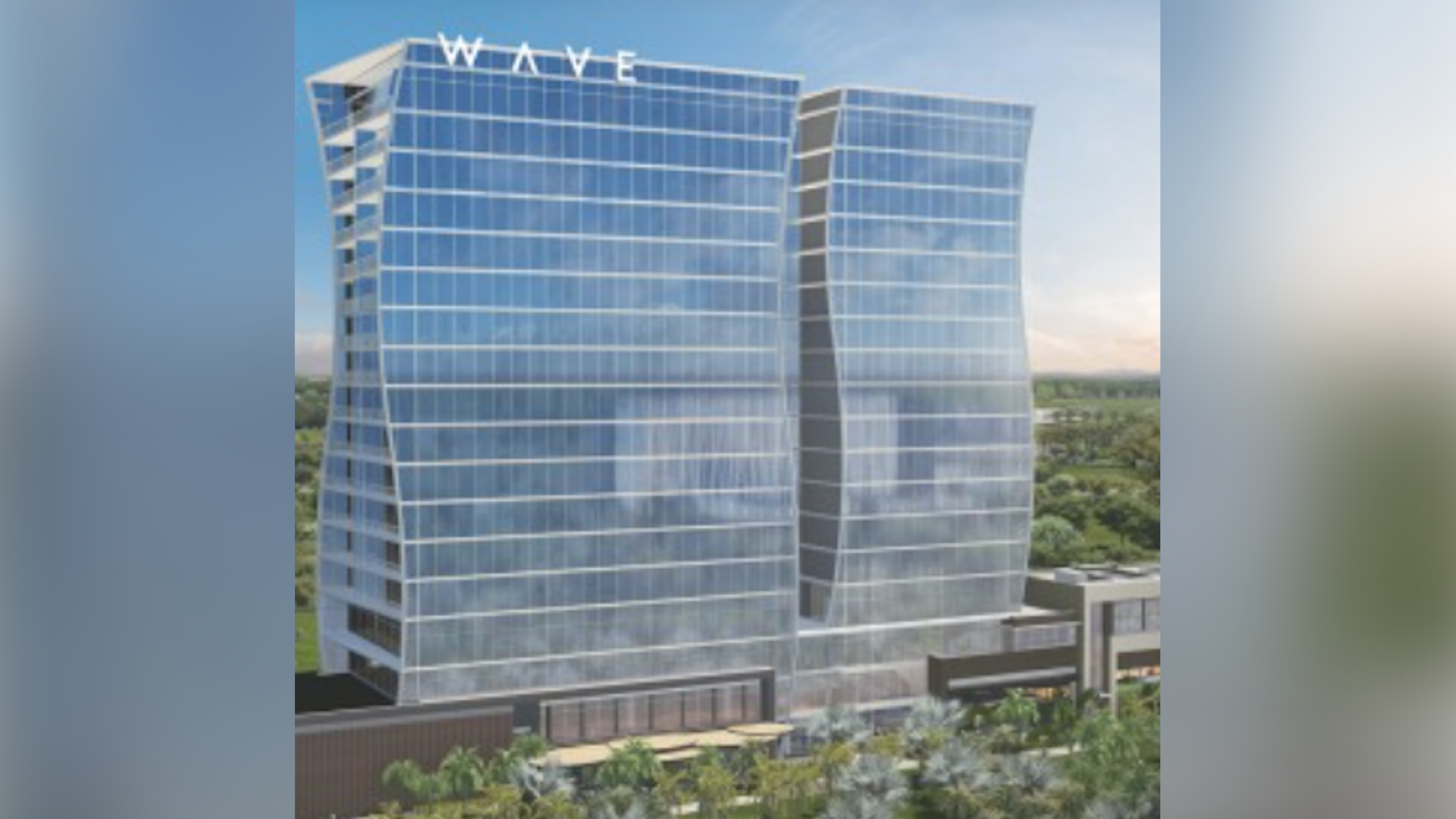
James Tattersall, director of sales and marketing for Lake Nona Wave Hotel, talks about the hotel's initiatives to foster diversity and how these amenities champion inclusivity in the Orlando area.
Desmond Howard, former NFL wide receiver and Modelo college football playoff ambassador, joins Cheddar News to talk about the Modelo sweepstakes honoring the 30th anniversary of his iconic punt return.