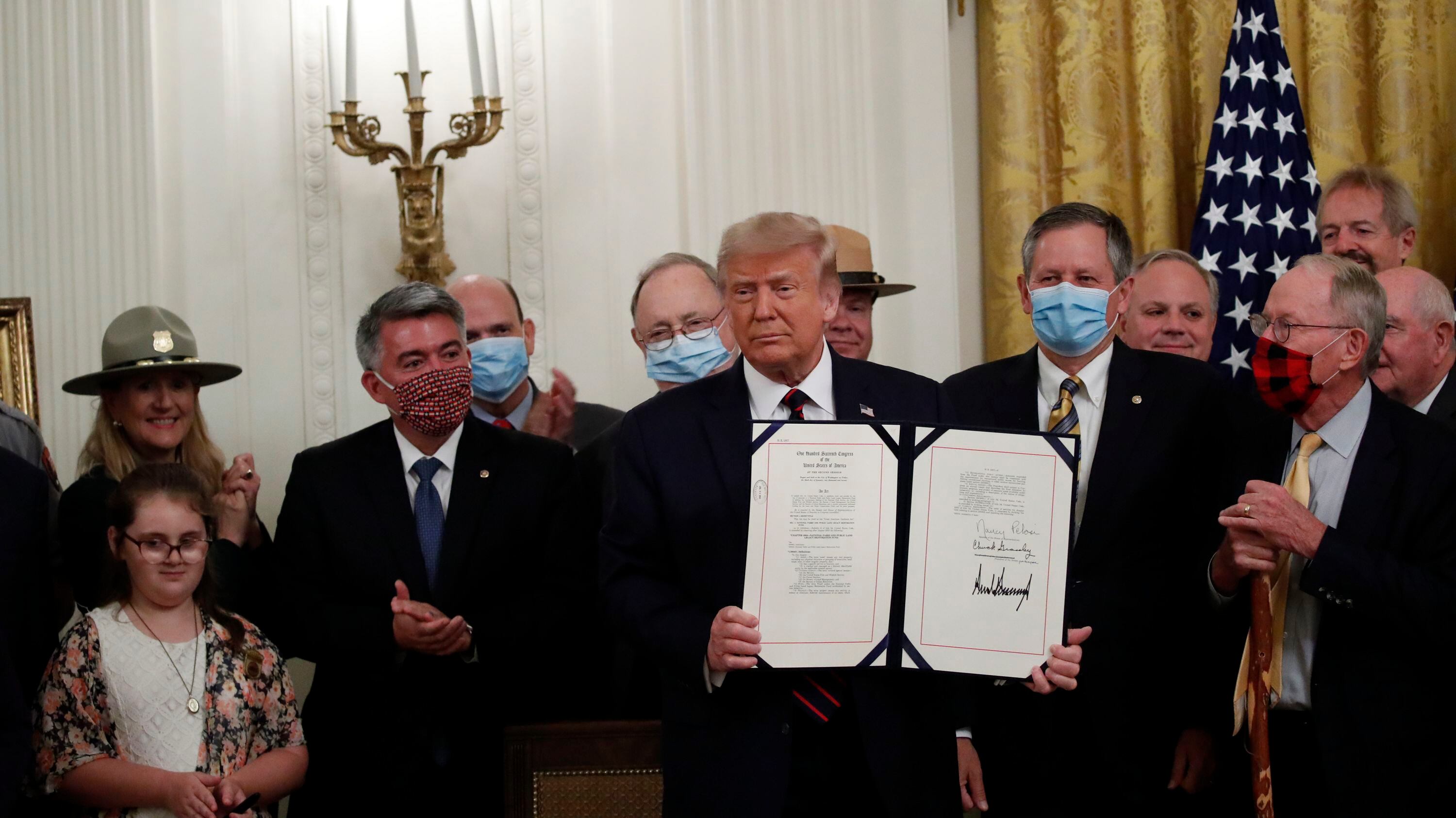
President Donald Trump poses for a photo during a signing ceremony for H.R. 1957 – "The Great American Outdoors Act," in the East Room of the White House, Tuesday, Aug. 4, 2020, in Washington. (AP Photo/Alex Brandon)
By Darlene Superville
President Donald Trump on Tuesday signed into law legislation that will devote nearly $3 billion annually to conservation projects, outdoor recreation, and maintenance of national parks and other public lands. The measure was overwhelmingly approved by Congress.
"There hasn't been anything like this since Teddy Roosevelt, I suspect," Trump said about the 26th president, who created many national parks, forests, and monuments to preserve the nation's natural resources.
Supporters say the Great American Outdoors Act is the most significant conservation legislation enacted in nearly half a century. Opponents counter that the money isn't enough to cover the estimated $20 billion maintenance backlog on federally owned lands.
The law requires full, mandatory funding of the popular Land and Water Conservation Fund and addresses the maintenance backlog facing America's national parks and public lands. The law would spend about $900 million a year — double current spending — on the conservation fund and another $1.9 billion per year on improvements at national parks, forests, wildlife refuges, and range lands.
Trump in his budgets to Congress had previously recommended slashing the amount of money allocated to the fund, but he reversed course and called for full funding in March.
Supporters say the legislation will create at least 100,000 jobs while restoring national parks and repairing trails and forest systems.
The park maintenance backlog has been a problem for decades, through Republican and Democratic administrations.
The House and the Senate cleared both bills by overwhelming bipartisan margins this summer.
Among the bills' congressional champions are Republican Sens. Cory Gardner of Colorado and Steve Daines of Montana. Both are among the Senate's most vulnerable incumbents, and each represents a state where the outdoor economy and tourism at sites such as the Rocky Mountain and Yellowstone national parks play an outsize role.
Daines and Gardner persuaded Trump to support the legislation at a White House meeting this year.
The late Rep. John Lewis, D-Ga., sponsored the original measure that passed the House and contained Senate amendments.
Ivanka Trump, the Republican president's daughter, and adviser, also supported the legislation.
President Trump talked about the beauty of the national parks on Tuesday, ticking off the names of some of them but tripping over Yosemite, one of the best known, and badly mispronouncing it twice.
"We want every American child to have access to pristine outdoor spaces, where young Americans experience the breathtaking beauty of the Grand Canyon when their eyes widen in amazement as Old Faithful burst into the sky when they gaze upon Yosemite's, Yosemite's, towering sequoias, their love of country grows stronger and they know that every American has truly a duty to preserve this wondrous inheritance," Trump said, pronouncing Yosemite's as yoh-SEH'-mytz instead of yoh-SEM'-it-eez.
The legislation's opponents, mostly Republicans, complain it would not eliminate an estimated $20 billion maintenance backlog on 640 million acres (259 million hectares) of federally owned lands. The legislation authorizes $9.5 billion for maintenance over five years.
Lawmakers from Gulf Coast states also complained that their states receive too small a share of revenue from offshore oil and gas drilling that is used to pay for the conservation fund.
___
This story has been corrected to show the area with the maintenance backlog is 640 million acres, not 640 acres.
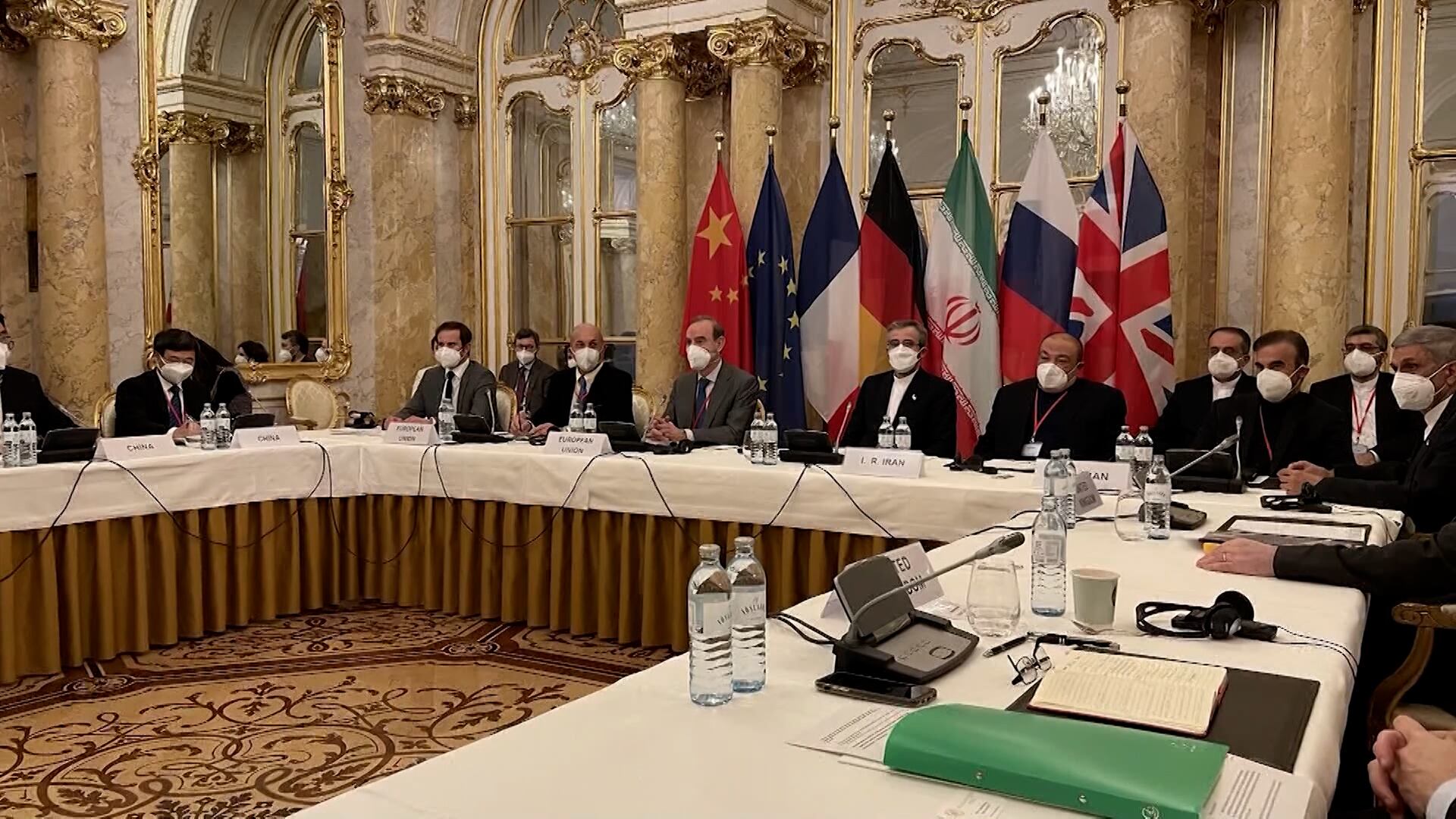
The U.S. is back in negotiations for a nuclear deal with Iran, years after former President Donald Trump withdrew the country from the Joint Comprehensive Plan of Action (JCPOA), which had been meant to curtail the Middle Eastern nation's nuclear ambitions. Former State Department senior advisor to the George W. Bush and Trump administrations, Christian Whiton, joined Cheddar News Wrap to discuss. “It appears to be very similar to the original JCPOA, which does put some constraints on Iran's nuclear program, but also has sunset provisions, including some that in the original plan were expected to take effect in 2025," he said. "And so, if we just reenter that plan, really it just buys perhaps a few years of slowing down, stopping, whatever you want to say, Iran's nuclear program."
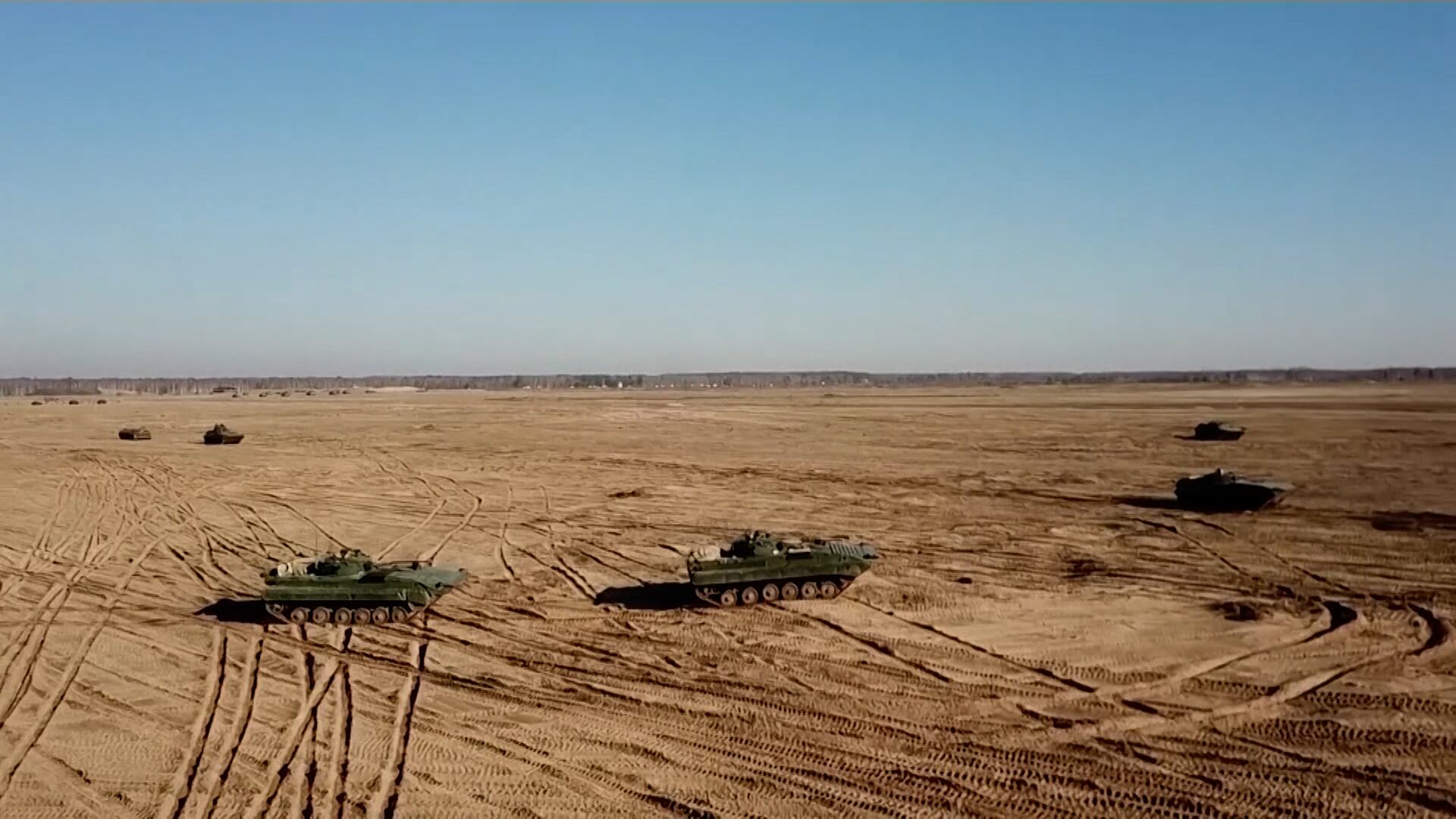
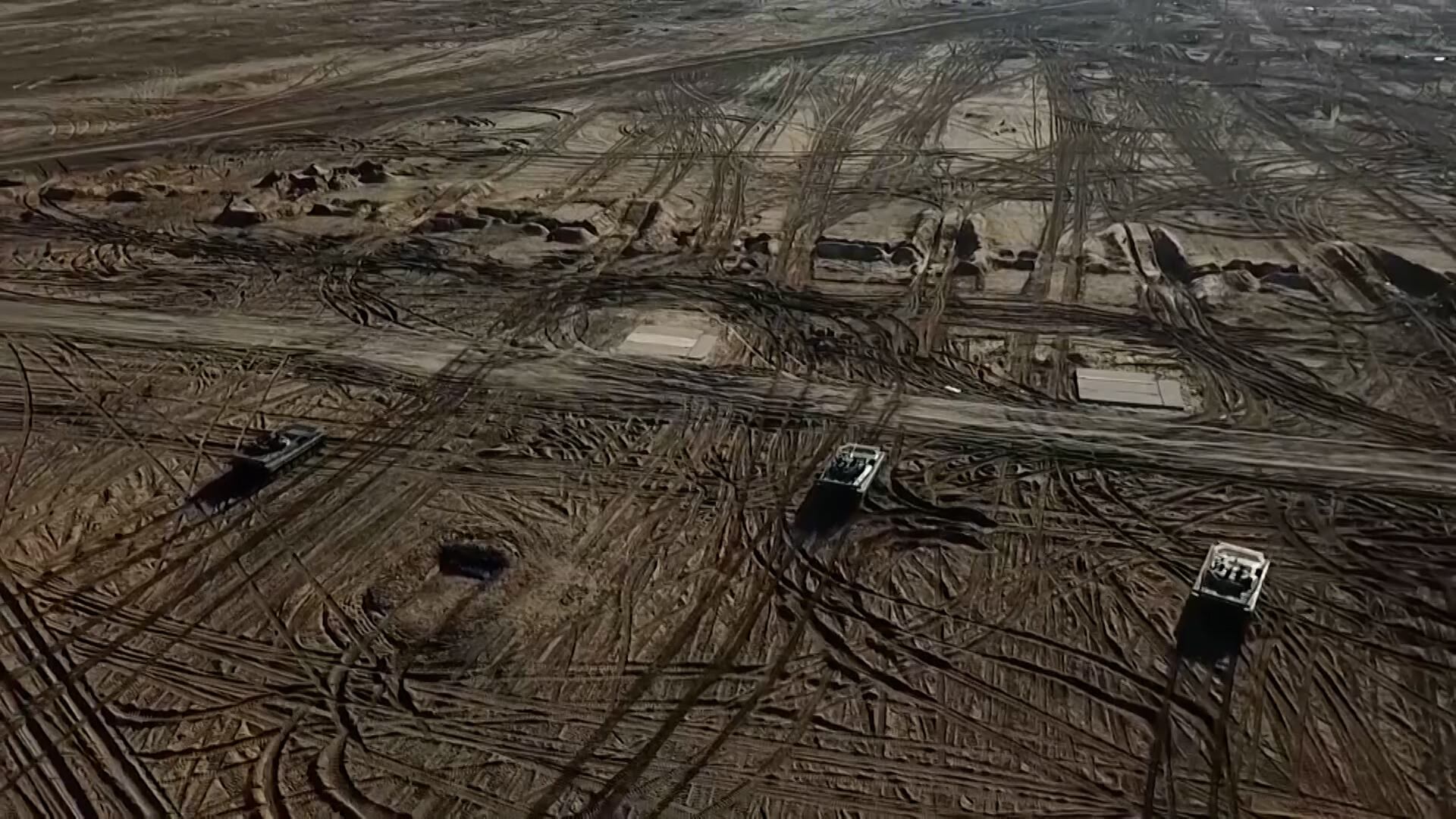
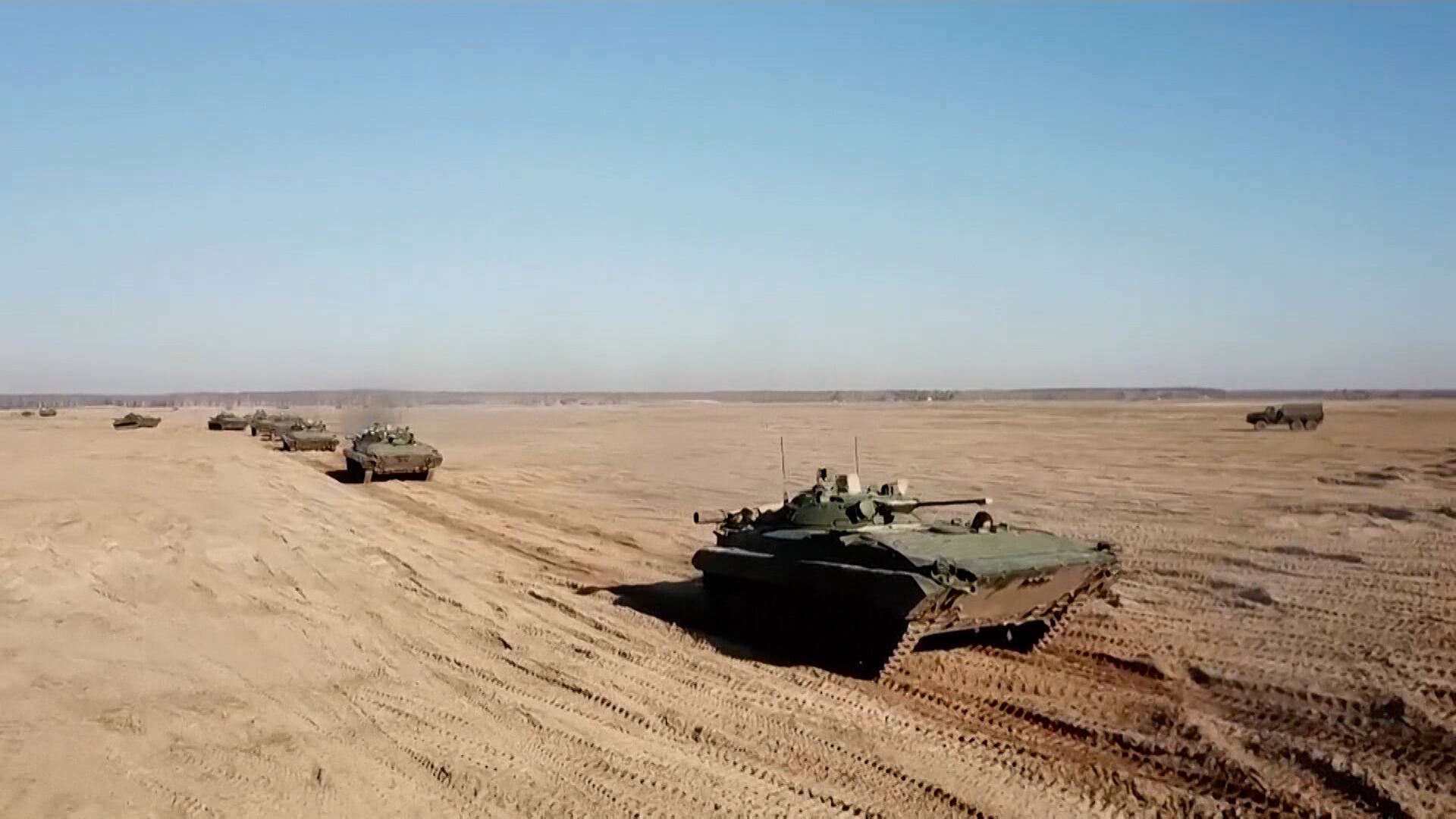
The U.S. has announced the first of what could be multiple levels of sanctions against Russia after Moscow recognized two regions of Ukraine as independent. This comes as Britain imposes sanctions on five Russian banks and two oligarchs, and Germany freezes the Nord Stream gas pipeline. Terrell Star, a foreign affairs reporter at The Atlantic Council, joins from Kyiv to discuss.
Growing tensions in Ukraine might soon be impacting consumers in the United States. With Russia on an invasion footing in the region, gas prices are predicted to go up 10 to 15 cents a gallon in the next coming weeks, according to Robert Sinclair, spokesperson for AAA. Sinclair joined Cheddar to break down what could happen even further. "We've been seeing prices go up, and there's been nothing that's happened to affect supplies," he said. "But it's something known as the fear tax where just the talk of something that might interfere with supplies leads to prices going up speculatively."
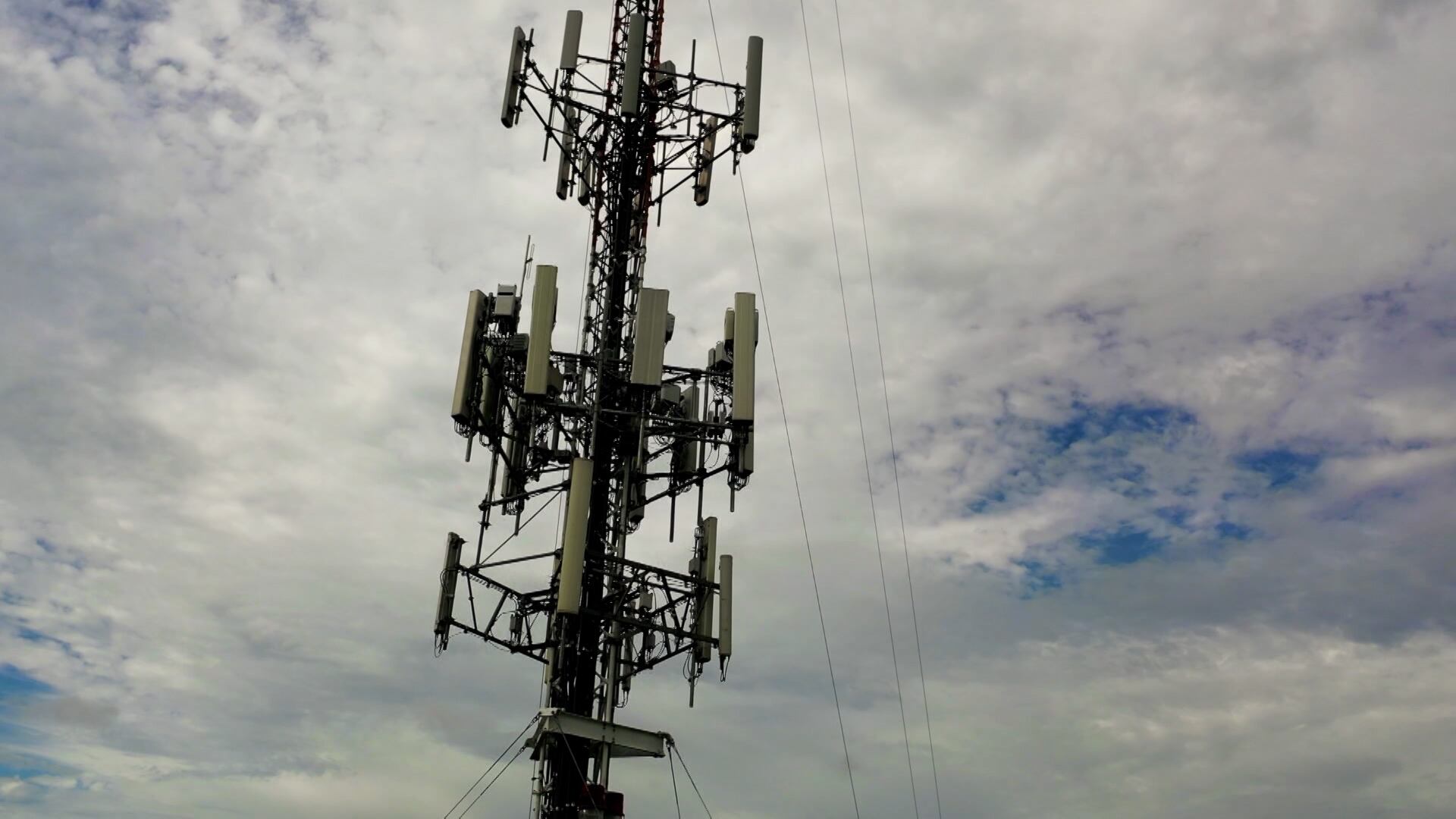
The end of 3G is upon us. On Tuesday, AT&T became the first major provider to disable its 3G services, and T-Mobile and Verizon plan to follow suit later this year. The shutdowns are expected to impact millions of vehicles that use 3G networks for updates, remote connection, and certain emergency and convenience features. Lance Ulanoff, the U.S. Editor-in-Chief of TechRadar, joined Cheddar's Closing Bell to discuss the ramifications of the changeover.
A new report shows nearly 240 former officials in Congress, the White House, and regulatory agencies have changed careers to work in the crypto industry.
President Biden unveiled new economic sanctions on Russia for what he called "the beginning of a Russian invasion". This came one day after Putin sent troops into two breakaway regions of eastern Ukraine. Alex Ward, national security reporter for POLITICO, explains what these sanctions might do to the global economy.
U.S. stocks ended today's session sharply lower on the heels of rising geopolitical tensions between Russia and Ukraine. Melissa Brown, Managing Director of Applied Research at Qontigo, joins Cheddar News' Closing Bell to discuss.
President Joe Biden said Tuesday that the U.S. will begin to impose sanctions on Russia, calling recent troop movement into Ukraine an 'invasion.' Biden and other government officials including from the State Department have begun to classify the Russian troop movement as an invasion after Russian President Vladimir Putin ordered troops to two independent Ukrainian areas in an alleged "peacekeeping" mission — which the West considers an act of aggression. Biden said Russia will continue to pay 'an even steeper price' if it continues sending troops into Ukraine. What happens next? Will Putin find a way around these sanctions? Ariel Cohen, senior fellow at the Atlantic Council, joins Closing Bell to discuss Biden's remarks, how the West will protect Ukraine since it doesn't belong to NATO, and more.