The 'Sex Recession:' How Tech is Contributing to Young People Doing It Less
*By Max Godnick*
If you're searching for hook-ups on social media or via dating apps, you're probably doing it wrong.
Young people are having less sex [according to the latest cover story in The Atlantic](https://www.theatlantic.com/magazine/archive/2018/12/the-sex-recession/573949/), and technology is contributing to the generational dry spell.
According to the Centers for Disease Control, only 41 percent of high-school students reported having had sex in 2015 compared to 51 percent in 1991. In 2014, the average American had sex 54 times a year, down from 62 times in the late 1990s.
From economic stress to a rise in anxiety rates, researchers have pegged the decline on a variety of potential factors. But like most everything at the core of millennial sociology ー social media and technology might be to blame for the so-called "sex recession."
"It seems like they would make things easier, and for some people they do, but they don't work they don't work that well for a lot of people," Kate Julian, senior editor at The Atlantic, said of dating apps Thursday in an interview on Cheddar.
"They can be demoralizing and inefficient."
She pins part of the problem on the gamification of online dating ー people report using apps like Tinder for upwards of an hour and a half a day, not to find a potential partner but instead, "for an ego boost or for a diversion," Julian said.
"They're not necessarily following through on it with real-life interactions."
And then, there's porn.
According to Julian, researchers aren't quite sure how the rise in pornography led to a drop in sex, but it's undoubtedly a factor.
"We can say that over the period of time that digital porn has existed, people have reported masturbating a lot more," she explained.
Online porn isn't only causing young people to have less sex ー it's also making sex worse.
"Porn may be changing the way people are having sex to some extent," Julian said. "There are a lot of things that are prevalent in porn that maybe your average person doesn't want to experience," she added citing practices popularized in porn like non-consensual choking.
"It really didn't want to make them come back for more."
But some people are still getting luckyー and possibly even in record numbers.
Julian acknowledged that the sweeping statistical analysis may not reflect the experiences of individuals whose sex lives have been helped by the destigmitazation and digitization of sex.
"Some people very well may be having more sex than ever and there's some data that suggests that, we're just talking about averages," she said.
For full interview [click here](https://cheddar.com/videos/the-atlantic-explains-why-young-people-are-having-less-sex).
Student loan debt continues to be a major concern for tens of millions of Americans who collectively owe about $1.7 trillion. Black college students often take on larger amounts of student debt in order to pay for a higher education. In turn, they are more likely to struggle post-graduation with repaying their debt, creating a racial wealth gap divide. Andre Perry, senior fellow at Brookings Institution joined All Hands to help break down the black student debt crisis.
BTS’ hit single “Butter” tops the zeitgeist again, bumping back up to number one on Billboard’s Hot Trending Chart. The chart tracks what songs people are talking about rather than what they're listening to.
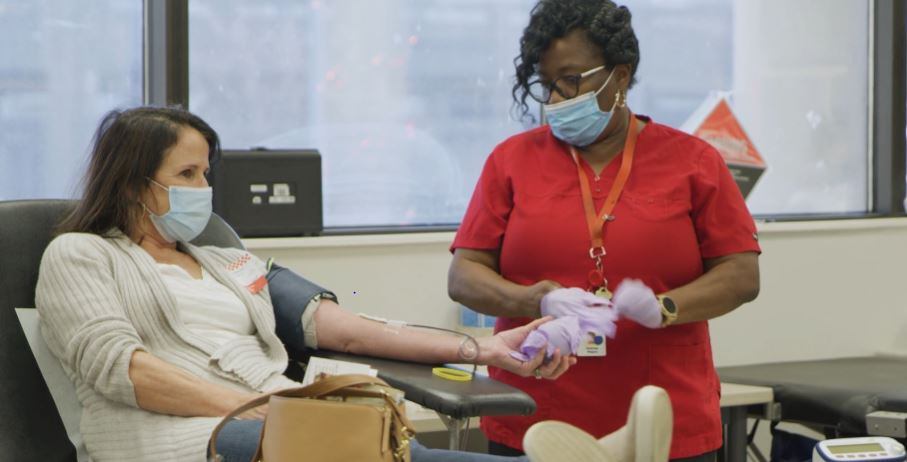
The American Red Cross has declared its first-ever "national blood crisis" in the United States. Since COVID hit the U.S. in March 2020, blood donations have declined by 10 percent. American Red Cross Medical Director, Dr. Baia Lasky joined Cheddar News to discuss the country facing the worst blood shortage in over a decade. Dr. Lasky noted that as much as 40 percent of Americans are eligible to donate blood but only about 4 percent do so. "This is going to be ongoing," she said. "This is not an acute shortage. We really do need the commitment of people to come out and donate and donate again." Appointments to donate can be made by using the Red Cross Donor App, at RedCrossBlood.org, or calling 1-800-RED CROSS (1-800-733-2767).
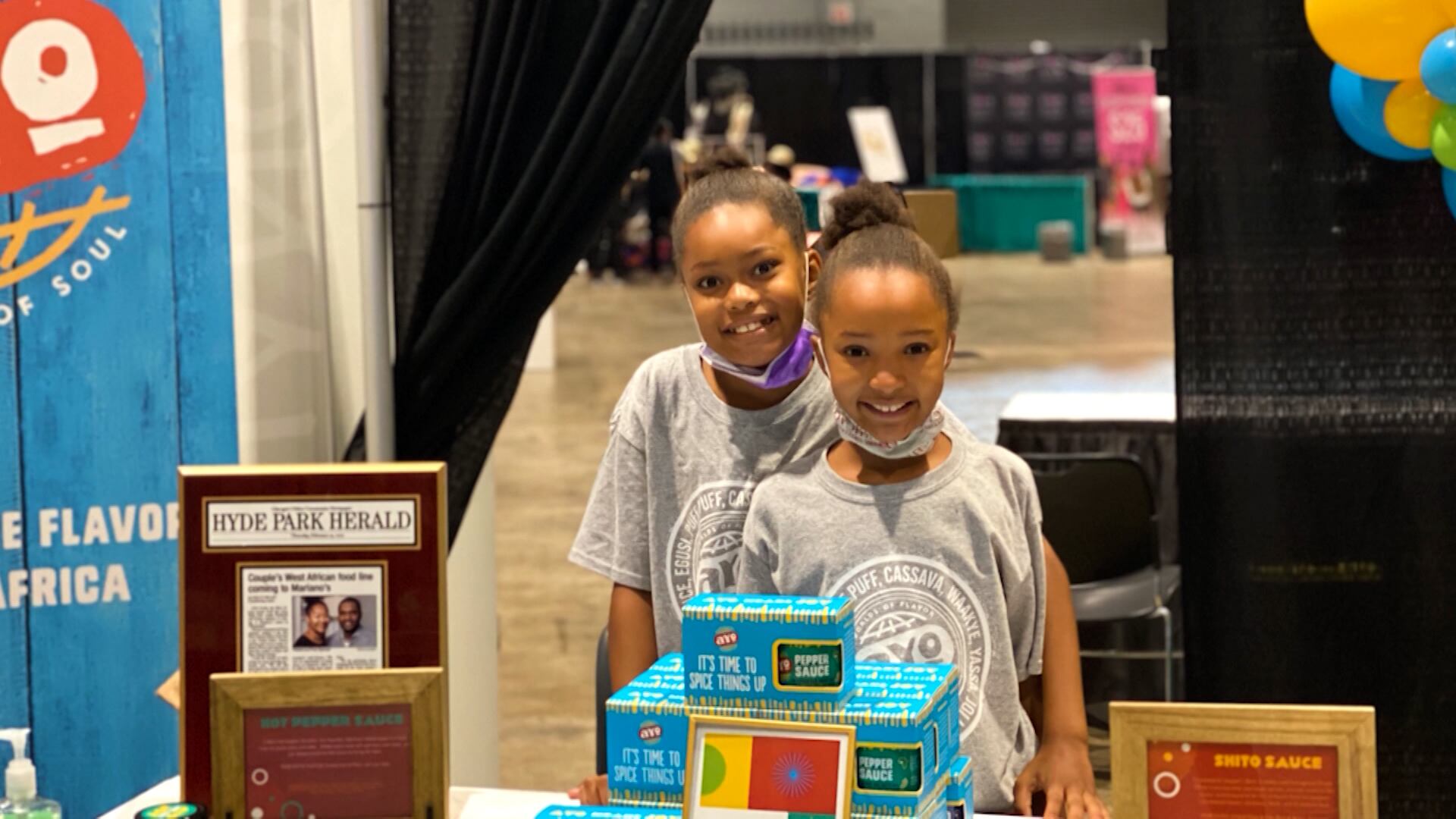
On this episode of ChedHER: Co-Founder of VC firm CaJE breaks down how she's creating a new era of venture capital and empowering Black women with 'soil' funding to start and grow their businesses; AYO Foods Co-Founder discusses how the brand is bringing West African cuisine to the frozen food industry and building a grocery aisle her daughters can be proud of; Chief Marketing & Customer Experience Officer at Chase Auto talks her experience being a woman of color in the auto industry, and why transportation is so important to financial freedom.
Renée Horne, chief marketing and customer experience officer at Chase Auto, joins ChedHER to discuss her experience being a woman of color in the auto industry and why transportation is so important to financial freedom.
Perteet Spencer, Co-Founder of AYO Foods, joins ChedHER to discuss how the brand is bringing West African cuisine to the frozen food industry and building a grocery aisle her daughters can be proud of.
Crystal Etienne, Founder and CEO of period apparel company Ruby Love and Co-Founder of VC firm CaJE, joins ChedHER to discuss her experience bootstrapping her company to $10 million, and how she's creating a new era of venture capital and empowering Black women with 'soil' funding to start and grow their businesses.