By David Koenig
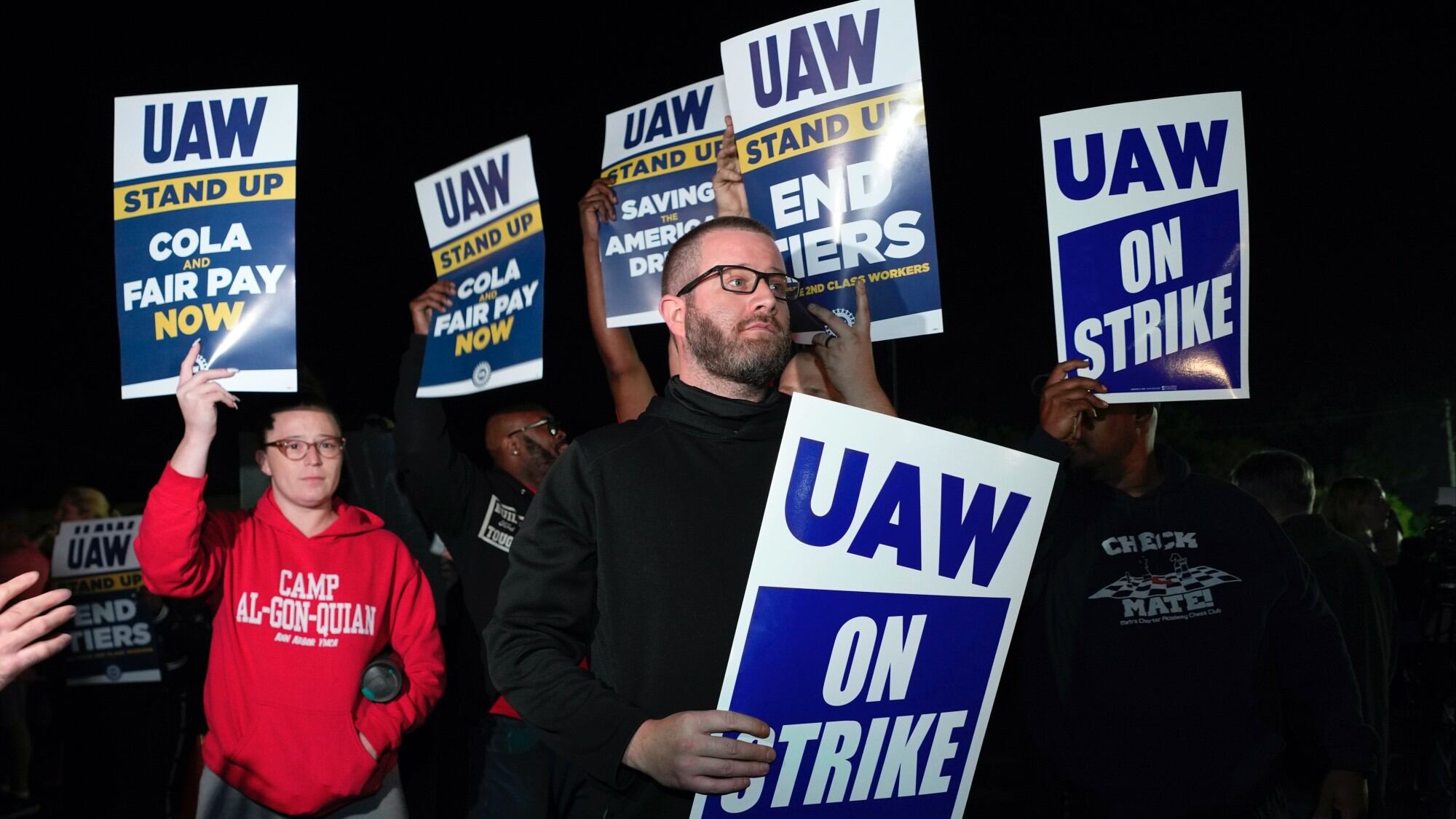
Car shoppers are heading for a new round of sticker shock if the strike by the United Auto Workers doesn’t end soon, particularly for popular vehicles that are already in short supply.
The number of vehicles on dealer lots will shrink the longer the walkout goes on. Dealers are likely to lose incentives that the manufacturers pay them to boost sales by cutting prices.
And consumers might make things worse with panic-buying.
Many analysts think it will take several weeks before dealer lots start to look a bit empty. Ford, General Motors and Stellantis built up inventories of vehicles ahead of Thursday night’s strike, and the UAW decided to limit the walkout to just three plants – at least for now.
“Guys at the dealerships are going to tell you, ‘The UAW this and that,’ but their lots are full of cars now,” says Ivan Drury, the director of insights at Edmunds, a provider of information about the auto industry. He estimates that at current inventory levels and the pace of vehicle sales, most car shoppers shouldn’t notice much change for a couple of months.
Vehicles from the Detroit Three sat in inventory an average 52 days before being sold in August, up from 31 days at the start of last year, according to Edmunds data.
The UAW began striking at factories that make only a few vehicles – Ford Broncos and Rangers, Jeep Wranglers, Chevrolet mid-size pickups and GMC vans. Dealers have good inventories of those.
The union said it had “reasonably productive conversations” with Ford on Saturday, while Stellantis gave details about its most recent offer to the union.
Mark Stewart, chief operating officer for North America at Stellantis, also said his company has contingency plans to limit the impact on consumers, though he declined to give details about them.
“We really want to encourage customers: Don’t be afraid,” Stewart said, while suggesting they see the deals available at dealerships.
If the strike isn’t ended soon, however, there could be shortages of some makes and models –big sellers or vehicles that are already in short supply, such as Chevrolet Silverado and Tahoe, GMC Sierra and Ford F-Series pickups. The car companies have plants in Mexico that could keep producing some models – as long as they have a supply of parts.
While the supply of cars from Detroit’s Big Three will largely depend on how long the strike lasts and how quickly it spreads to other plants – there were rumors Friday that additional factories could be added next week – there are other factors.
Garrett Nelson, an auto analyst for CFRA Research, expects manufacturers to eliminate incentives they pay to dealers to boost sales. Those incentives let dealers reduce their sticker prices, and they’re often targeted at slower-selling models.
The biggest wild card could be consumer psychology – panic-buying that would drive up prices.
“The impact on prices would be almost instantaneous,” Nelson says. “Dealers will say, ‘Look, we’re not sure how many additional vehicles we’re going to be getting.’ There could be somewhat of a panic effect that could stimulate consumers to make that purchase sooner rather than later.”
As cars from Ford, GM and Stellantis, the successor to Fiat Chrysler, become harder to find, there will be a ripple effect. Consumers who need a vehicle would likely turn to nonunion competitors like Toyota, Honda and Tesla, who would be able to charge them more.
“You’ll start to see that pricing gets affected everywhere — and not just on the new end of the business," Drury says. “Used-car values, which have been seeing a bit of a decline from last year’s highs, could start going back up” as consumers look for an affordable alternative to new vehicles.
Consumers who lease their vehicle and are coming to the end of the term could be especially vulnerable. Drury says leasing companies want their cars back while the used-car market is hot, and might be unwilling to extend the lease.
Anyone shopping for a new, used or leased car right now will also be hit by higher interest rates. The average rate for a new-car loan this week stood at 7.46%, and for a used car, it was 8.06%, according to Bankrate.
High rates are contributing to a spike in rejections for consumers looking to buy a ride. The Federal Reserve Bank of New York said this month that the rejection rate for auto loans is now 14.2%, the highest since the bank started tracking figures in 2013 and up from 9.1% six months ago. (Rejections are also up for mortgages, credit cards and other loans, as lenders recoil at the growing number of people falling behind on payments. Household debt is rising.)
Car prices were rising long before the auto workers even raised the possibility of a strike. A chip shortage, disruptions in the global supply chain and strong demand pushed prices higher.
The average price for a new vehicle jumped from $39,919 in 2020 to $48,798 so far this year, according to Kelley Blue Book. Cheap cars have all but disappeared, and consumers are forced into ever-longer loans to limit their monthly payments. Prices for used cars rose sharply in 2021 and 2022, but have slipped slightly this year.
Prices are almost certain to rise even if the strike is settled quickly, because the auto makers' labor costs will increase.
“It’s almost a foregone conclusion that the UAW will succeed in getting substantial wage increases,” says Patrick Anderson, the founder of Anderson Economic Group, a research firm that conducts market analysis. “Part of that is simply due to inflation, part of that is due to the profits of the automakers, and part of that is due to the leverage that the UAW has right now with a short inventory and an economy that still has a lot of people that want to buy cars.”
The UAW is asking for a 36% increase in wages over four years, plus other demands that would increase expenses for the companies. On Saturday, Stellantis detailed its latest offer for cumulative raises of nearly 21% in hourly wages, roughly in line with proposals from Ford and GM.
Politicians also have been pushing automakers to consider workers who gave up pay and benefits to help their employers during the Great Recession.
“Now that our carmakers are enjoying robust profits, it’s time to do right by those same workers so the industry can emerge more united and competitive than ever,” former President Barack Obama said in a statement Saturday.
UAW President Shawn Fain is sensitive to the impression that the union's gains will come out of consumers' pocketbooks. He points out that prices were rising before the strike, and says labor accounts for a fraction of the Big Three’s total costs.
“They could double our wages and not raise car prices and still make billions of dollars in profit,” he said during an online presentation to union members this week.
It's all enough to make many motorists consider avoiding the car lot and keeping their current car a while longer. Their bank accounts will be healthier without car payments.
“Holding on to your car is not a bad thing," said Drury, the Edmunds analyst. “It's a lot more durable than you think it is.”