As Americans continue to get vaccinated every day, they're rushing to get back to pre-pandemic activities, from eating out at restaurants to going back to movie theaters.
Many are also rushing out to get a new tattoo.
The pandemic proved nearly fatal for many businesses across different sectors. Anything that brought a worker and a customer into close proximity was especially challenging to reopen.
Tattoo shops checked all of those shutdown boxes, and getting a tattoo is one of the most pandemic un-friendly activities out there. The close contact, the collaboration with the artist, and of course the needles going in and out of your skin for hours on end.
The pandemic itself has been unfriendly to the tattoo industry. Lockdowns forced artists to cancel months of appointments and created industry-wide chaos.
Hannah Everhart, a Maryland tattoo artist, is among those professionals rocked by the pandemic. Once the shop she worked in reopened, she was limited in the number of people she could see each week. And since many of the 30,000 tattoo artists in the U.S. are essentially independent contractors and don't own their own shop, they need regular business to get by.
Everhart knew the pandemic would forever change the industry, so she started thinking seriously about opening her own studio.
"A shop was always the long term goal with tattooing," Everhart said. "It's something that I was really thinking for the five-year plan. But during the pandemic, everything was shut down. It gave me time to sit down and evaluate my situation as far as, like, money, and would this be something I could make work?"
It turns out opening her own shop in a year when small businesses faced a major downturn wasn't as hard as she might have expected. She opened Raven and Rose Studios in Savage, Md., in January.
"When I started running the numbers, it kind of made sense," she said. "It was like, oh, I could actually make this work. I could make this happen."
Everhart's move has proven to be an opportune one as the tattoo industry is seeing incredibly high demand. She has seen so much interest that she's booked until October.
(Note: I got to jump the line for my new ink, as you can see above.)
"Everyone's getting tattooed. This is honestly the furthest I've been booked out ever in my eight year career," Everhart said. "I have never been booked out this far so, and a lot of other artists are also experiencing the same thing."
The surge in interest has kept up even as Everhart and other tattoo artists across the industry shifted to digital consultations and appointment-only tattooing.
While she says the increased demand will eventually plateau, some things from the pandemic will stick around. Everhart plans to continue wearing masks while tattooing so she and her customers don't get even a little bit sick.
"I just don't have time to get sick," she said. "People are scheduling appointments three months in advance. And if it gets to be the week of their appointment, and I have to call and reschedule 'cause I have the sniffles, that's not a good look. So, I'm definitely going to keep wearing masks."
Post-pandemic realities aside, Everhart's work isn't stopping any time soon.
"You have people who have been wanting to get tattooed for a really long time. And now they're just like, I'm going to pull the trigger on this. Life is too short. I've survived this pandemic. I can't stay at my house anymore. I need to get out. I want to do this thing," she said.
Anthony Saccaro, Founder and President of Providence Financial, joins Cheddar News' Closing Bell, where he elaborates on why he is excited that the market is beginning to rebound and believes February has the potential to be a good month after a turbulent January.
A 2021 report from UK Research and Innovation found that the shipping industry makes up at least 2.5 percent of the world's total CO2 emissions. It's a problem that energy solutions company, Leclanché, is trying to solve. Founded in 1909, the company has been developing and producing batteries for more than 100 years. Today, Leclanché's lithium-ion battery is used to electrify not just ships, but also railroad locomotives, trucks, and specialty vehicles. Cheddar News spoke with Pierre Blanc, chief technology and industrial officer of Leclanché, to discuss.
Amazon is betting that ammonia could be the fuel of the future, participating in a Series A round for the Brooklyn-based company Amogy in December. Amogy aims to de-carbonize transportation with a clean energy system that uses ammonia as a renewable fuel. Amogy is partnering with Amazon on its first commercial product - an ammonia-powered cargo-shipping vessel. Amogy CEO Seonghoon Woo joins Cheddar Climate to discuss.
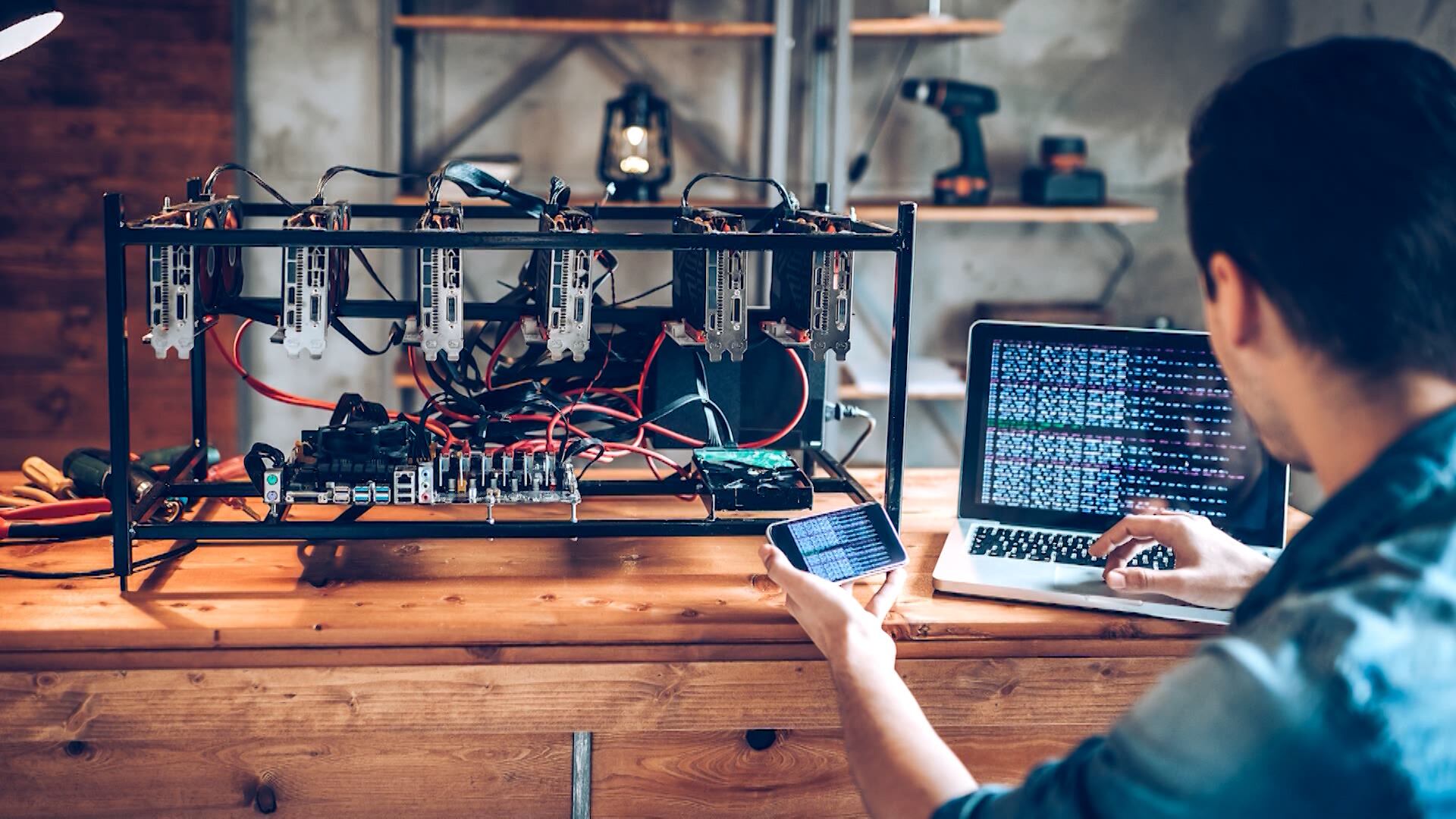
Joseph Pallant, Founder and Executive Director for the Blockchain for Climate Foundation, joins Cheddar Climate, where he discusses the among of energy crypto mining consumes and explains how his organization is on a mission to make the crypto industry more environmentally sustainable.
One of the world's largest transport companies is kicking off Black History Month with a new initiative aimed at the next generation of business leaders. Today, FedEx announced the launch of its Student Ambassador Program. Participants selected from eight historically black colleges and universities will receive career guidance from FedEx executives. The program is part of FedEx's ongoing commitment to HBCUs and will also help the company expand its pipeline for diverse talent. Cheddar News welcomes senior vice president at FedEx, Jenny Robertson, and Jerryl Briggs, President of Mississippi Valley State University, to discuss.
Driver assistance monitoring systems are meant to keep the driver's eyes on the road, but according to a report from AAA, different ways of monitoring provide significantly different results. The study found that direct camera-based systems that scanned the driver's eye movements were faster and more reliable than those indirect systems that looked at steering-wheel input. Megan McKernan, the manager of automotive services for the Automobile Club of Southern California, joined Cheddar to discuss the findings. "Triple-A is recommending that automakers include both direct and indirect systems just to really prevent consumers from trying to misuse these systems," she said, noting that neither system on its own is not foolproof.
"Sing 2" has overthrown "Spider-Man: No Way Home" as the number one film at the UK box office. The animated sequel brought in $8.1 million, in just its two first weekends. However, "No Way Home" is still on track to beat "Avatar" as the number one grossing movie of all time.
Pinterest recently added augmented reality to its portfolio. The image sharing and social media platform's new e-commerce tech will allow consumers to interact with retailers and visualize online products inside their homes.
On this episode of Cheddar Reveals, Jim Riordan, Director of the MBA Sport Management program at Florida Atlantic University, breaks down the successes, failures, and chaos of the first seven months of the Name, Image, Likeness policy in college athletics; Adi Kunalic, President of Opendorse, discusses the first-ever association-wide deal in college athletics between Opendorse and the NAIA, and how Opendorse is marketing and educating student-athletes to make the most of their NIL deal potential; Cheddar gets a look at Curiosity Stream's 'Predicting a Pro'.