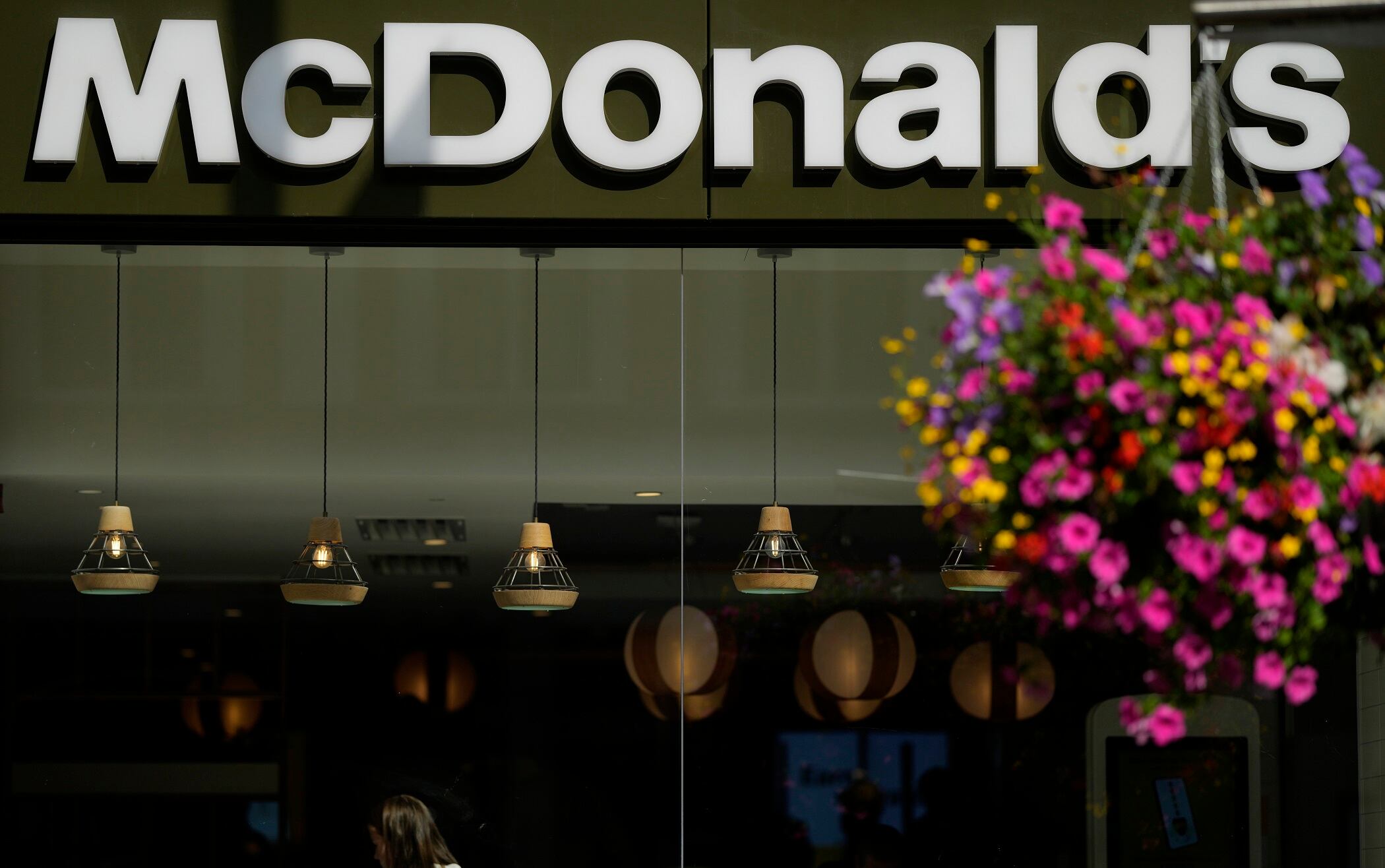
A customer walks in a McDonald's restaurant, in London, Tuesday, Aug. 24, 2021. McDonald’s says it has pulled milkshakes from the menu in all 1,250 of its British restaurants because of supply problems stemming from a shortage of truck drivers. The fast-food chain says it is also experiencing shortages of bottled drinks. (AP Photo/Alastair Grant)
McDonald’s says it has pulled milkshakes from the menu in all 1,250 of its British restaurants because of supply problems stemming from a shortage of truck drivers.
The fast-food chain says it is also experiencing shortages of bottled drinks.
“Like most retailers, we are currently experiencing some supply chain issues, impacting the availability of a small number of products,” McDonald’s said in a statement Tuesday. “Bottled drinks and milkshakes are temporarily unavailable in restaurants across England, Scotland and Wales.”
It said it was “working hard to return these items to the menu.”
It is the latest in a series of shortages to parts and products in Britain blamed on a combination of Brexit and the coronavirus pandemic. Britain’s exit from the European Union at the end of last year has made it harder for the bloc’s citizens to work in the U.K., and businesses have also been hit by large numbers of employees having to self-isolate because of possible exposure to the virus.
Industry body the Road Haulage Association says pandemic restrictions over the past 18 months have delayed many new recruits taking their driving tests. The group says Britain is short about 100,000 drivers, from a pre-pandemic total of 600,000.
Last week, chicken chain Nando’s temporarily shut about 50 outlets because of a shortage of poultry. KFC also warned recently that supply chain issues meant it was unable to stock some menu items.
Supermarkets have also reported problems getting some products onto shelves.
The U.K. government has temporarily eased restrictions on the number of hours drivers can work in an attempt to improve the situation.
Stan Farnsworth, chief marketing officer at PulseForge, joined Cheddar to talk about his company's debut at CES 2022 and how it plans to innovate the sustainable tech manufacturing space. PulseForge is bringing a new approach to industrial thermal processing, which contributes to 30 percent of global greenhouse gas emissions, according to Farnsworth. "By using 85 percent less energy in the processing of materials through a variety of manufacturing processes, we can make a direct impact in reducing carbon output and reducing carbon footprint associated with manufacturing," he said.
Oliver Chen, senior retail analyst at Cowen, joined Cheddar's "Opening Bell" to discuss the latest details about department store chain Kohl's after it received at least two offers from buyers to take the company private. Chen stated that Kohl's is an attractive landing spot for prospective buyers because of its premium real estate and undervalued stock prices. He also noted that despite the rise in online shopping, there is still room for brick and mortar shops to flourish. "We're very bullish on bricks meets clicks. The integration of stores and digital," Chen told Cheddar. "People love to return items in stores, people love the treasure hunt of shopping and the convenience and immediacy of stores."
Four-day week global, an organization in the UK, is pushing for a society where health and wellbeing come first, and a world in which people work to live, rather than live to work. They're demanding a four-day work week based o a recent study that proves productivity increases when working hours are reduced to 32 hours a week. Now, at least 30 companies in the UK are taking part in a four-day work week trial. joining me now is Charlotte Lockhart, founder of four-day week global.
The streaming giant Netflix posted its latest earnings from its fourth quarter after the close on Thursday. The company's stock plummeted shortly after the company warned that its rate of subscription additions are slowing down. Senior Reporter at MarketWatch Jon Swartz, joined Cheddar to discuss more.