By Stan Choe and Damian J. Troise
Updated 4:35 pm ET
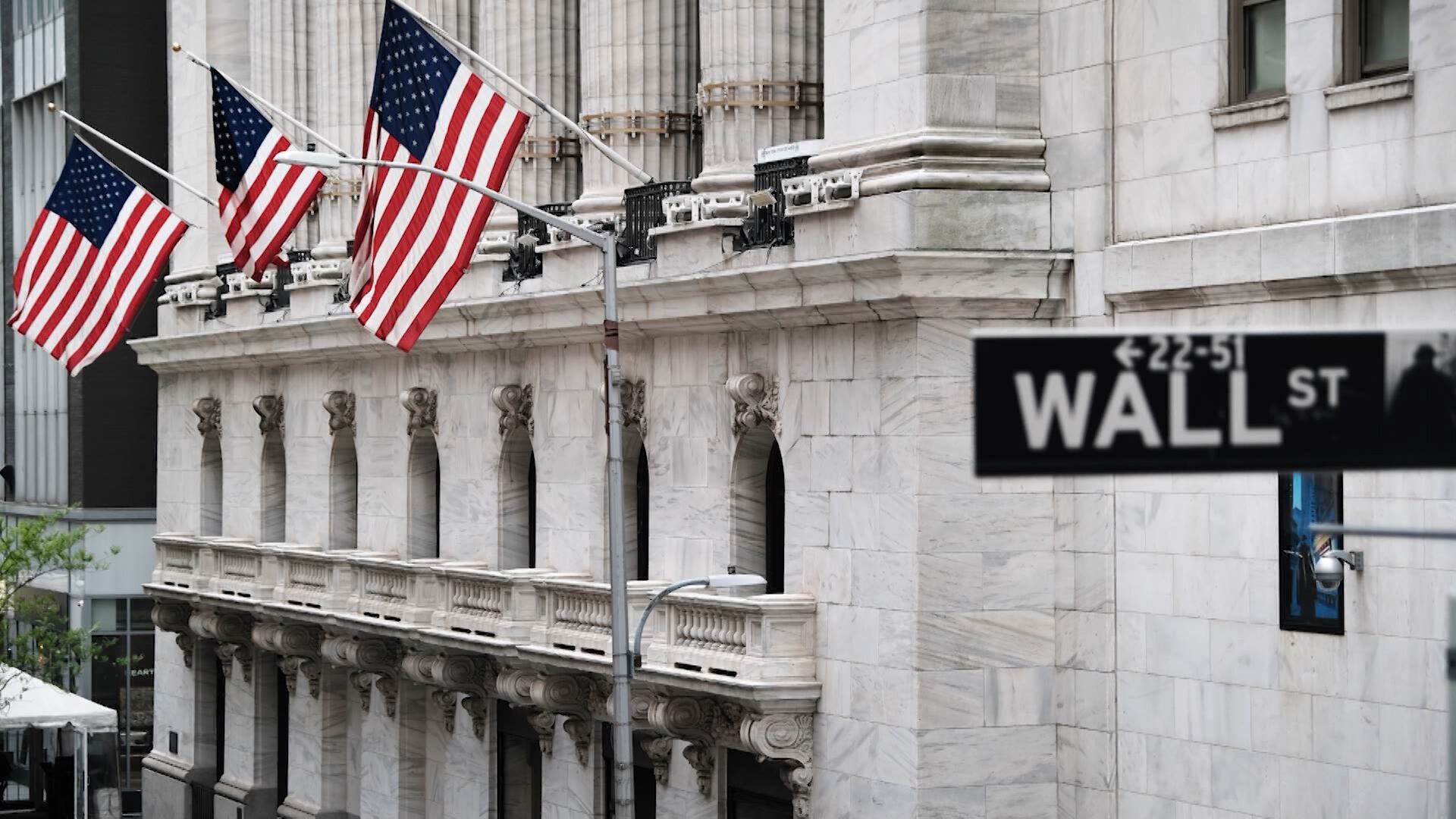
Wall Street rallied Monday as hopes for economic aid from Washington helped it recover all its knee-jerk losses after learning President Donald Trump tested positive for the coronavirus.
The S&P 500 jumped 60.16 points, or 1.8 percent, to 3,408.60 amid widespread gains, with nine out of 10 stocks in the index rising. Energy producers and tech companies led the way.
Treasury yields, stocks overseas and oil all climbed after Trump and House Speaker Nancy Pelosi both noted the importance over the weekend of additional support for the economy. The market's rally accelerated after Trump tweeted in the afternoon that he'll leave the hospital, though his medical team said he "may not entirely be out of the woods yet."
The Dow Jones Industrial Average rose 465.83 points, or 1.7 percent, to 28,148.64, and the Nasdaq composite climbed 257.47, or 2.3 percent, to 11,332.49. Smaller stocks rose even more in an indication of improved market optimism, and the Russell 2000 index jumped 42.67, or 2.8 percent, to 1,581.96.
The lift follows through on a comeback that helped markets cut their losses on Friday, after Trump's condition became publicized. Stocks initially tumbled as the jolt of uncertainty raised concerns that a White House victory for Democrat Joe Biden would mean higher taxes and tighter regulations for companies, which could drag down their profits. But analysts said a Democratic sweep of the election could also raise the probability of a big government support plan for the economy, something that investors have been clamoring for since jobless benefits and other stimulus Congress approved in March expired.
The market's moves on Monday and late Friday suggest investors are anticipating either a large stimulus effort or the increased likelihood of a "blue wave," said Yousef Abbasi, global market strategist at StoneX.
Stocks got an immediate lift Friday afternoon after Pelosi told airline executives to stop the furloughs of tens of thousands of workers because aid for the industry was "imminent," either as a stand-alone effort or as part of a wider rescue package. A stand-alone bill for airlines failed to advance in the House on Friday, but hopes remain for a larger effort.
Over the weekend, Trump tweeted from the hospital that the country wants and needs more economic stimulus. "Work together and get it done," he said on Saturday.
A day later, Pelosi said that the two sides are making progress, but they still haven't reached a breakthrough. "It just depends on if they understand what we have to do to crush the virus," she said in an interview on CBS.
A report on Monday said growth for the nation's services industries last month was stronger than economists expected. It's an encouraging piece of data, but it follows a string of mixed reports that have shown some areas of the economy slowing since Congress' last round of aid expired.
"Our dark expectations in the aftermath of the COVID-19 crisis are not coming through," said Scott Knapp, chief market strategist at CUNA Mutual Group. "The pace of the improvement is slowing, but it's still upward."
He expects the upcoming election to throw some more volatility into the markets, but not much as investors seem somewhat indifferent to the potential outcome. He said a key signal to that indifference was the market's muted response to the news that Trump had contracted COVID-19.
"It's pretty difficult to overstate how understated the market's reaction was," Knapp said.
Shares of Regeneron rose 7.1 percent after Trump received an experimental drug from the company that supplies antibodies to help the immune system fight the virus.
Trump on Friday also began a five-day course of remdesivir, a Gilead Sciences drug currently used for moderately and severely ill patients. The drugs work in different ways — the antibodies help the immune system rid the body of the virus, and remdesivir curbs its ability to multiply.
Gilead rose 2.3 percent.
MyoKardia, a biopharmaceutical company, surged 57.8 percent after Bristol Myers Squibb said it would buy the 8-year-old company for $13.1 billion, or $225 per share in cash.
On the losing side was DraftKings, which fell 5.1 percent. It and some of its existing investors are selling 32 million shares of the company's stock after it nearly sextupled in 2020.
In Asian trading, Japan's Nikkei 225 gained 1.2 percent, South Korea's Kospi jumped 1.3 percent and Hong Kong's Hang Seng rose 1.3 percent.
Fujitsu President Takahito Tokita apologized Monday for the breakdown last week in the Tokyo Stock Exchange's trading system, which the Japanese company had developed. Speaking during an online webinar, he promised to work with the exchange to prevent a recurrence of the malfunction in Fujitsu's Arrowhead system, which caused all trading to be halted in Tokyo on Oct. 1.
By Friday, trading resumed after the problem was fixed.
In Europe, Germany's DAX returned 1.1 percent, and France's CAC 40 rose 1 percent. The FTSE 100 in London added 0.7 percent.
The yield on the 10-year Treasury rose to 0.76 percent from 0.70 percent late Friday.
___
AP Business Writer Yuri Kageyama contributed.