By Damian J. Troise and Alex Veiga
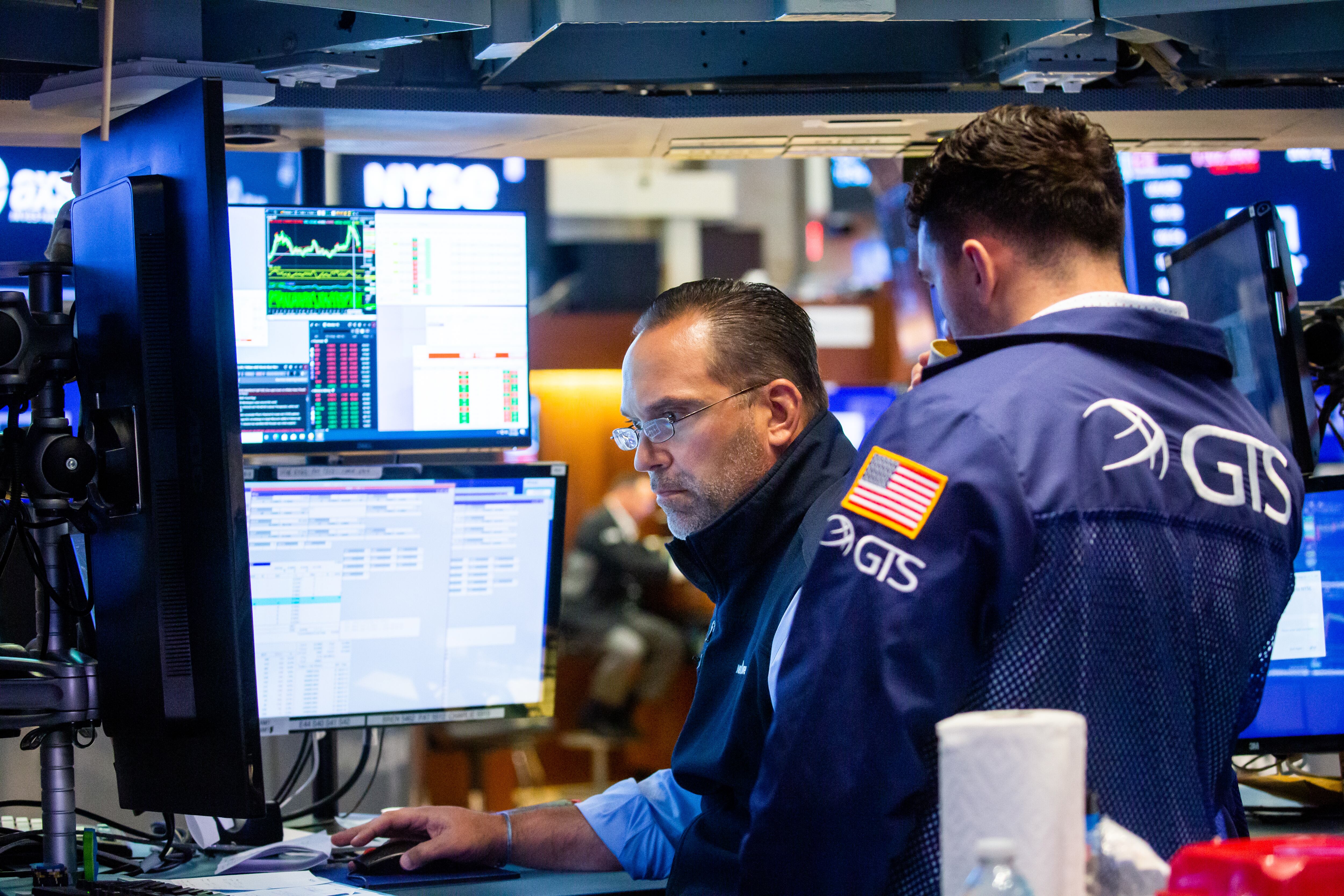
Wall Street capped an up-and-down week of trading Friday with a broad sell-off that wiped out the major indexes' gains for the week.
The S&P 500 lost 0.9% and posted its second straight weekly loss. Roughly 80% of the stocks in the benchmark index fell. Technology and communication companies accounted for much of the pullback. Industrial and financial stocks also were big drags on the index. Only the index's health care sector managed a gain.
Small-company stocks bucked the overall market slide. Bond yields rose broadly. Energy prices fell.
Trading has been choppy throughout the week as investors weighed a mixed bag of economic data reflecting how the economy is weathering a spike in COVID-19 cases and how it might continue its recovery in the coming months. Wall Street is also looking ahead to next Wednesday, when the Federal Reserve is due to deliver its latest economic and interest rate policy update.
"We’ve seen a gradual deterioration over the course of the week, with two little up periods, but for the most part, generally a weakening (stock) market,” said Alan McKnight, chief investment officer at Regions Asset Management.
The S&P 500 fell 40.76 points to 4,432.99. Despite being down about 0.6% for the week, the index is within 2.3% of the all-time high it set Sept. 2.
The Dow Jones Industrial Average fell 166.44 points, or 0.5%, to 34,584.88, while the tech-heavy Nasdaq composite slid 137.96 points, or 0.9%, to 15,043.97.
The Russell 2000 index of smaller companies recovered from an early slide and rose 3.96 points, or 0.2%, to 2,236.87.
Bond yields rose. The yield on the 10-year Treasury rose to 1.38% from 1.33% late Thursday.
Technology and communication stocks were the biggest weights on the market. Apple fell 1.8% and Facebook dropped 2.2%.
Oil prices fell 0.9% and natural gas prices fell 4.3%. The weak energy prices helped pull down energy stocks. Oilfield services company Schlumberger fell 1.9%.
Health care stocks eked out gains. Lab equipment maker Thermo Fisher Scientific was a standout with a 6.5% jump after giving investors an encouraging business update. Some travel-related stocks made solid gains. Cruise line operator Carnival rose 2%, while Norwegian Cruise Line gained 2.1%.
Also influencing the market’s gyrations was “quadruple witching,” the simultaneous expiration of four kinds of options and futures contracts. The phenomenon happens four times a year and forces traders to tie up loose ends in contracts they hold. More than 750 billion single stock options were due to mature Friday, said McKnight.
“Just the sheer size of that plays into this,” he said. “It creates more volume in the market and some of the volatility associated with that.”
Much of this week’s economic data pointed to an economy struggling to move forward in the last few months. Inflation remains a concern for businesses, which are dealing with supply chain problems and facing higher costs. Concerns about the highly contagious delta variant also have analysts worried that consumer spending, a key piece of economic growth, could stall.
Investors will have their eye on the Fed next week to see whether the central bank takes any action to address the impact of rising prices on businesses and consumers. The Fed has said higher costs for raw materials and consumer goods will likely remain temporary as the economy recovers, but analysts are concerned that the higher prices could stick around and dent companies’ bottom lines while also crimping spending.
Updated on September 17, 2021, at 5:36 p.m. ET.