By Damian J. Troise and Alex Veiga
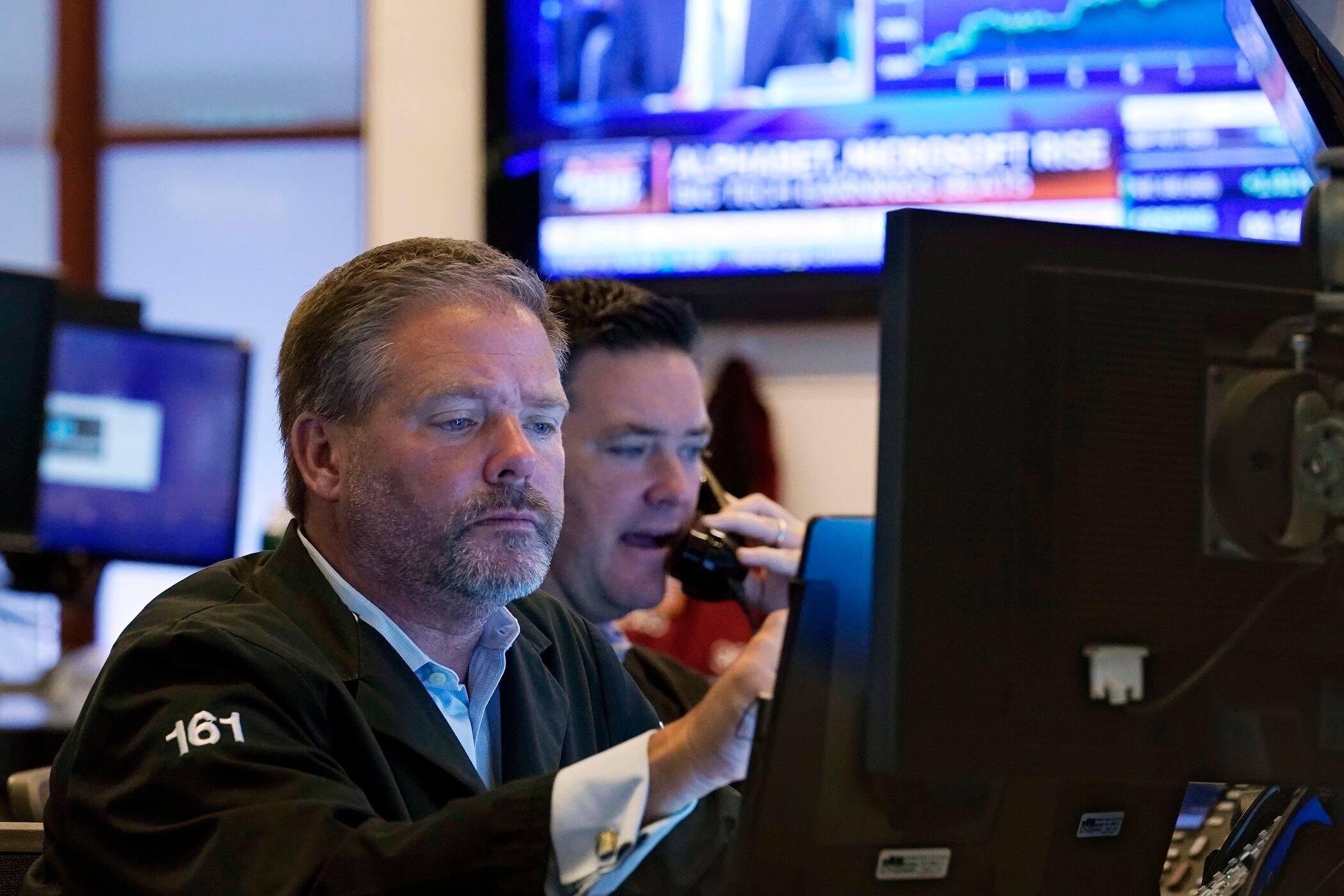
Stock indexes capped a wobbly day of trading on Wall Street with mixed results Wednesday after the Federal Reserve said it was seeing improvement in the economy, but not enough to start dialing down its support measures.
The S&P 500 slipped less than 0.1% after giving up a brief afternoon gain. The Dow Jones Industrial Average fell 0.4%, while the Nasdaq composite rose 0.7%. The yield on the 10-year Treasury note held steady at 1.23%.
A slide in technology stocks, makers of household and personal products, and companies that rely on consumer spending weighed on the S&P 500. The pullback was kept in check by gains in communications, health care and energy stocks.
Following the Fed's latest two-day policy meeting, the central bank said it was leaving its key interest rate unchanged and would continue to buy billions in bonds every month.
The Fed also noted that vaccinations were helping the economy, but it dropped a sentence in its statement that it had included after its previous meeting that said those vaccinations have reduced the spread of COVID-19. That was the only reference to the delta variant that has caused a spike in COVID cases in several hotspots in the United States and many other countries.
“The market really was not expecting any surprises, and what it ended up getting, as anticipated, was that the Fed would say that the economy continues to recover, but not strongly enough to alter current monetary policy,” said Sam Stovall, chief investment strategist at CFRA.
The S&P 500 slipped 0.82 points to 4,400.64. The benchmark index remains within 0.5% of the all-time high it set on Monday. The Dow lost 127.59 points to 34,930.93, while the Nasdaq rose 102.01 points to 14,762.58.
Small-company stocks fared better than the broader market, driving the Russell 2000 index to a gain of 33.12 points, or 1.5%, to 2,224.95. The index had been down 0.1% before the Fed's afternoon announcement.
“Maybe the worry was that the Fed would sound more hawkish and raise rates, which would have more of an adverse impact on small-caps, which have to borrow more than large-caps,” Stovall said.
The Fed has kept its benchmark short-term rate pegged at nearly zero since March 2020, when the pandemic tore through the economy. The central bank has also been buying $120 billion in Treasury and mortgage bonds each month in a bid to spur more borrowing and spending.
Analysts expect the Fed to move toward reducing the bond purchases that have helped keep interest rates low through the pandemic. The big question for investors is the timing and pace of such a pullback. The market is also weighing concerns about the pace of the economic recovery, which could be stymied by the renewed spread of COVID-19.
“The pace is going to be slower than some folks predicted because of the delta variant,” said Greg Bassuk, founder and CEO of AXS Investments. “We believe that we’re going to continue to see a greater opening recovery, but with a lot more volatility.”
There are also lingering concerns about whether inflation will continue to rise, depending on the economic recovery and supply chain problems that have made some goods more expensive.
Beyond the Fed, investors continued to review the latest batch of quarterly earnings reports.
Google’s parent company Alphabet was a standout, jumping 3.2% after reporting a profit surge last quarter. Pfizer also rose 3.2% after its profit and revenue surged on strong sales of its COVID-19 vaccine and other medicines. The drugmaker also raised its sales and profit forecasts for the year. Boeing jumped 4.2% after the airplane maker reported a surprise quarterly profit, its first since 2019.
Solid earnings weren’t enough to lift stocks for other companies. McDonald’s fell 1.9%, despite reporting a surge in revenue and beating analysts’ forecasts as dining rooms reopened. Facebook rose 1.5%, but lost that gain and more in extended trading despite reporting after the market closed that its second-quarter earnings doubled thanks to a massive increase in advertising revenue.
Investors will be focusing much of their attention on what companies are forecasting for the rest of the year. Those forecasts, along with a mix of economic reports on gross domestic product and personal income and spending, should give investors a clearer picture of the economic recovery's trajectory as they head into August, Bassuk said.
Markets made gains in Europe and were mostly lower in Asia.
Updated on July 28, 2021, at 5:00 p.m. ET.