By Damian J. Troise and Alex Veiga
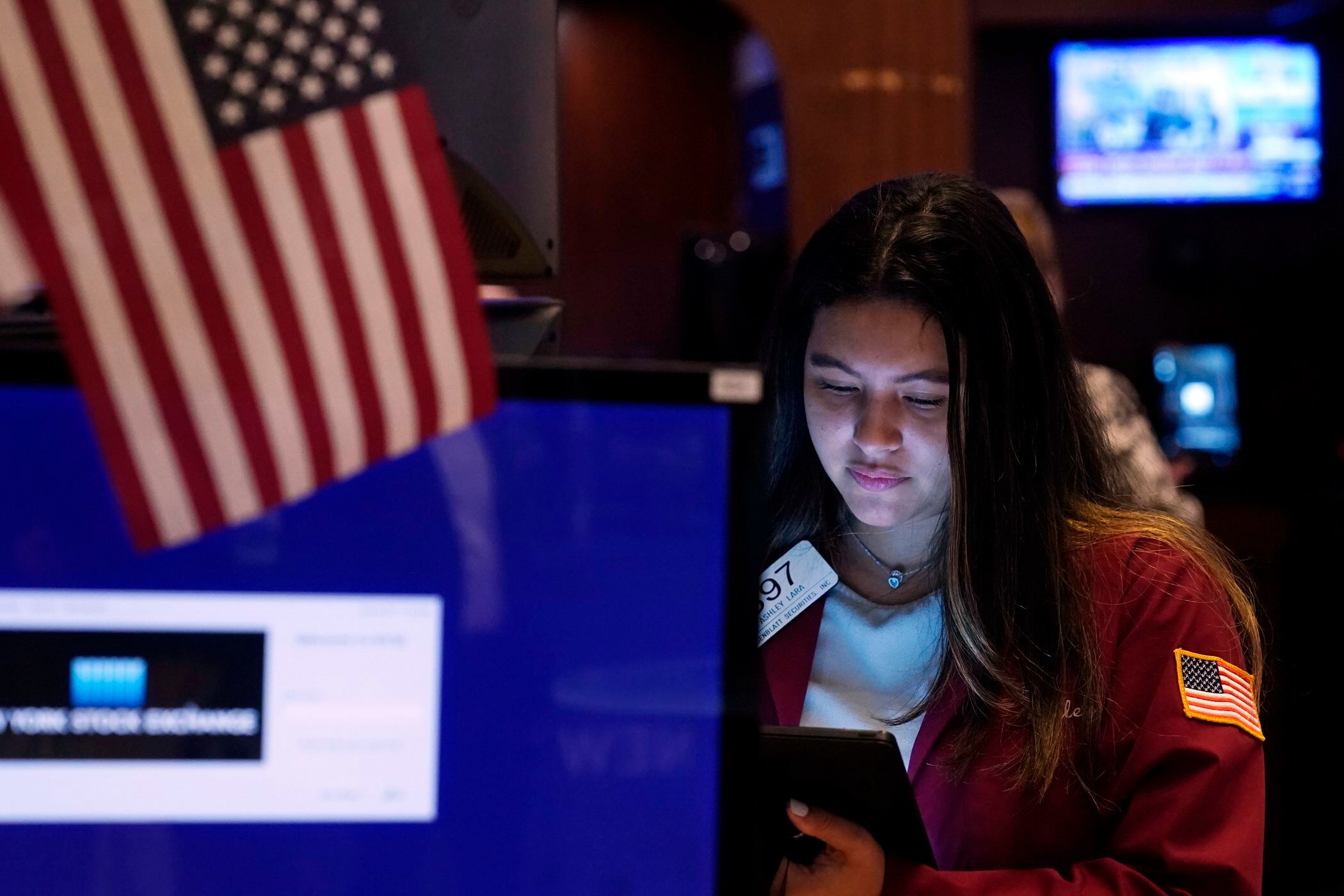
Stocks jumped on Wall Street Tuesday, making up much of the ground they lost a day earlier when worries flared about spreading cases of the more contagious variant of COVID-19.
The comeback was the latest rebound following a pullback as investors continue to try and assess how badly rising infections will hurt the economic recovery.
The S&P 500 rose 64.57 points, or 1.5%, to 4,323.06. The gain erased most of the benchmark index's loss from Monday's 1.6% drop, its biggest since May.
Airlines, cruise operators and other stocks that sank a day earlier were back in the winning column. American Airlines climbed 8.4% and Carnival gained 7.5%. Technology, financial, industrial and health care stocks also powered a big share of the benchmark index's broad gains.
The Dow Jones Industrial Average rose 549.95 points, or 1.6%, to 34,511.99. The blue-chip index lost 725 points a day earlier. The Nasdaq composite gained 223.89 points, or 1.6%, to 14,498.88.
Small company stocks mounted the strongest comeback. The Russell 2000 index outpaced the other major indexes with a gain of 63.62 points, or 3%, to 2,194.30.
The sharp one-day rebound for the broader market shows yet again just how choppy trading has been as investors try to figure out the lingering virus' impact on inflation, the broader economy and businesses ranging from airlines to banks. The broader market has managed to keep gaining ground even with all the churn and the benchmark S&P 500 notched several records over the last few weeks.
The spread of the more contagious delta variant of COVID-19 has become a worry spot for investors and policymakers. The Centers for Disease Control has said an estimated 83% of cases in the U.S. are tied to the delta variant of the virus. While tens of millions of Americans have gotten vaccinated, there remains a significant percentage of Americans who are either reluctant or outright hostile to the idea of being vaccinated.
Los Angeles Country last weekend reinstituted an indoor mask mandate as the region's infection rate was climbing quickly yet again. Other parts of the country, like Southern Missouri, are flooded with COVID cases that are straining hospitals once more.
Bond yields fell sharply on Monday on fears that the strong economic recovery from the pandemic could be put at risk from additional lockdowns or coronavirus cases. The yield on the 10-year Treasury note dipped as low as 1.14% early Tuesday, but has reversed course and is up to 1.21% from 1.18% the day before. A week ago it was trading at 1.42%.
“We’re seeing a more dramatic extension of what we experienced over the last couple of weeks, which is really the market searching for a narrative,” said Yung-Yu Ma, chief investment strategist at BMO Wealth Management.
Investors are looking for whatever clues they can get to better gauge the continued trajectory of the economic recovery. Everything from comments from the Federal Reserve to outlooks from companies and economic data are being used to get a clearer picture of what the economy might look like throughout the rest of this year and into 2022.
Wall Street is also in the midst of earnings reporting season. IBM rose 1.5% after the company reported better than expected revenue and profits, helped by its cloud computing business. Hospital operator HCA Healthcare jumped 14.4% for the biggest gain in the S&P 500 after handily beating Wall Street’s second-quarter profit and revenue forecasts.
Outside of earnings, drug distributors made some big moves following reports that they are on the verge of $26 billion settlement over opioid lawsuits. AmerisourceBergen rose 3.5% and McKesson rose 3.2%.
Paint and coatings maker PPG Industries fell 4.4% for the biggest decline in the S&P 500 after its second-quarter profit fell short of analysts' forecasts and it faces supply chain issues and higher raw materials prices.
Updated on July 20, 2021, at 4:34 p.m. ET.