By Damian J. Troise and Alex Veiga
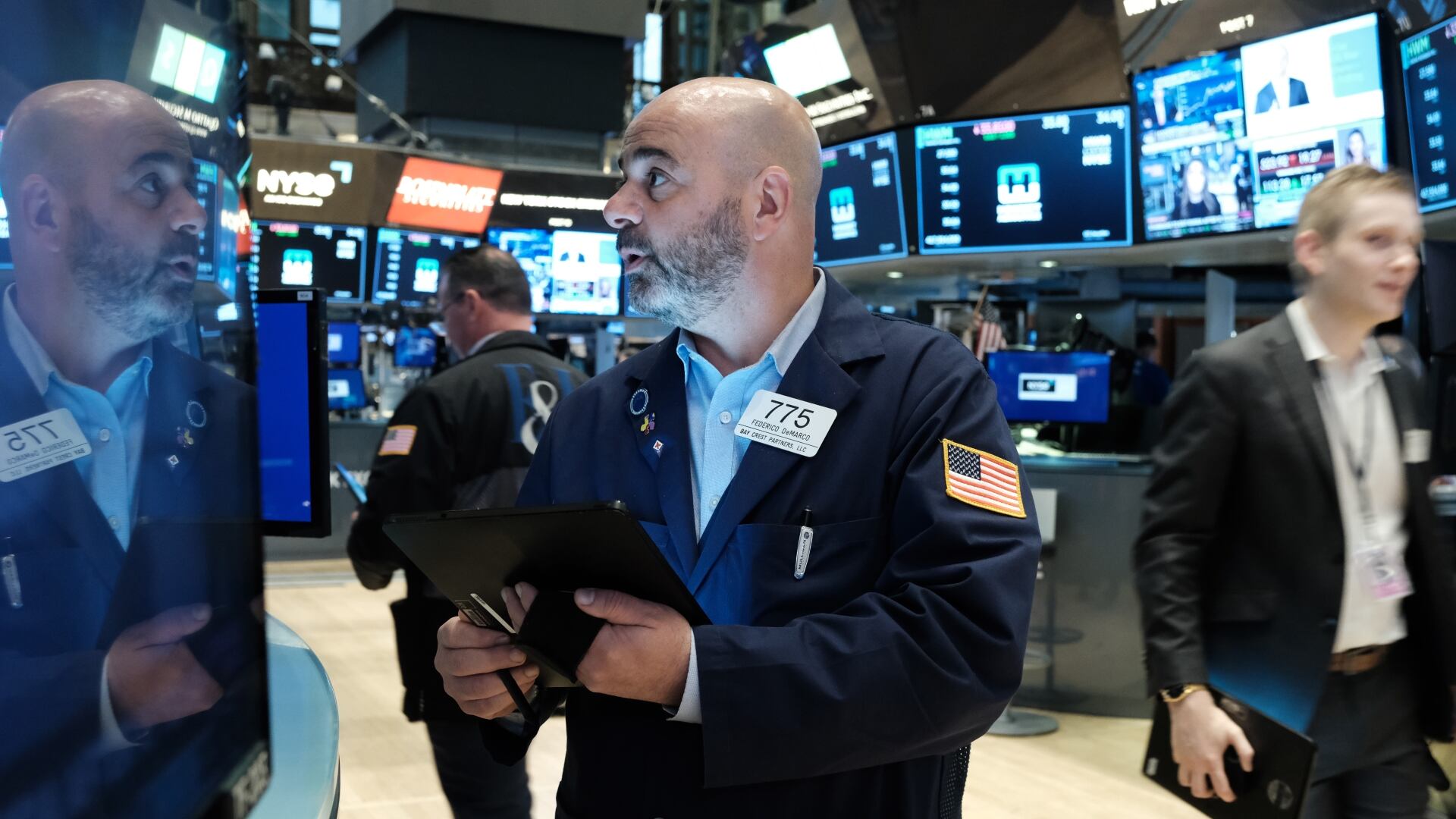
Stocks closed broadly lower on Wall Street Wednesday, extending the market’s downturn to a third day. The price of Bitcoin and other cryptocurrencies dropped sharply in a surge of selling. The S&P 500 lost 0.3%. Bitcoin’s price was down 7% to just over $40,000, according to the crypto news site Coindesk, having swung in a huge range of as low as $30,202 and as high as $43,621 over the past day. The stock of the digital currency exchange operator Coinbase, whose website went down briefly in the morning, fell almost 6% and is down sharply from its IPO just over a month ago.
THIS IS A BREAKING NEWS UPDATE. AP’s earlier story follows below.
Stocks fell broadly in afternoon trading Wednesday as the market's downturn entered a third day. Meanwhile the price of Bitcoin and other cryptocurrencies dropped sharply.
The S&P 500 index was down 1% as of 2:19 p.m. Eastern. The benchmark index is on track for its worst weekly loss in over two months. The Dow Jones Industrial Average was down 392 points, or 1.2%, to 33,675 points and the Nasdaq fell 0.8%.
Bank stocks were among the biggest decliners. Goldman Sachs fell 2.5% and Wells Fargo fell 2.2%. A range of retailers and other companies that rely directly on consumer spending were also posting sharp drops. Home Depot slid 1.3%, Gap fell 3.7% and L Brands dropped 4.5%.
Energy sector stocks, the biggest gainers so far this year, bore the heaviest losses as the price of U.S. crude oil skidded 3.5%.
Digital currencies were in freefall after China’s banking association issued a warning over the risks associated with digital currencies. A statement posted on the industry association’s website said all members should “resolutely refrain from conducting or participating in any business activities related to virtual currencies.”
Bitcoin’s price was down 10.5% to around $38,561, according to the crypto news site Coindesk, well below the recent high of over $63,000 it reached in mid-April. This comes after longtime Bitcoin advocate Tesla recently recently said it would no longer accept Bitcoin as payment for its cars, reversing its earlier position.
The selling was so intense that the web site of Coinbase, an online brokerage for digital currencies, was temporarily down in the morning. Coinbase's stock dropped 6.8%, and is now down about 35% from the peak it reached on April 16, just two days after its IPO.
Investors also continue to be focused on whether rising inflation will be temporary or whether it will endure. Prices are rising for everything from gasoline to food as the economy recovers from its more than year-long malaise.
The Federal Reserve expects that rising inflation will be temporary and related to the recovering economy, but investors are still uncertain and have been more cautious.
“That’s one of the things people are struggling with,” said J.J. Kinahan, chief strategist with TD Ameritrade. “They go to get gas and get in line at a grocery store and they see higher prices; there's this mixed message for the average investor.”
The fear is that the Federal Reserve will have to dial back its extensive support if inflation persists. That includes record-low interest rates and the monthly purchase of $120 billion in bonds meant to goose the job market and economy. For all the worries about inflation, however, many professional investors are echoing the Federal Reserve in saying that they expect rising prices to be “transitory.”
Higher interest rates drag on most of the stock market, but they are particularly painful for stocks, especially technology shares, considered the most expensive and those bid up for profits expected far into the future.
Treasury yields were mostly higher. The yield on the 10-year Treasury note rose to 1.68% from 1.64% late Tuesday.
Target gained 5.5% after reporting strong results as consumers, some flush with U.S. stimulus payments, were eager to spend as the pandemic eases.
Updated on May 19, 2021, at 4:19 p.m. ET.