By Damian J. Troise
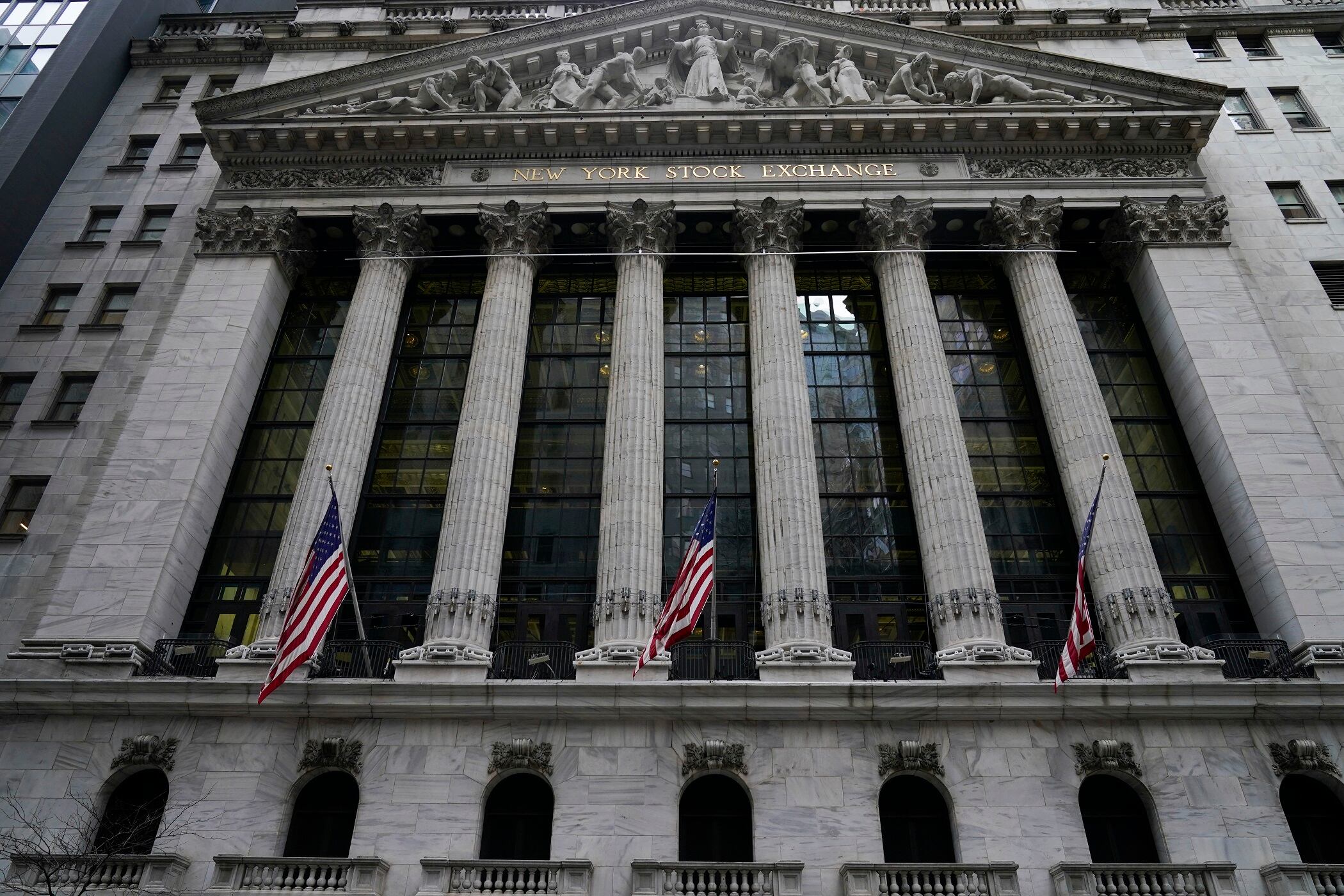
Stocks closed broadly lower on Wall Street Tuesday, weighed down by sharp declines in Big Tech stocks that also left the Nasdaq with its worst drop since September 2020.
Investors are busy reviewing the latest round of corporate earnings and are facing a particularly heavy week with results from some of the nation's biggest companies. The latest corporate report cards are hitting Wall Street amid lingering concerns about rising inflation, interest rate hikes and potential damage to global economic growth.
The S&P 500 fell 120.92 points, or 2.8% to 4,175.20. The benchmark index closed the day with 95% of its stocks losing ground. The Dow Jones Industrial Average fell 809.28 points, or 2.4%, to 33,240.18.
The tech-heavy Nasdaq bore the brunt of the day's losses. It fell 514.11 points, or 4%, to 12,490.74. That's its worst drop since Sept. 8, 2020. The index is now down 20% so far this year as investors shun the ultra-pricey tech sector, which had made gangbuster gains for much of the pandemic.
With interest rates set to rise as the Federal Reserve steps up its inflation fight, traders are less and less willing to endure the lofty prices they had been paying for Microsoft, Facebook’s parent company and other tech giants.
Microsoft fell 3.7%. Google's parent company, Alphabet, fell 3.6% in regular trading and lost another 6% in after-hours trading after reporting results that fell short of analyst estimates.
More big technology companies are on deck to report earnings this week, including Facebook parent's company, Meta, on Wednesday, and Apple on Thursday.
Tesla slumped 12.2% over concerns that CEO Elon Musk will be distracted and less engaged in running the electric vehicle maker as he buys social media company Twitter, which fell 3.9%.
Retailers and other companies that rely on direct consumer spending also fell broadly. General Motors fell 4.5% while Nike slipped 5.8%.
General Electric fell 10.3% for one of the sharpest losses on the market after telling investors that inflation and other pressures are weighing on its profit forecast for the year.
Bond yields fell. The yield on the 10-year Treasury fell to 2.73% from 2.82% late Monday.
Energy companies eked out a gain, the only one of the 11 sectors in the S&P 500 to do so. The price of benchmark U.S. crude oil rose 3.2%.
Stocks have been shaky recently, with the S&P 500 coming off a three-week losing streak.
“It’s the market getting a little more comfortable with a slowdown at best and recessionary fears at worst,” said Ross Mayfield, investment strategy analyst at Baird.
The last few days have been volatile as Wall Street also tries to assess how China's strict lockdown measures to fight COVID-19 will impact the broader global economy, including hurting demand in the world's second-largest economy. It could be prompting a resetting of expectations while Wall Street is also still focused on the Federal Reserve's plan to raise its benchmark interest rates this year.
“The market had gotten comfortable, to an extent, with the Fed, but when you layer on demand destruction in China, it’s a little much for the market to stomach,” Mayfield said.
Outside of technology companies, earnings for industrial and retail companies remain a key focus of Wall Street for the rest of the week. Airplane maker Boeing reports its results on Wednesday. Industrial bellwether Caterpillar reports its results on Thursday, along with McDonald's and Amazon.
Investors are closely reviewing the latest round of corporate report cards to get a better sense of how different industries are handling rising inflation, which has prompted many companies to raise prices. The results will also give a clearer picture of how consumers are reacting to higher prices on everything from food to clothing and gasoline.
In economics news, the Conference Board reported that consumer confidence dampened slightly in April but remains high. And on Friday the Commerce Department releases its personal income and spending report for March.
Persistently rising inflation has prompted the Fed to shift its monetary policy in order to aggressively fight inflation. The chair of the Fed has indicated the central bank may hike short-term interest rates by double the usual amount at upcoming meetings, starting next week. It has already raised its key overnight rate once, the first such increase since 2018.
Economists and investors are concerned that the U.S. economy might slow sharply or even fall into a recession because of the big interest-rate increases the Fed is expected to push through.
Updated on April 26, 2022, at 5:00 p.m. ET.