By Stan Choe
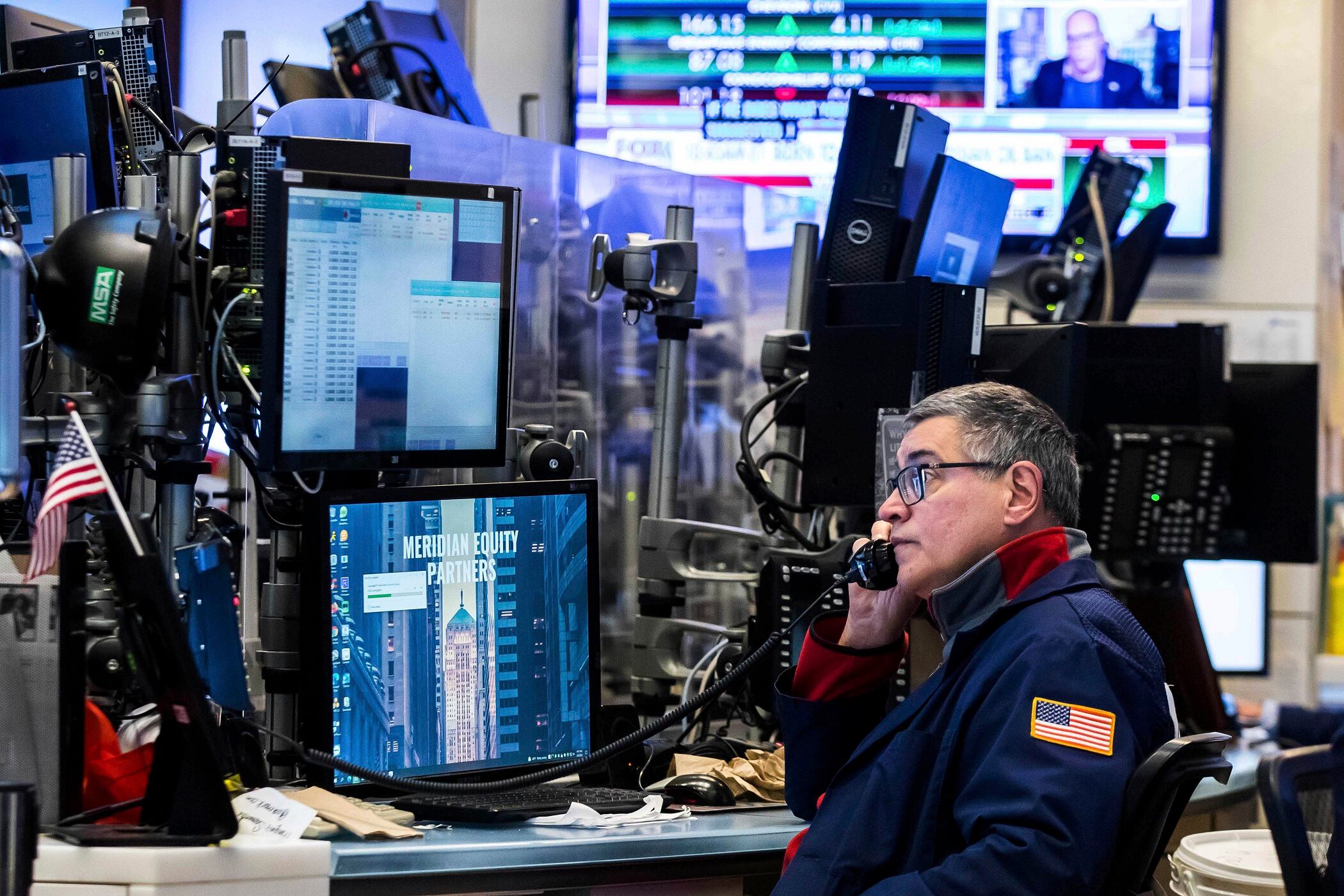
Stocks closed lower Tuesday following another wobbly day of trading on Wall Street, as oil prices climbed after the U.S. banned imports from Russia.
The economic fallout from its invasion of Ukraine also rocked the market for nickel, driving up its price so much that trading for the metal was shut.
The S&P 500 fell 0.7% after careening between a loss of 1% and a gain of 1.8%. Such wide swings have become common as investors struggle to guess how high oil prices will go, and how much they'll drag on the economy. The benchmark index lost 30.39 points to 4,170.70. It has fallen four days in a row and is now 13.1% below its record high set early this year.
Oil has surged on worries global supplies will be disrupted because Russia is one of the world’s largest energy producers. After President Joe Biden’s announcement of the Russian oil ban, the price of a barrel of U.S. crude rose 3.6% to settle at $123.70. Brent crude, the international standard, rose 3.9% to $127.98.
But oil prices did not climb as high as they did a day earlier, when worries flared about a possible ban and U.S. oil's price touched $130.50. As oil pared its gains following Biden's announcement, stocks also trimmed their losses.
The surprising reactions may have been a result of the big moves that markets already made a day earlier, in anticipation of the announcement, said Nate Thooft, chief investment officer of multi-asset solutions at Manulife Investment Management.
“You've seen the sanctions ramp up, but in the eyes of the market, that’s old news," he said. “Now that it's happened, and a lot of selling has already occurred, the market asks, ‘Who else is going to sell?’ and you have people buy into the market."
He expects the dizzying hour-to-hour swings to continue. Uncertainty is still high, and many investors are still anxious to trade quickly. “To me, for the traditional investor," he said, “this is one of those situations where you buy on weakness and close your eyes.”
The Nasdaq composite fell 35.41 points, or 0.3%, to 12,795.55. On Monday, it closed 20% below its record high. The Dow Jones Industrial Average fell 184.74 points, or 0.6%, to 32,632.64. It earlier swung from a loss of 238 points to a gain of 585.
Small company stocks held up better than the broader market. The Russell 2000 rose 11.68 points, or 0.6%, to 1,963.01.
Already high oil prices have pushed the average price of a gallon of gasoline in the country to a record high. Biden said he hopes to limit the pain for Americans, but he acknowledged that the ban will increase gasoline prices.
“Defending freedom is going to cost us as well,” he said.
Biden also said he understood many European allies may not be able to make similar moves, because they are much more dependent on Russian energy supplies. European nations have said they plan to reduce their reliance on Russia for their energy needs, but filling the void without crippling their economies will likely take some time.
“Markets just need time to digest things and they were credibly shocked when it (the invasion) happened,” said Kristina Hooper, chief global market strategist at Invesco. “It’s not a surprise that the E.U. is not going in with the U.S. on this, and that is certainly a positive for oil, but we also have to recognize that this is changing rather quickly.”
The U.S. ban on Russian oil imports is the latest move by governments and companies around the world to squeeze Russia’s finances following its attack of Ukraine. All the penalties raise questions about how high prices will go not only for oil but also for natural gas, wheat and other commodities where the region is a major producer. That’s in turn adding more pressure to the already high inflation sweeping the world, cranking up its hold on the global economy.
It's also making an already difficult path for the Federal Reserve and other central banks around the world even more treacherous. They’ve been hoping to raise interest rates enough to push down high inflation, but not so much as to cause a recession.
“This geopolitical risk has essentially reduced some of the Fed's policy risk and they are far less likely to make a policy error this year,” Hooper said. “The Fed does recognize this risk to U.S. policy and will tread more carefully.”
All the uncertainty has led to particularly wild trading for commodities, where challenges for supplies are colliding with strengthening demand as the global economy comes back from its coronavirus-caused shutdown.
Trading in nickel was suspended Tuesday on the London Metal Exchange after prices doubled to an unprecedented $100,000 per metric ton.
Nickel is used mostly to produce stainless steel and some alloys, but increasingly it is used in batteries, particularly electric vehicle batteries.
Russia is the world’s third-biggest nickel producer. And the Russian mining company Nornickel is a major supplier of the high-grade nickel that is used in electric vehicles.
The yield on the 10-year Treasury note, which is used to set interest rates on mortgages and many other kinds of loans, rose to 1.84% from 1.75% late Monday.
___
AP Business Writers Damian J. Troise, Yuri Kageyama and Alex Veiga contributed.
Updated on March 8, 2022, at 4:50 p.m. ET.