By Stan Choe
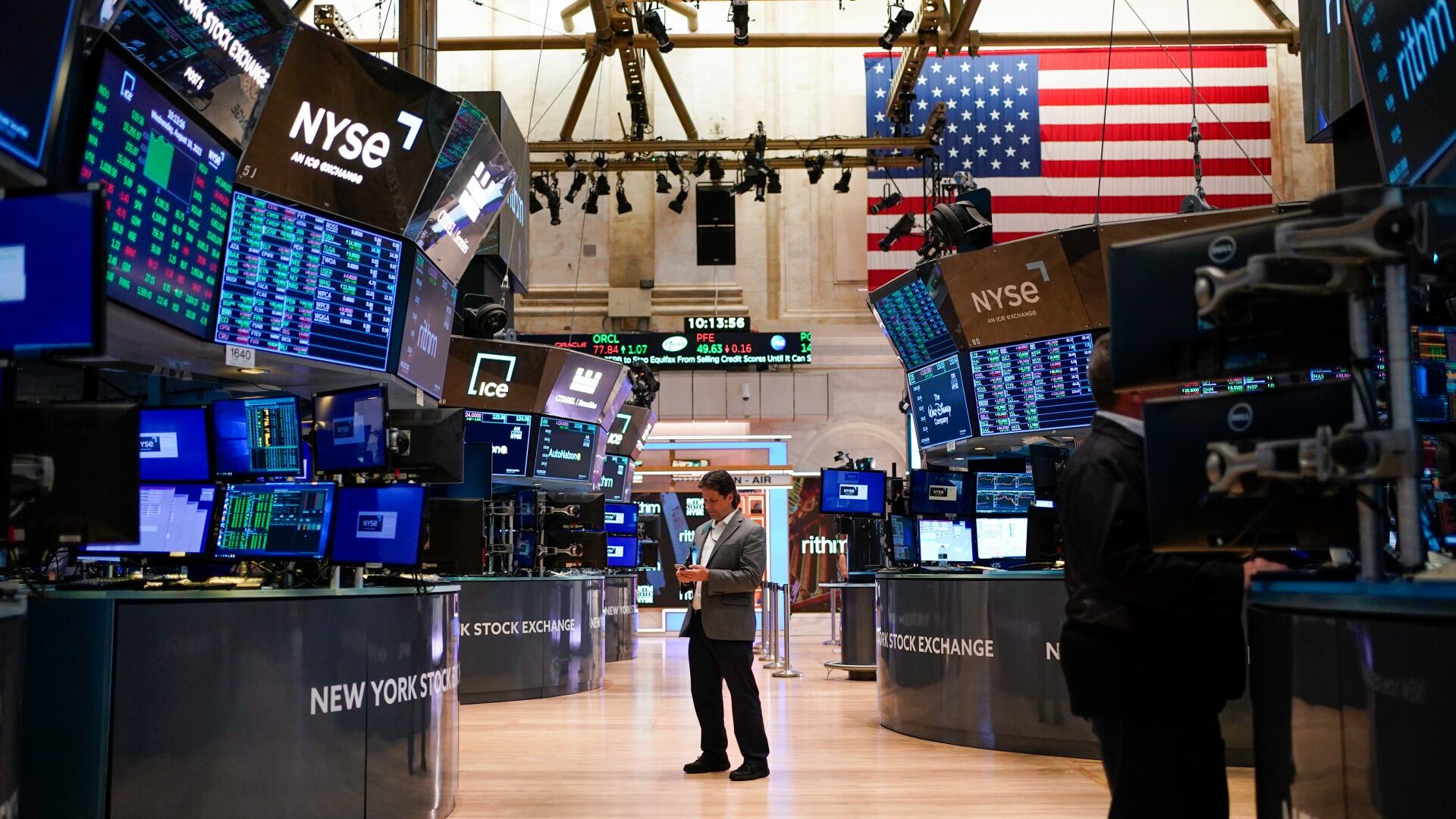
U.S. stocks drifted lower Monday to start what could be a quiet stretch following their best week since March.
The S&P 500 lost 8.58 points, or 0.2%, to 4,273.79. The Dow Jones Industrial Average fell 199.90, or 0.6%, to 33,562.86, while the Nasdaq composite slipped 11.34, or 0.1%, to 13,229.43.
The majority of stocks on Wall Street sank after a report showed growth fell short of economists' forecasts for businesses in the construction, accommodation and other U.S. services industries last month. It was still a fifth straight month of expansion, though.
It's the latest mixed reading for a U.S. economy that has defied forecasts for a recession but has begun to slow under the weight of higher interest rates.
“There’s this muddle-through environment that the market is starting to work through,” said Anthony Saglimbene, chief market strategist at Ameriprise Financial.
Monday's dip came after a weekslong rally carried Wall Street to its highest level since August. That was largely because a resilient job market has forced recession-callers to keep pushing out predictions for a downturn by another few months. Still, pressure remains on the economy from the squeeze of still-high inflation, interest rates and cracks in the U.S. banking system.
“The market is starting to build a degree of optimism that I think is warranted,” Saglimbene said. “Whether it comes to fruition remains to be seen.”
After helping to lead the market higher early in the day, a drop for heavyweight Apple helped drag the S&P 500 to its modest loss in the afternoon. It fell 0.8% after unveiling a long-rumored headset that will place its users between the virtual and real world. It will cost $3,500 when it's released early next year.
In the oil market, crude gained after Saudi Arabia said it would cut back production in hopes of boosting its price. A barrel of U.S. crude rose 0.6% to $72.15, and a barrel of Brent crude, which is the international standard, climbed 0.8% to $76.71.
Both were close to $120 a year ago, and their prices have fallen on worries that a strapped global economy would burn less fuel.
Elsewhere, Wall Street was relatively quiet. This upcoming week is light on earnings reports and top-tier economic data. That leaves few clues for the dominant question hanging over the market: Which will come first, the economy falling into a recession or inflation easing enough for the Federal Reserve to cut interest rates?
That’s why much attention is on next week, when the government will release the latest monthly updates on inflation at the consumer and wholesale levels. It’s also when the Fed will meet next on interest rate policy. Traders are largely betting that it will stand pat on rates, which would mark the first meeting where it hasn’t hiked in more than a year.
The bet on Wall Street, though, is that it could resume hiking rates in July. The reason for such a pause would be to allow the Fed time to assess how its frenetic set of rate hikes over the last year have affected the economy.
The goal of high rates is to lower inflation by slowing the entire economy and dragging down prices for stocks, bonds and other investments. With rates at their highest level since 2007, several high-profile U.S. bank failures since March have already shaken the market, while the manufacturing industry has been contracting for months.
Last week, though, data showed that U.S. employers unexpectedly accelerated their hiring in May, while increases in workers' wages slowed to keep some pressure off inflation. That helped bring Wall Street to the edge of what’s called a “bull market.”
If the S&P 500 rises 0.4% more and finishes a day above 4,292.44, it will be more than 20% above where it was in mid-October. That would mean Wall Street’s main measure of health has transformed from its frigid “bear market,” when it fell more than 20% over nine months, into a powerful bull.
In the bond market, the yield on the 10-year Treasury fell to 3.68% from 3.70% late Friday. It helps set rates for mortgages and other loans that shape the economy's strength.
The two-year Treasury, which moves more on expectations for the Fed, dropped to 4.45% from 4.51%. It had been higher earlier in the morning, before the weaker-than-expected report on the U.S. services industries thudded onto Wall Street.
In stock markets abroad, indexes were mostly lower in Europe. Japan's Nikkei 225 jumped 2.2%, while gains in other Asian markets were more modest.
AP Business Writers Matt Ott and Joe McDonald contributed.