By Stan Choe
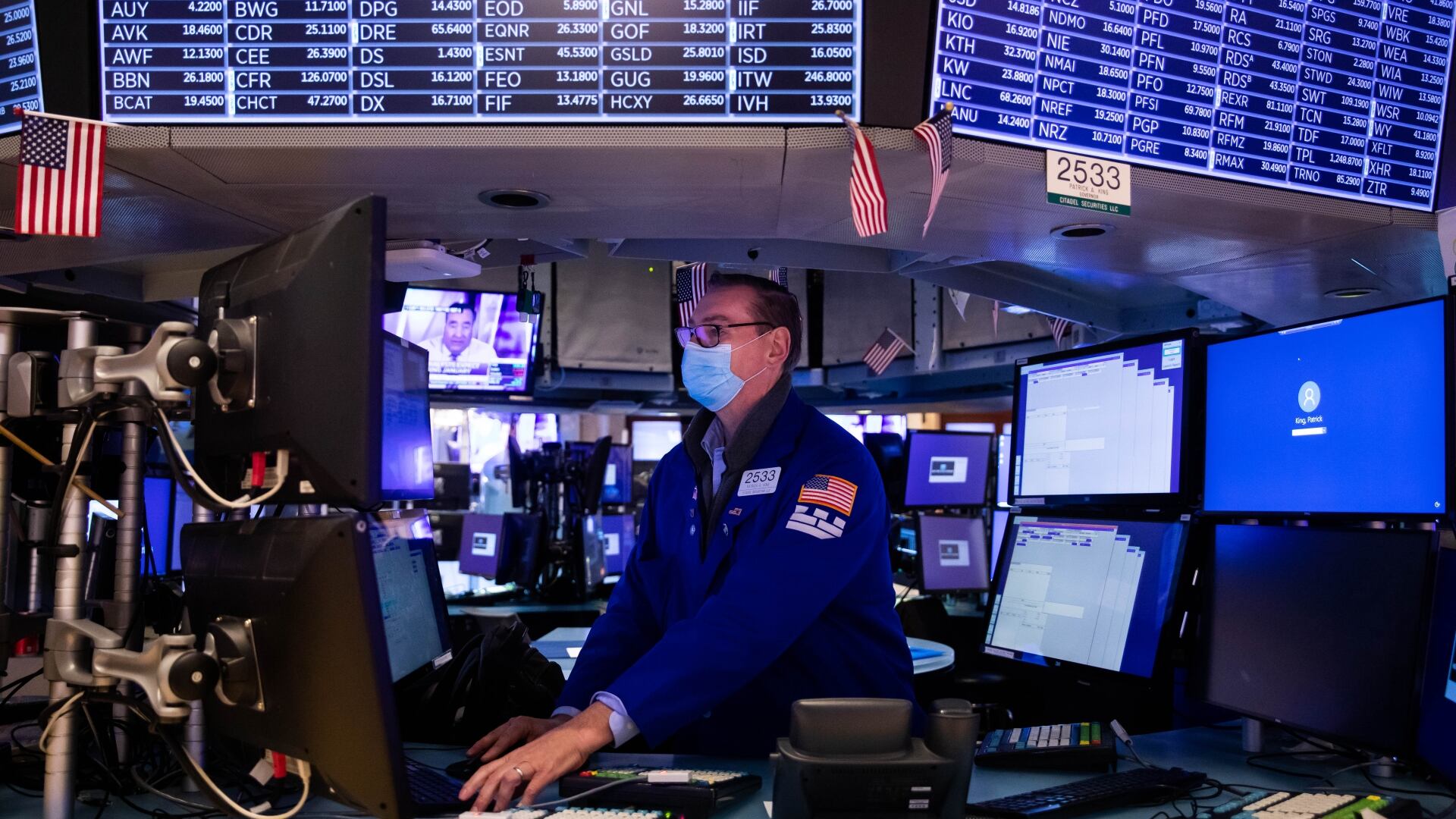
Stocks rose just enough Thursday for Wall Street to barrel into a new bull market as the S&P 500 keeps rallying off its low from last autumn.
The index rose 0.6% to carry it 20% above a bottom hit in October. That means Wall Street’s main measure of health has climbed out of a painful bear market, which saw it drop 25.4% over roughly nine months.
The Dow Jones Industrial Average added 168 points, or 0.5%. The Nasdaq composite, meanwhile, led the market with a 1% rise. That’s been the norm so far this bull run, as chip maker Nvidia and a handful of other big tech stocks have been responsible for the lion's share of Wall Street’s gains.
Declaring the end of a bear market may seem arbitrary, but it offers a useful marker for investors. It also provides a reminder that investors able to hold on through downturns have nearly always made back all their losses in S&P 500 index funds eventually.
Even though it was driven by so many superlatives — the worst inflation in generations and the fastest hikes to interest rates in decades, for example— this most recent bear market lasted only about nine months. It stretched from Jan. 3, 2022, when the S&P 500 set a record, until Oct. 12, when it hit bottom. That’s shorter than the typical bear market, and it also resulted in a shallower loss than average.
“In hindsight, it might not look that bad, but it certainly feels bad in the moment,” said Brent Schutte, chief investment officer at Northwestern Mutual.
What made last year even more painful for investors is that both stocks and bonds lost money, he said, something that hasn’t happened in decades.
A good chunk of this bull market’s gains has been because the economy has refused to fall into a recession despite repeated predictions for one. It’s withstood the highest interest rates since 2007, three high-profile collapses of U.S. banks since March, another threat by the U.S. government of an economy-shaking default on its debt and a series of other challenges.
“Bottom line, the economy has been very resilient,” said Anthony Saglimbene, chief markets strategist at Ameriprise Financial.
“So much negativity was built into the market,” he said. “While it’s too early to know this for sure, stocks look like they’re doing what they normally do when all the negativity has been discounted into the stock market: They start moving higher in anticipation of better days ahead.”
Not only has the economy avoided a recession because of a remarkably solid job market and spending by consumers, hopes are also rising that the Fed may soon stop hiking interest rates.
High rates work to undercut inflation by slowing the entire economy and dragging on prices for stocks and other investments.
The broad expectation among traders is that the Fed will hold rates steady next week, which would mark the first meeting where it hasn’t raised rates in more than a year. While it may hike rates one more time in July, the hope on Wall Street is that it won’t go beyond that. Inflation has been coming down from its peak last summer.
But many challenges still remain for the stock market.
Chief among them is that no one can be sure when the Fed will stop hiking rates. Even if inflation has eased, it’s remained stubbornly above the Fed’s comfort level and still causes pain for all kinds of households, particularly ones with lower incomes.
That has some investors continuing to prepare for a coming recession, even if they keep pushing out predictions for when it will arrive by a few months.
“It’s been an odd and uneven recovery” coming out of the recession caused the COVID pandemic, Northwestern Mutual’s Schutte said. “It’s been an odd and even push into recession.”
Another warning sign for skeptics is how much of the S&P 500’s gains have been concentrated this year within just a handful of stocks.
Hopes for a pause by the Fed have helped big, high-growth stocks in particular. Investors see them benefiting the most from easier interest rates because that’s what’s happened in the past.
Add on top of that euphoria around artificial intelligence fanned by last month’s tremendous sales forecast by Nvidia, and just seven stocks have been responsible for the majority of the S&P 500’s gain this year.
Nvidia, Apple, Microsoft and other Big Tech giants have huge influence on the S&P 500 because they’re the biggest, and the index gives more weight to stocks based on their size. Nearly half the stocks in the S&P 500, meanwhile, are down for the year so far.
Thursday offered a good example. The biggest forces pushing the S&P 500 upward included Apple, Microsoft and Nvidia. Big Tech gained as expectations built for the Fed to take a pause on rates next week.
That was because a report showed the highest number of U.S. workers applied for unemployment benefits last week since October 2021. A cooling labor market could push against pressure that may have built for tougher policy after central banks in Canada and Australia hiked their own interest rates recently.
But the S&P 500 was nearly split between winners and losers. Smaller stocks in the Russell 2000 index, meanwhile, slipped 0.4%.
The arrival of a bull market also doesn’t mean the stock market has made it back to its prior heights. Because of math, a 25% drop for the S&P 500 requires a 33% rally to follow in order to just get back to even.
All told, the S&P 500 rose 26.41 points to 4,293.93. The Dow gained 168.59 to 33,833.61, and the Nasdaq rose 133.63 to 13,238.52.
After the unemployment data hit the market, Treasury yields gave up gains from earlier in the morning. The yield on the 10-year Treasury fell to 3.71% from 3.78% late Wednesday. It helps set rates for mortgages and other important loans.
The two-year yield, which moves more on expectations for the Fed, fell to 4.53% from 4.55%.
AP Business Writers Yuri Kageyama and Matt Ott contributed.