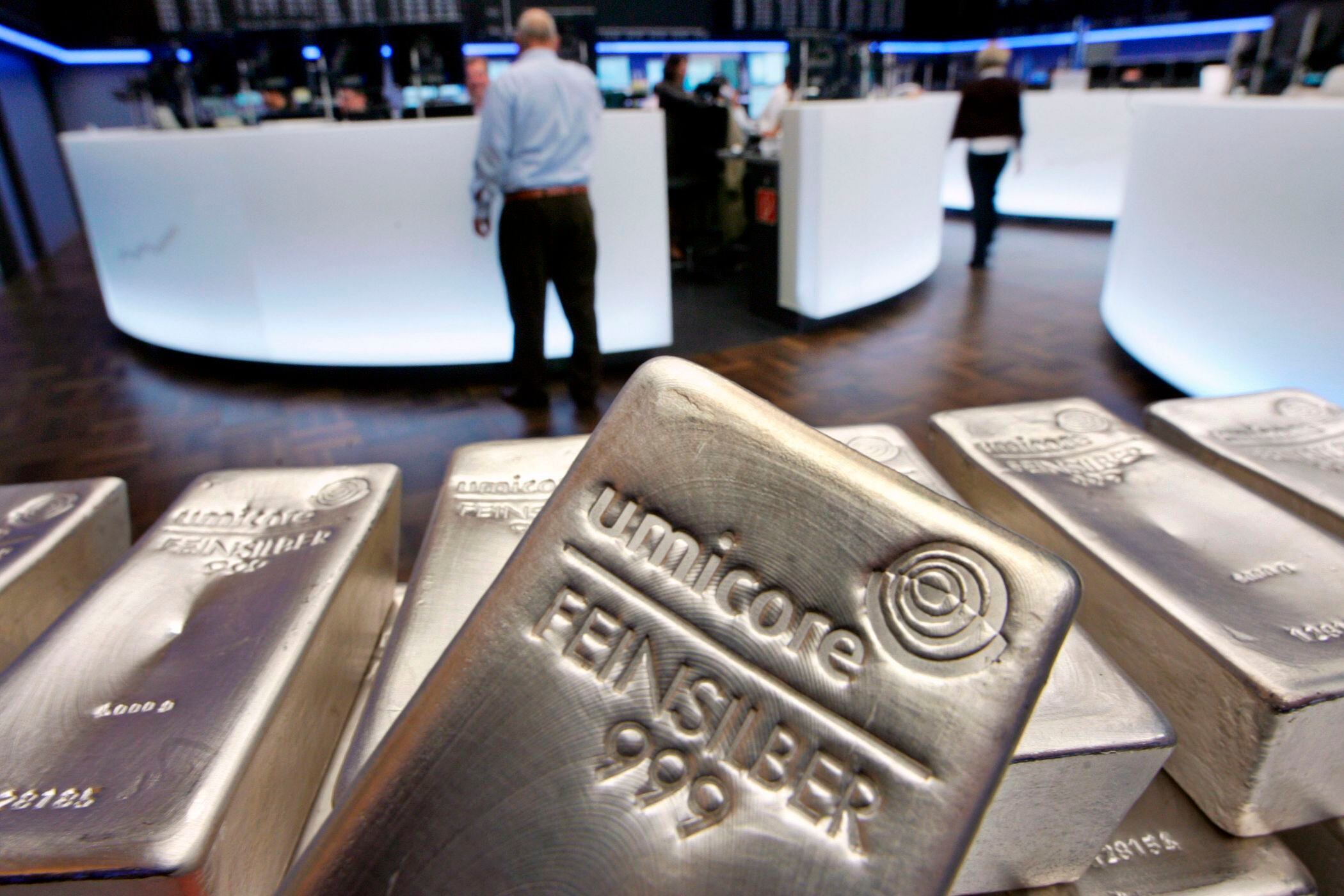
The erratic trading in shares of underdog companies like GameStop that turned markets combustible last week appears to have migrated to commodities, sending silver prices surging to an eight-year high.
Silver futures jumped more than 9% on Monday to $29.42 per ounce with #silversqueeze trending on Twitter. That exuberance spread to companies that mine precious metals, especially silver. Shares of Pan American Silver surged more than 9%, First Majestic Silver rose 18.7%, Hecla Mining spiked 21.8%, and Coeur Mining soared 17.6%.
Some analysts called price jump the latest assault by the smaller investors who sent GameStop soaring recently. But many of those same traders instead called it a trap set by hedge funds to divert their attention away from GameStop, as the saga captivating Wall Street gets even more dramatic.
An online army of Reddit traders banded together for the past week to snap up thousands of shares of GameStop, AMC and other struggling chains, stocks that have been heavily shorted (bets that the stock will fall) by a number of hedge funds. In the process, they've done heavy damage to those hedge funds in a stunning reversal of financial power on Wall Street.
Some of these smaller traders believe the hedge funds that were pillaged last week are behind the surge in silver. Communications on messaging boards claim hedge funds have now become active on Reddit anonymously, attempting to drive them out of GameStop bets and into silver, but only after hedge funds had taken huge positions.
“IT’S A TRAP!” one Redditor warned, though no one really seemed certain.
Meanwhile, GameStop shares dropped 28% to $233 but the stock price has been tremendously volatile of late. Last week a 44% drop on Thursday was followed by a 68% jump Friday.
The number of GameStop shares that have been shorted (bets that the stock will fall), were slashed by more than half in recent days, according to a report Monday by the analytics firm S3 Partners.
Last week’s turmoil caused hedge funds to pull back on their investments by the sharpest degree since February 2009, during the market collapse caused by the financial crisis, according to Goldman Sachs, which provides services such as clearing and consulting to hedge funds.
Goldman says hedge funds have have been getting out of both short sales, where they’re betting a stock will fall, and more traditional investments that bank on rising prices “in every sector,” according to a Goldman Sachs report Monday.
Even so, hedge funds' exposure to the stock market remains close to record levels. That means there’s still risk for more sell-offs by hedge funds.
The narrative has burst from financial pages, reaching even the White House, where President Joe Biden and Treasury Secretary Janet Yellen were peppered with questions about it last week.
On Monday, White House press secretary Jen Psaki was asked about GameStop and said that the incident/market volatility raises “an important set of policy issues.”
“We think congressional attention to these issues is appropriate,” Psaki adds.
The story has also moved out of Reddit chatrooms and into places where silver actually trades hands. Coin dealers are being overwhelmed by orders Monday.
The Silver Mountain, a Netherlands-based bullion dealer, said on its website that, “Due to extreme market volatility we cannot accept any new orders at this moment,” adding it hoped to reopen by the afternoon.
____
Jonathan Lemire contributed to this story from Washington.
Updated on February 1, 2021, at 3:42 p.m. ET with the latest details.