By Paul Wiseman
The reprieve is over. Just as the American economy is struggling with high inflation and interest rates, the coming resumption of student loan payments poses yet another potential challenge.
The suspension of federal student loan payments, which took effect at the height of the pandemic in 2020, expires late this summer. Interest will start accruing again in September. Payments will resume in October.
Though many hoped their loans might at least be lightened, the Supreme Court last week struck down a Biden administration plan that would have given millions of people some relief from the return of the loan payments. The Biden plan would have canceled up to $20,000 in federal student loans for 43 million borrowers; 20 million would have had their loans erased entirely. The court ruled that the plan exceeded the government’s authority.
The restart of those payments will force many people to start paying hundreds of dollars in loans each month — money they had been spending elsewhere for the past three years. Their pullback in spending on goods and services won't likely make a serious dent in the $26 trillion U.S. economy, the world's largest. Any pain instead will likely be concentrated in a few industries, notably e-commerce companies, bars and restaurants and some major retailers.
Even if all that won't be enough to weaken overall economic growth, the shift in spending by many young adults could inject further uncertainty into an economy already beset by uncertainties, from whether the Fed will manage to tame inflation and halt its interest rate hikes to whether a recession is destined to strike by next year, as many economists still fear.
Josh Bivens, chief economist at the Economic Policy Institute think tank, suggested that the likely hit to the economy might amount to perhaps one-third of a percentage point of gross domestic product — the nation's total output of goods and services — or about $85 billion or $90 billion a year.
It's “not trivial, but it’s not huge,’’ Bivens said. “At the macro level, my guess is that it won’t be a game-changer.’’
The continued willingness of consumers to spend has kept the economy humming despite more than a year of dramatically rising interest rates. Consumers have had the financial wherewithal to load up Amazon shopping carts, go out for dinner and buy everything from lawn furniture to new refrigerators, in part because the government spent around $5 trillion since 2020 to cushion the economic damage from COVID-19.
But those pandemic relief programs, including the student loan moratorium, are ending and adding to the obstacles the economy is facing.
The suspension of loan payments “had given people a bit more money in the pocket, and they’ve gone out and they’ve spent that money,’’ said Neil Saunders, managing director of the GlobalData Retail consultancy.
Deutsche Bank analysts who follow the retail industry estimate that the resumption of the loan payments could shrink consumer spending by $14 billion a month, or an average of $305 per borrower. The biggest blow, they say, will likely be absorbed by online commerce and mail-order companies and by restaurants and bars.
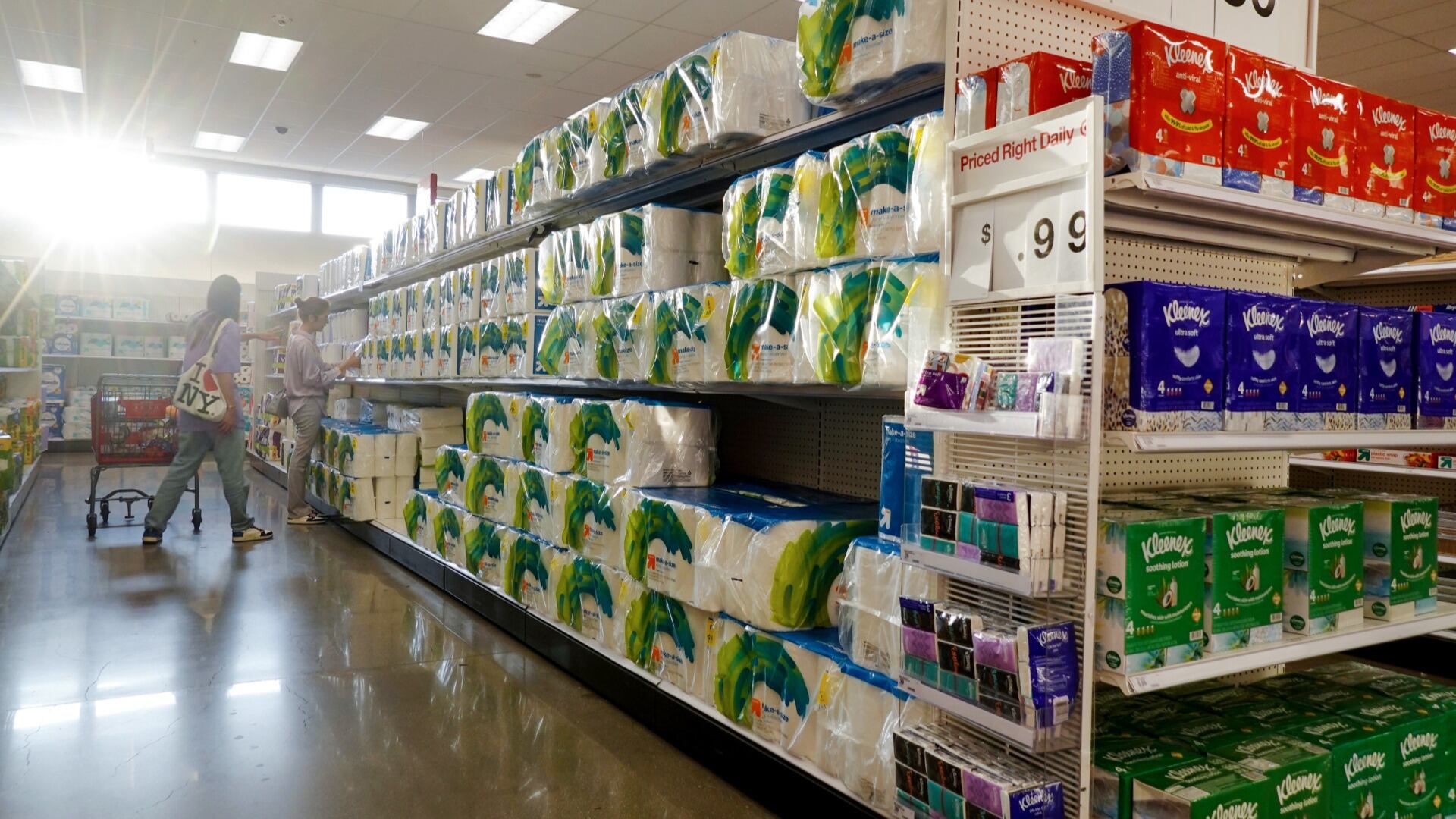
Among the individual companies that could be hurt, according to the Deutsche Bank analysis, are Macy’s, Target and Kohl’s. The largest retailer, Walmart, is thought to be insulated from major damage because of its grocery business. (Walmart is also the nation's largest grocer.)
Dollar stores and other discounters might even benefit if more financially squeezed consumers turn to bargain-hunting.
Jan Hatzius, chief economist at Goldman Sachs, and his colleagues say they expect the end of the student loan moratorium to impose a “modest drag’’ on the economy, shaving 0.2% off growth in consumer spending this year. The dent to spending would have been half as much, they say, if the Supreme Court had allowed the Biden debt forgiveness program to proceed.
The economy has endured a wild ride since COVID-19 hit in early 2020. A deep recession engulfed the economy in March and April that year. Massive government aid fueled a rebound of surprising speed, strength and resilience.
But it came at a price: Surging demand from consumers overwhelmed the world’s factories, ports and freight yards, resulting in delays, shortages — and much higher prices. Inflation surged last year to heights not seen since the early 1980s.
In response, the Fed began jacking up its benchmark short-term rate in March 2022. Since then, it’s raised its key rate 10 times. Higher borrowing costs have had the intended effect of slowing the economy and price acceleration. From a year-over-year peak of 9.1% in June 2022, consumer price inflation fell to 4% in May. Yet that’s still twice the Fed’s 2% target. So the central bank has signaled that more rate hike are likely this year.
At the same time, the government has been phasing out pandemic relief. Extended unemployment aid ended in September 2021. An expansion of the food stamps program ended this year.
The savings that Americans had socked away beginning at the peak of the pandemic — when they were receiving government relief checks and saving money while hunkered down at home — are evaporating. Fed researchers have reported that any “excess’’ pandemic savings probably dried up in the first three months of 2023.
Despite everything, the economy has proved surprisingly durable. The government last week sharply upgraded its estimate of January-through-March economic growth to a 2% annual rate and said consumers were spending at their fastest pace in nearly two years. Factor in a still-robust job market — employers keep hiring briskly, and unemployment, at 3.7%, is barely above a half-century low — and the economy has repeatedly outrun predictions, first sounded more than a year ago, that a recession was inevitable.
“The economy has really powered through it,’’ Bivens said. “So what is the straw that breaks the camel’s back? My guess is it’s not this. I don’t think it’s a big-enough thing.’’
Still, Bivens said, he worries about the Fed rate hikes and federal cutbacks, including the end of the student loan payment moratorium, “throwing more contractionary shocks’’ at an American economy that has defied the doubters — at least for now.
AP Retail Writer Anne D'Innocenzio contributed to this report from New York.