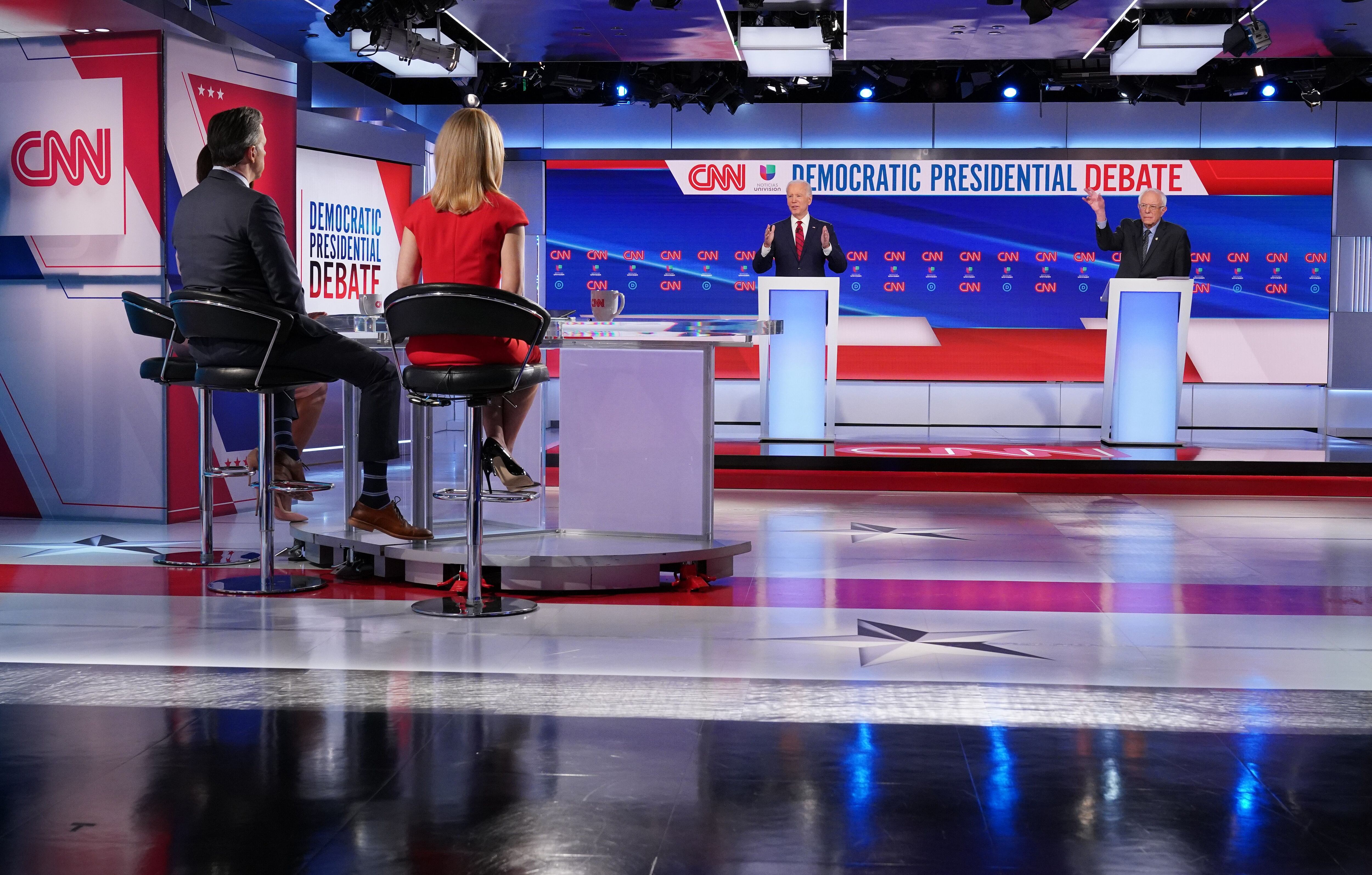
(L-R) Moderators Univision's journalist Ilia Calderon (hidden), CNN chief Washington correspondent Jake Tapper and CNN political correspondent Dana Bash listen to Democratic presidential hopefuls former US vice president Joe Biden and Vermont Senator Bernie Sanders take part in the 11th Democratic Party 2020 presidential debate in a CNN Washington Bureau studio in Washington, DC on March 15, 2020. (Photo by MANDEL NGAN / AFP) (Photo by MANDEL NGAN/AFP via Getty Images)
By Bill Barrow
There is no 12th Democratic presidential debate on the horizon now that the nominating process is in a holding pattern due to the coronavirus pandemic.
One of the Democratic National Committee's lead debate organizers, Xochitl Hinojosa, said the party has not set a date or secured a television broadcasting partner for what would be the final encounter of the dozen that DNC Chairman Tom Perez promised at the campaign's outset.
There's no evidence that either Joe Biden, the prospective nominee, or Bernie Sanders, Biden's last remaining rival, is clamoring for a debate, and there's doubt among the candidates' advisers that one will occur.
The first 10 Democratic debates were held in public venues before audiences of party officials and candidates' supporters. CNN and the DNC moved the March 15 debate, the first after U.S. officials publicly urged a massive coronavirus response, from Phoenix to the network's Washington studios. There was no live audience, and the candidates stood 6 feet (1.83 meters) apart, recognizing the public health recommendations.
Since then, Mayor Muriel Bowser of the District of Columbia has issued a stay-at-home order urging only nonessential workers to move about the nation's capital. New York, where national television networks are based, now has among the most serious coronavirus outbreaks of any U.S. city.
The next debate was expected to be in an East Coast location before the April 28 primary anchored by New York. That primary remains scheduled for now, but several states, including Maryland, Rhode Island, and Connecticut, have pushed back to join New Jersey on June 2.
The 11th debate, the relocated one, was the first between just Biden and Sanders and came after the rest of the field had either dropped out or failed to meet debate qualifications. Biden had established a clear delegate lead over Super Tuesday and March 10 primaries. Sanders' aides said at the time that the Vermont senator wanted to use the forum to trumpet his progressive agenda as a democratic socialist against the former vice president's more establishment approach.
Sanders' team is making no such noise now. “If there is a debate in April, he plans to be there,” Sanders spokesman Mike Casca said. It was a notably muted tone for a campaign and candidate often critical of the DNC and the “establishment media" for alleged unfair treatment.
For most people, the new coronavirus causes mild or moderate symptoms, such as fever and cough that clear up in two to three weeks. For some, especially older adults and people with existing health problems, it can cause more severe illness, including pneumonia, and death.
Associated Press writer Will Weissert in Washington contributed to this report.
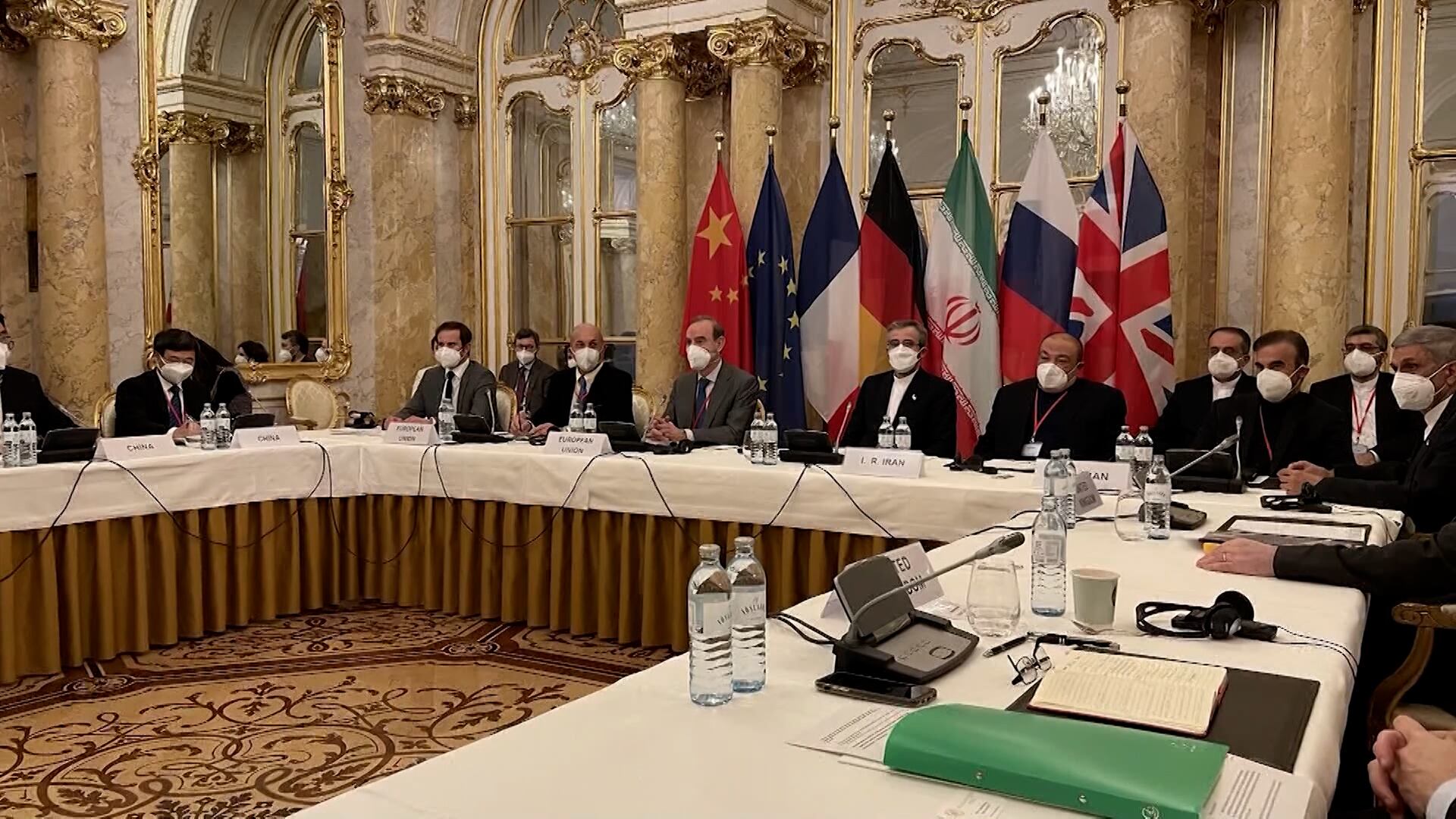
The U.S. is back in negotiations for a nuclear deal with Iran, years after former President Donald Trump withdrew the country from the Joint Comprehensive Plan of Action (JCPOA), which had been meant to curtail the Middle Eastern nation's nuclear ambitions. Former State Department senior advisor to the George W. Bush and Trump administrations, Christian Whiton, joined Cheddar News Wrap to discuss. “It appears to be very similar to the original JCPOA, which does put some constraints on Iran's nuclear program, but also has sunset provisions, including some that in the original plan were expected to take effect in 2025," he said. "And so, if we just reenter that plan, really it just buys perhaps a few years of slowing down, stopping, whatever you want to say, Iran's nuclear program."
The U.S. has announced the first of what could be multiple levels of sanctions against Russia after Moscow recognized two regions of Ukraine as independent. This comes as Britain imposes sanctions on five Russian banks and two oligarchs, and Germany freezes the Nord Stream gas pipeline. Terrell Star, a foreign affairs reporter at The Atlantic Council, joins from Kyiv to discuss.
Growing tensions in Ukraine might soon be impacting consumers in the United States. With Russia on an invasion footing in the region, gas prices are predicted to go up 10 to 15 cents a gallon in the next coming weeks, according to Robert Sinclair, spokesperson for AAA. Sinclair joined Cheddar to break down what could happen even further. "We've been seeing prices go up, and there's been nothing that's happened to affect supplies," he said. "But it's something known as the fear tax where just the talk of something that might interfere with supplies leads to prices going up speculatively."
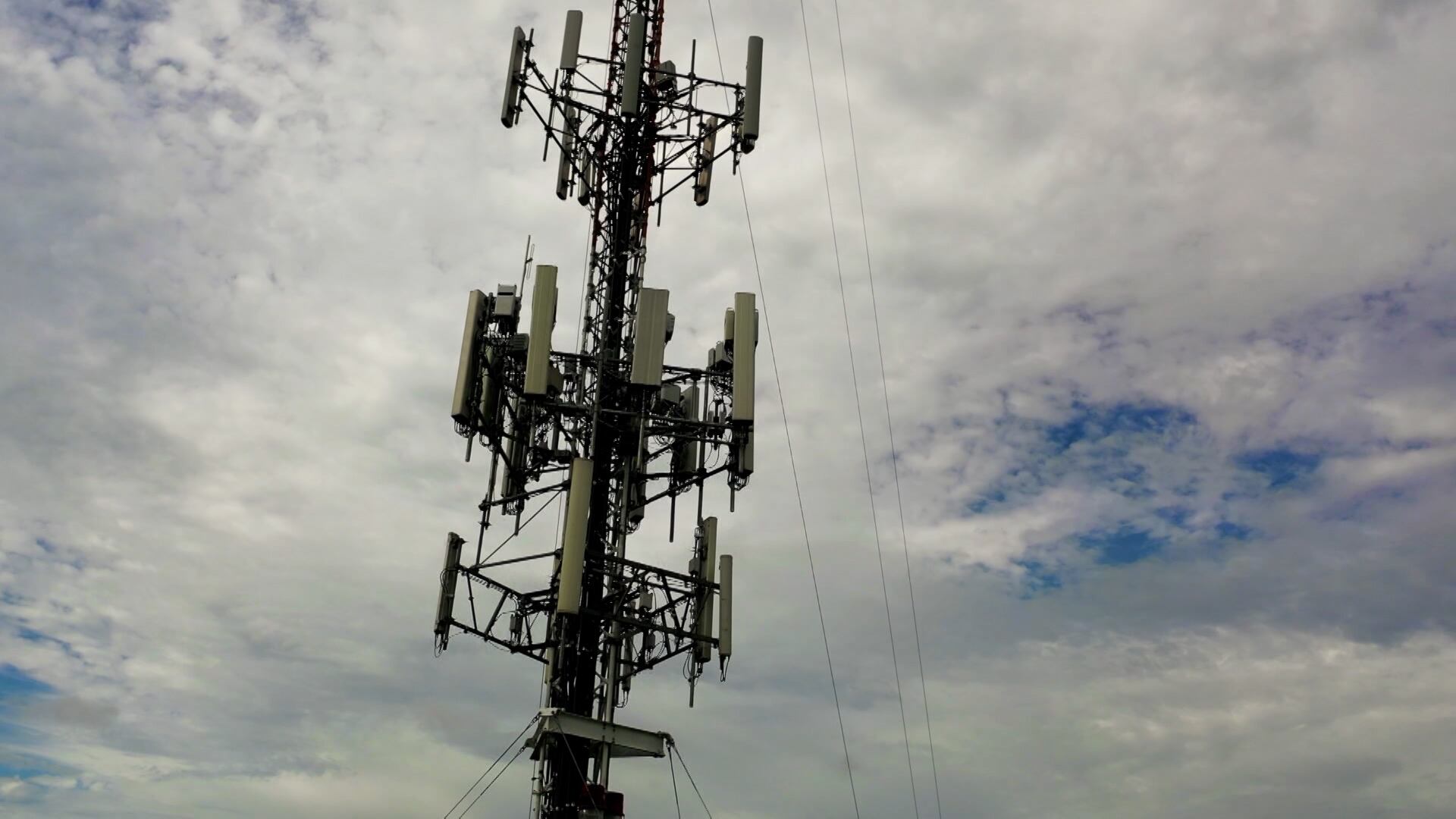
The end of 3G is upon us. On Tuesday, AT&T became the first major provider to disable its 3G services, and T-Mobile and Verizon plan to follow suit later this year. The shutdowns are expected to impact millions of vehicles that use 3G networks for updates, remote connection, and certain emergency and convenience features. Lance Ulanoff, the U.S. Editor-in-Chief of TechRadar, joined Cheddar's Closing Bell to discuss the ramifications of the changeover.
A new report shows nearly 240 former officials in Congress, the White House, and regulatory agencies have changed careers to work in the crypto industry.
President Biden unveiled new economic sanctions on Russia for what he called "the beginning of a Russian invasion". This came one day after Putin sent troops into two breakaway regions of eastern Ukraine. Alex Ward, national security reporter for POLITICO, explains what these sanctions might do to the global economy.
U.S. stocks ended today's session sharply lower on the heels of rising geopolitical tensions between Russia and Ukraine. Melissa Brown, Managing Director of Applied Research at Qontigo, joins Cheddar News' Closing Bell to discuss.
President Joe Biden said Tuesday that the U.S. will begin to impose sanctions on Russia, calling recent troop movement into Ukraine an 'invasion.' Biden and other government officials including from the State Department have begun to classify the Russian troop movement as an invasion after Russian President Vladimir Putin ordered troops to two independent Ukrainian areas in an alleged "peacekeeping" mission — which the West considers an act of aggression. Biden said Russia will continue to pay 'an even steeper price' if it continues sending troops into Ukraine. What happens next? Will Putin find a way around these sanctions? Ariel Cohen, senior fellow at the Atlantic Council, joins Closing Bell to discuss Biden's remarks, how the West will protect Ukraine since it doesn't belong to NATO, and more.