By Stan Choe, Damian J. Troise, and Alex Veiga
Oil futures plunged below zero on Monday, the latest never-before-seen number to come out of the economic coma caused by the coronavirus pandemic.
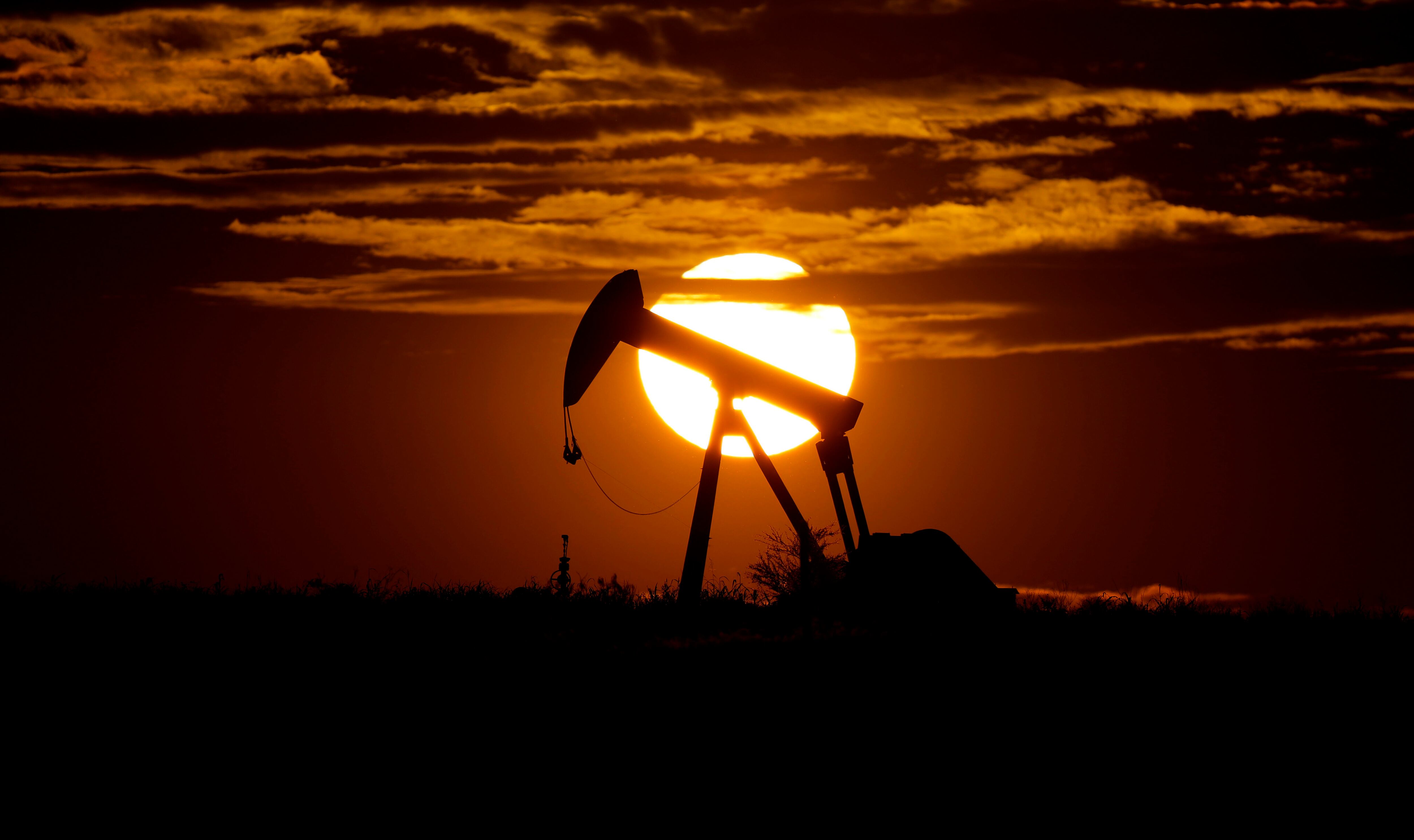
Stocks and Treasury yields also dropped on Wall Street, with the S&P 500 down 1.8%, but the market’s most dramatic action by far was in oil, where the cost to have a barrel of U.S. crude delivered in May plummeted to negative $37.63. It was at roughly $60 at the start of the year.
Traders are still paying $20.43 for a barrel of U.S. oil to be delivered in June, which analysts consider to be closer to the “true” price of oil. Crude to be delivered next month, meanwhile, is running up against a stark problem: traders are running out of places to keep it, with storage tanks close to full amid a collapse in demand as factories, automobiles and airplanes sit idled around the world.
Tanks at a key energy hub in Oklahoma could hit their limits within three weeks, according to Chris Midgley, head of analytics at S&P Global Platts. Because of that, traders are willing to pay others to take that oil for delivery in May off their hands, so long as they also take the burden of figuring out where to keep it.
“Almost by definition, crude oil has never fallen more than 100%, which is what happened today,” said Dave Ernsberger, global head of pricing and market insight at S&P Global Platts.
“I don’t think any of us can really believe what we saw today,” he said. “This kind of rewrites the economics of oil trading.”
Also exacerbating the volatility is that few traders are buying and selling U.S. oil to be delivered in May. They won’t even have the opportunity to do so after Tuesday, when trading contracts for it expire and the earliest delivery they’ll be able to buy is for June.
Brent crude, the international standard, fell nearly 9% to $25.57 per barrel.
The plunge in oil sent energy stocks in the S&P 500 to a 3.7% loss, the latest in a dismal 2020 that has caused their prices to nearly halve.
Halliburton lurched between gains and sharp losses, even though it reported stronger results for the first three months of 2020 than analysts expected. The oilfield engineering company said that the pandemic has created so much turmoil in the industry that it “cannot reasonably estimate” how long the hit will last. It expects a further decline in revenue and profitability for the rest of 2020, particularly in North America.
The S&P 500 fell 51.40 points to 2,823.16. The Dow Jones Industrial Average lost 592.05 points, or 2.4%, to 23,650.44, and the Nasdaq dropped 89.41, or 1%, to 8,560.73.
The losses ate into some of the big gains indexes have made since late March, driven lately by investors anticipating the potential reopening of businesses as infections level off in hard-hit areas. Pessimists have called the rally overdone, pointing to the severe economic pain sweeping the world and continued uncertainty about how long it will last.
“The government can declare whatever they want in terms of encouraging people to get out and do stuff,” said Willie Delwiche, investment strategist at Baird. “Whether or not broad swaths of society do that remains to be seen. It’s going to take seeing people start to get out and do stuff again. That will be the necessary positive development, not just declaring getting things open.”
More gains from companies that are winners in the new stay-at-home economy helped limit the market’s losses. Netflix jumped 3.4% to set another record as people shut-in at home look to fill their time. Amazon added 0.8%.
In Asia, Tokyo’s Nikkei 225 fell 1.1%. The Hang Seng index in Hong Kong lost 0.2%, and South Korea’s Kospi fell 0.8%.
European markets were modestly higher. The German DAX was up 0.5%, the French CAC 40 was up 0.7% and the FTSE 100 in London gained 0.7%.
In a sign of continued caution in the market, Treasury yields remained extremely low. The yield on the 10-year Treasury slipped to 0.62% from 0.65% late Friday.
Stocks have been on a general upward swing recently, and the S&P 500 just closed out its first back-to-back weekly gain since the market began selling off in February. Promises of massive aid for the economy and markets by the Federal Reserve and U.S. government ignited the rally, which sent the S&P 500 up as much as 28.5% from a low on March 23.
More recently, countries around the world have tentatively eased up on business-shutdown restrictions put in place to slow the spread of the virus.
But health experts warn the pandemic is far from over and new flareups could ignite if governments rush to allow ”normal” life to return prematurely. The S&P 500 remains nearly 17% below its record high as millions more U.S. workers file for unemployment every week amid the shutdowns.
Many analysts also warn that some of the recent rally for stocks is due to expectations the economy will pivot quickly and rebound sharply once economic quarantines are lifted. Those could prove to be too optimistic.
“There’s still uncertainty surrounding the reopening of the economy,” said Julian Emanuel, chief equity and derivatives strategist at BTIG. “Come fall, are we going to be back on airplanes? Are we going to go out and eat?”
___
AP Business Writer Elaine Kurtenbach contributed.