New York planned for a long fight against the coronavirus outbreak amid hopeful hospitalization trends. Gov. Andrew Cuomo extended stay-at-home restrictions Thursday through mid-May and New York City is getting ready to use 11,000 empty hotel rooms for coronavirus quarantines. Meanwhile, Mayor Bill de Blasio said the city is grappling with a projected $7.4 billion loss in tax revenue because of the crisis.

Here are the latest coronavirus developments in New York:

RESTRICTIONS EXTENDED

New York state will extend its stay-at-home restrictions at least through May 15 amid signs the initial wave of the coronavirus outbreak is slowing down.

Cuomo said Thursday that transmission rates still need to be tamed as he prolonged the restrictions that have left most New Yorkers housebound.

The number of people hospitalized statewide has ticked down to around 17,000, far below initial projections. But there are still close to 2,000 newly diagnosed people coming into hospitals daily, Cuomo said.

New York recorded 606 COVID-19-related deaths Wednesday, the lowest daily number in more than a week.

“This is still continuing at a really tragic, tragic rate,” Cuomo said at a press briefing.

The governor said the requirement for New Yorkers to wear face coverings when people are out and close by other people starting Friday will also help fight the outbreak.

____

NEW PLAN FOR HOTEL ROOMS:

After initially lining up hotels to become temporary hospitals, the city is now planning to use the rooms as quarantine sites for some people in crowded apartments, for some homeless shelter residents and for health care workers who don’t want to risk infecting family members, de Blasio said.

In some communities where infection rates are high, some people are living in cramped multi-generational households, the mayor noted.

“If there is a threat that someone might get infected in the home and it might spread amongst the members of that family, we have to guard against that,” he said.

De Blasio said the city will work with community health centers to identify who needs the service and will start moving people into hotel rooms on April 22.

Initially, “our projections told us we might have to use a vast number of hotels, dozens and dozens, to be able to accommodate all the medical needs,” he said. “So far, thank God, that has not been the case.”

The COVID-19 virus causes mild or moderate symptoms for most people. For some, especially older adults and people with existing health problems, it can cause more severe illness or death.

BUDGET CRUNCH

New York City expects to take a $7.4 billion budget hit over the next 15 months because of the coronavirus, de Blasio said Thursday as he detailed planned cuts and appealed to President Donald Trump and Congress for an infusion of cash for cities and states.

“If you lead, the Senate will follow. If you are silent, they will not. It’s on you, Mr. President,” the Democrat said at a news briefing. He said he spoke Wednesday to the Republican president and told him “his hometown needs him.”

The city so far has spent over $700 million to handle the virus outbreak and expects to spend a total of $3.5 billion by the end of December, according to a news release from the mayor's office.

The new spending has come as tax revenues are shrinking. The mayor’s new $89.3 budget proposal, released Thursday, trims projected tax revenue by $2.2 billion in the current budget year, and it’s $5.2 billion lower than his earlier plan for the fiscal year that begins in July.

The city has drawn on reserves, and it’s also saving on some programs because of virus-related shutdowns. But the mayor’s plan also calls for making a wide variety of trims: everything from delaying an expansion of its free prekindergarten program for 3-year-olds to reducing tree pruning, and from suspending a summer-job program for young people to closing city pools this summer in light of the virus.

Still, there are uncertainties about whether it will be enough. The city Independent Budget Office on Wednesday projected a $9.7 billion revenue shortfall in this budget year and next. De Blasio said he respects the independent agency but stands by City Hall’s projections.

He said layoffs or furloughs would be a last resort, but “honestly, that decision rests in Washington.”

“Washington has to step in so we can provide basic services," he said. “We must have that stimulus money, or else we’re going to have to make horrible choices.”

Share:
More In Culture
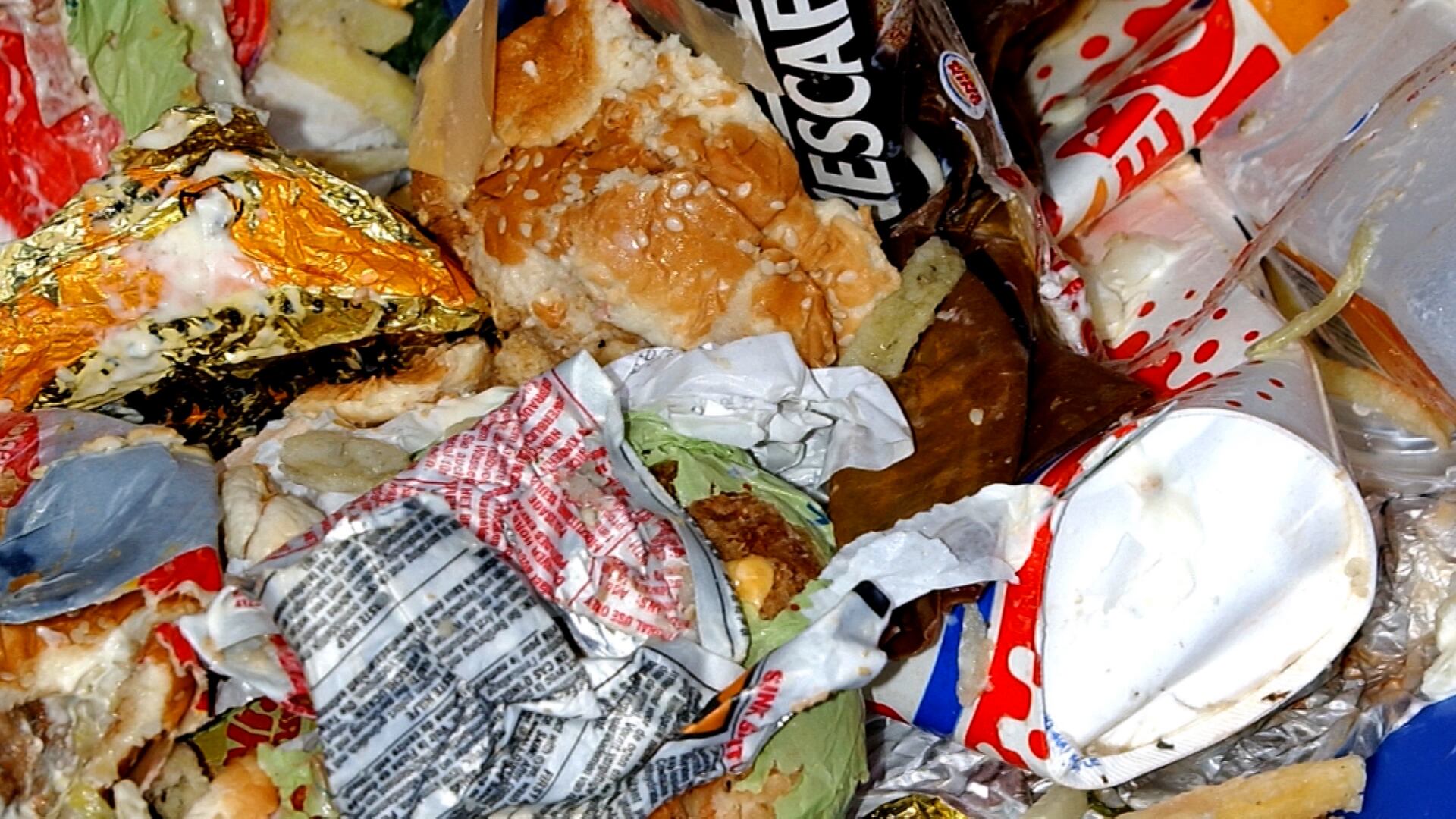
California Starts Largest U.S. Food Waste Recycling Program
California's new composting law will affect what residents do in their kitchens. As of this week, Californians will have to recycle excess food in an effort to reduce emissions caused by food waste. Cities and counties will turn recycled food into compost or use it as a renewable energy source. California's new law is the largest mandatory residential food waste recycling program in the country. Rachel Wagoner, Director of the California Department of Resources, Recycling and Recovery called the law 'the biggest change to trash' since recycling started in the 1980s. She joined Cheddar Climate to discuss.
Sweetgreen Launches Salad Subscription Service 'Sweetpass'
Fast-casual restaurant chain Sweetgreen is rolling out its first salad subscription service called sweetpass as it looks to customers tackling new year weight loss and health goals. Members will receive up to 30 percent off of purchases.
Severe Snowstorm Blankets D.C., Mid-Atlantic Region
Washington DC and the surrounding areas saw a record breaking snow storm Monday as a strong storm system works its way across the eastern U.S. The extreme weather event caused extensive damage in the greater Washington area, leaving thousands in the region without power. Jonathan Porter, Chief Meteorologist, AccuWeather, joined Wake Up with Cheddar to discuss the fierce storm.
Over 3,000 Flights Canceled on Monday Over Severe Weather, Crew Shortages
Airlines canceled more than 3,000 flights on Monday over severe weather and crew shortages. The cancellations come on one of the busiest travel days of the holiday season, and is a continuation of the industry-wide disruption that started before Christmas. Thomas Pallini, Aviation Reporter for Insider joined Wake Up with Cheddar to discuss.
End of Child Tax Credit Could Mean Slide Back Into Increasing Child Poverty
Millions of Americans with young children have relied on the child tax credit since the federal government began issuing checks in July 2021. The last round of payments was sent out just before the Christmas holiday — at the same time as the omicron variant surged. Leah Hamilton, associate professor of social work at Appalachian State University, joined Cheddar to discuss what the end to the tax credit means as the U.S. sees the end of many relief programs and its highest number of COVID cases since the start of the pandemic. "It'll become harder for families to meet their basic needs, increasing national childhood poverty rates and the proportion of families who have difficulty putting food on the table, maintaining stable housing, and paying their bills," Hamilton said. She also pointed to research that the credit as a long-term investment in children offsets claims that it contributes to macroeconomic impacts like inflation.
NYT Piece Claims Silicon Valley Investors and Founders Contorted Legal Tax Break to Avoid Taxes on Investment Profits
Several Silicon Valley insiders are being accused of contorting a 1990s-era tax break to avoid taxes on millions of dollars of investment profits. The tax break is known as the qualified small business stock exemption, and it allows early investors in certain companies to avoid half of the taxes on up to $10 million in capital gains. A piece recently published in the New York Times says venture capital firms like Andreessen Horowitz replicated the tax exemption by giving shares of companies to friends and family, who would otherwise face a 23.8% capital gains bill. The CEO of Roblox is also accused of replicating the tax break for his family members at least 12 times. Although the loophole known as 'stacking' is considered to be legal, the Times piece implies that the exemption has been manipulated for the ultra-wealthy to become more wealthy. Greycroft co-founder and Chairman Emeritus Alan Patricof joins Cheddar News' Closing Bell to discuss.
Competitive Stock-Trading Mobile App Zingeroo Raises $8.5 Million
There is a new player in the mobile app stock trading space. Zingeroo recently announced a funding round of $8.5 million. The company says it aims to bring 'friendly competition' to stock trading, by literally breaking trading down into daily and weekly competitions between friends. Zingeroo also says it hopes its new approach can make trading more accessible, educational, and social than ever before. Zingeroo co-founder and CEO Zoe Barry joins Cheddar News' Closing Bell for more.
Load More