Microsoft's planned $69 billion purchase of video game company Activision Blizzard was blocked by a federal judge Tuesday, giving more time for an antitrust review of the deal.
U.S. District Judge Jacqueline Scott Corley in San Francisco ruled in support of a temporary restraining order sought by the Federal Trade Commission that will stop Microsoft from closing the deal.
In a court filing Monday, the commission had sought both a restraining order and injunction to stop Microsoft’s acquisition of the California company behind hit games such as Call of Duty, World of Warcraft and Candy Crush Saga.
Microsoft, maker of the Xbox game system, has spent months trying to win worldwide approval for the merger. While a number of countries have approved the acquisition, regulators for two important economies — the U.S. and the U.K. — have taken action to stop it, arguing it could suppress competition in the video game market.
The judge said her order temporarily blocking the deal “is necessary to maintain the status quo” while the Federal Trade Commission's legal cases against it are still pending. The bar for issuing an urgent restraining order is lower than it is to issue a preliminary injunction blocking the deal. A hearing on the commission's request for an injunction is set for June 22.
The commission said it brought its case to a federal court this week because it was concerned that Microsoft was trying to imminently close the deal before the trial begins, which would make it "difficult, if not impossible” to reverse course if the acquisition was later found to be illegal.
Microsoft said in a written statement late Tuesday that “accelerating the legal process in the U.S will ultimately bring more choice and competition to the gaming market."
“A temporary restraining order makes sense until we can receive a decision from the Court, which is moving swiftly,” the company said.
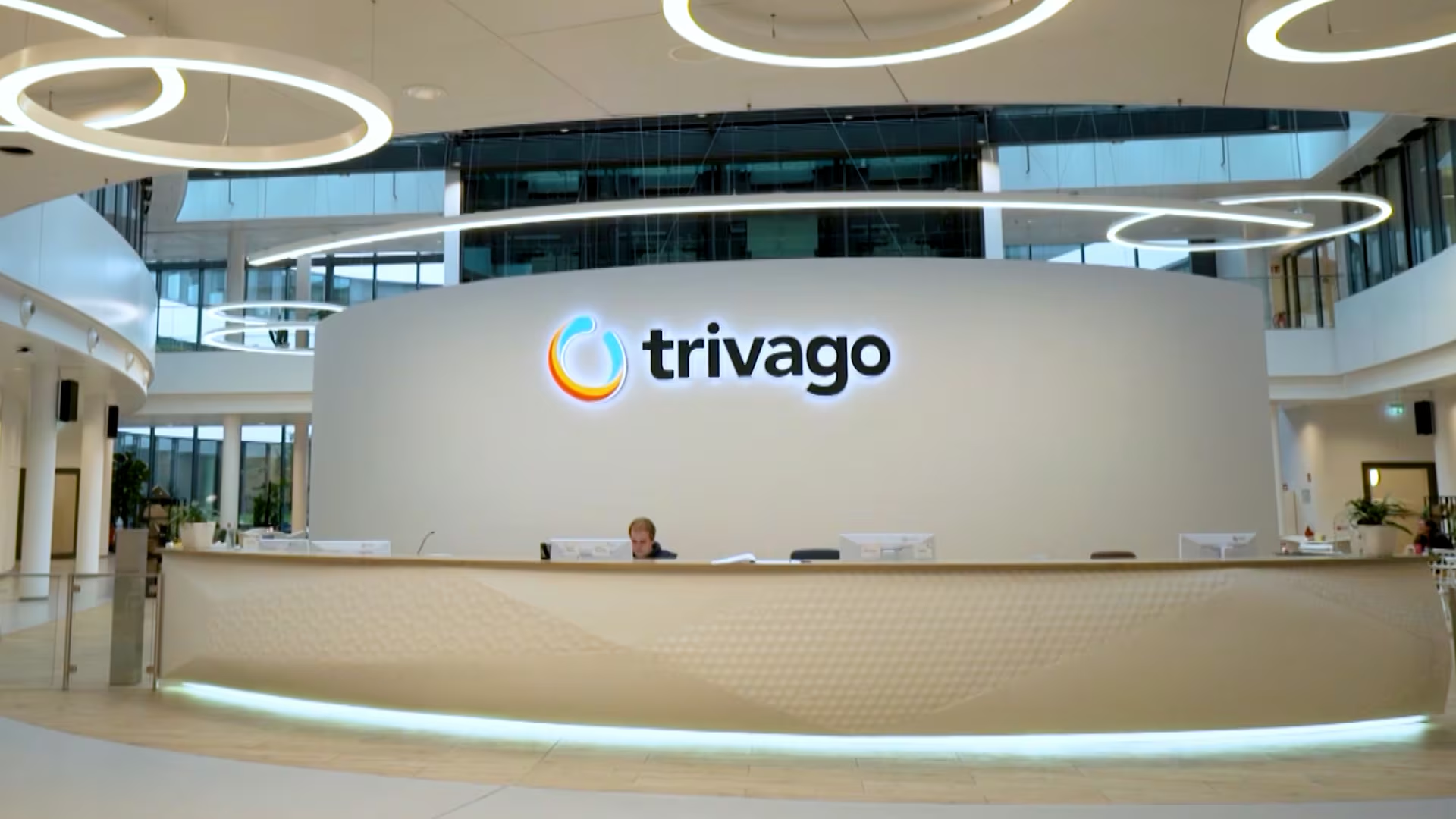
trivago reported its last earnings of 2021 yesterday, marking the end of a rollercoaster year. The online hotel search site was forced to cut costs during the pandemic as the travel industry shut down entirely, instead pivoting its strategy to meet customer demand in other ways. Matthias Tillmann, CFO of trivago, joined Cheddar's Opening Bell to discuss the company's results and why he's optimistic about the future of the travel industry in 2022.
PLAY, a low-cost airline headquartered in Iceland, is expanding service to New York Stewart International Airport, marking its third destination in the United States. PLAY is the latest affordable carrier to fly onto the scene, debuting its first flights a little more than six months ago. Birgir Jonsson, CEO of PLAY, joined Cheddar to discuss what this expansion means for the airline and what it's been like to lead a new airline during a pandemic. "For us to get into the market now, have the availability of great, brand new aircraft at historically low prices, and basically being able to secure a low operating cost base for the future is a completely rare opportunity," Jonsson said. "We can get into the market now when our competitors are also weak."
On Monday, Peloton CEO John Foley stepped down, 2,800 layoffs were announced, and its stock price skyrocketed. Lydia Moynihan, business reporter for the New York Post joined Cheddar News to talk about why investors are excited about this shift in power, while thousands of its workers were let go in a less than ideal manner. "One of the headlines that emerged was that even as they were being fired, Foley sort of couched it as, 'well, you know what, you're still gonna get a year's login to a Peloton subscription', as if somehow if that would make things better," Moynihan said of the soon-to-be ex-CEO. "So, even in that, it was seen as a very sort of tone-deaf move as people were being axed."
Low-cost airlines Frontier and Spirit have agreed to merge in a deal worth $6.6 billion. The new company name and other terms of the deal have not been disclosed. If approved, the merger would be the fifth-largest airline in the United States. Jonathan Root, senior vice president at Moody's, joins Closing Bell to discuss the impact this deal could have on the broader airline industry, as well as why it makes sense for both discount airlines to combine.