By Kevin Freking
Rep. Matt Gaetz said Sunday he will try to remove House Speaker Kevin McCarthy, a fellow Republican, from his leadership position this week after McCarthy relied on Democratic support to pass legislation that avoided a government shutdown. “Bring it on,” McCarthy responded.
Gaetz, a longtime McCarthy nemesis, said in broadcast interviews that McCarthy was in “brazen, material breach” of agreements he made with House Republicans in January when he ran for speaker. As a result, Gaetz said he would be filing a “ motion to vacate the chair,” as House rules permit.
McCarthy’s response: “So be it. Bring it on. Let’s get over with it and let’s start governing."
No speaker has ever been removed from office through such a move. Procedural votes could be offered to halt the motion or it could trigger a House floor vote on whether McCarthy, R-Calif., should remain speaker.
“I think we need to rip off the Band-Aid," said Gaetz, R-Fla. “I think we need to move on with new leadership that can be trustworthy.”
Republicans just ended a tumultuous week in which Congress flirted with a government closure and the majority party in the House could not even pass its own bill in an effort to avoid a shutdown. Many GOP lawmakers complained the House waited too long to take up annual spending bills, squandering an opportunity to force the Senate to negotiate on spending and policy priorities.
McCarthy has consistently worked to placate the conservative wing of his conference during his nearly nine months on the job. Last month, he launched an impeachment inquiry into President Joe Biden without a House vote, though the speaker had in the past said the failure to have such a vote created a process devoid of legitimacy. McCarthy also has pushed spending levels for next year that are far below the caps he agreed to with Biden on a deal to extend the nation's debt ceiling so that the government could pay its bills.
On Friday, he brought a short-term plan to fund the government that would enact steep spending cuts of nearly 30% for many agencies and strict border security provisions. But that was deemed insufficient by some Republicans, and 21 joined with every Democrat in voting against the package.
McCarthy pivoted on Saturday to a bill that would draw Democratic support. It keeps agencies funded at current levels into mid-November and provides $16 billion in disaster relief for states and communities dealing with hurricanes and other natural disasters. Democrats jumped at the chance to keep the government open and both chambers passed the bill by overwhelming margins.
Gaetz had threatened to file his ouster motion if McCarthy worked with Democrats and he said the spending package blew past spending guardrails that McCarthy had agreed to previously.
McCarthy has the support of a large majority of House Republicans, but because the GOP holds such a slim 221-212 majority, he may need votes from some Democrats to keep his job. When asked how many Republicans he had on board, Gaetz said he had enough to ensure that if McCarthy retains the speakership he would "be serving at the pleasure of the Democrats.”
“The only way Kevin McCarthy is speaker of the House at the end of this coming week is if Democrats bail him out,” Gaetz said.
Democratic Rep. Alexandria Ocasio-Cortez of New York said she would vote to oust McCarthy as speaker if such a vote occurs, calling him a “weak speaker” who had “lost control of his caucus.” But she also left open the opportunity for negotiations, saying that if there is Democratic support for McCarthy, it would come at a price.
“You don’t just vote for a Republican speaker for nothing. That’s not what we were elected here to do,” Ocasio-Cortez said.
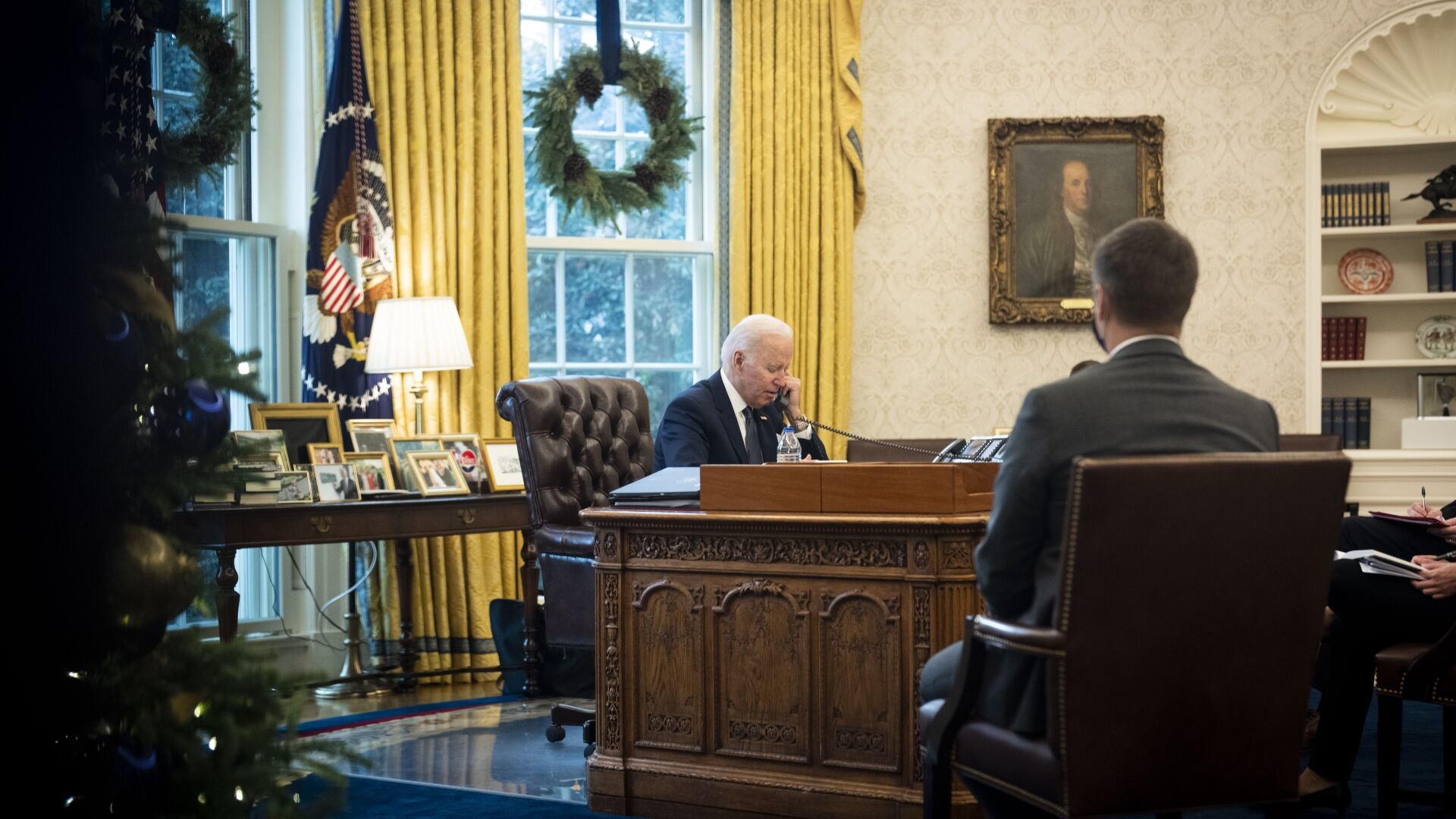
Biden declined to weigh in when asked if Democrats should help McCarthy keep his job.
“I don't have a vote on that matter,” Biden said at the White House on Sunday. “I'll leave that to the leadership in the House and the Senate.”
Gaetz's tactics have generated considerable scorn from many House Republicans. Rep. Mike Lawler, R-N.Y., spoke of Gaetz’s “diatribe of delusional thinking” and said Gaetz was acting for “personal, political reasons.” McCarthy made a similar accusation, saying that Gaetz was "more interested in securing TV interviews than doing something.
Still, McCarthy is unpopular with some within his party. That was on display in January when it took 15 rounds of voting to gain the support he needed within his conference to become speaker.
The rules of the House allow for any single lawmaker — Democrat or Republican — to make a “motion to vacate the chair,” essentially an attempt to oust the speaker from that leadership post through a privileged resolution.
In January, as he ran for speaker, McCarthy agreed to give as few as five Republican members the ability to initiate a vote to remove him. But when that was not good enough for his critics, he reduced that threshold to one — the system that historically has been the norm.
Proponents of allowing a lone lawmaker to file the motion said it promotes accountability, noting its long history in the House. The last use of the motion was in 2015, when then-Rep. Mark Meadows of North Carolina, a Republican who later became President Donald Trump’s White House chief of staff, introduced a resolution to declare the speaker’s office vacant. Two months later, Boehner, R-Ohio, said he would be stepping down.
McCarthy expressed optimism Sunday that Gaetz would fail and said that Gaetz has been after him since he ran for speaker.
“Yes, I'll survive,” McCarthy said.
Gaetz appeared on CNN's “State of the Union” and ABC's “This Week,'' while McCarthy was on CBS' ”Face the Nation." Ocasio-Cortez was on CNN and Lawler was on ABC.
Associated Press staff writer Farnoush Amiri contributed to this report.