While reports of COVID-19 outbreaks have shut down factories or disrupted supply chains for the traditional meat industry, plant-based meat company Impossible Foods has found itself expanding its reach -- this time through a new partnership with Starbucks.
The coffee chain announced this week it will be featuring the Impossible Breakfast Sandwich on its summer menu.
"Something like one-third of all the 18- to 29-year-olds in the country hit a Starbucks at least once a quarter," David Lee, Impossible Foods' chief financial officer, told Cheddar. "And so for us to be available in this way, to have nearly 20,000 locations serve our Impossible Sausage products, is a wonderful milestone for us."
Lee explained that Impossible's co-manufacturing partnerships, such as the one it shares with food supplier OSI Group, provides enough scalability to supply the market for its meat alternatives.
"It means that we can meet the large demand we expect from Starbucks, Burger King, many other partners, but also a really rapid rollout in grocery stores, which we began to speed up sometime around March or so this year," he said.
The CFO was also confident the company was addressing challenges from the coronavirus pandemic by selling Impossible Burgers that can be delivered straight to customers' homes. He reported that grocery sales of its products had grown 30 times over since March when most stay-at-home orders began, in addition to the orders made directly to Impossible.
"The theme has been scaling to meet unprecedented demand. As a result we feel relatively well-prepared to handle how this current pandemic has changed the way meat-eaters like to get their meat," he said. "We're seeing folks order it directly from us to be shipped to their home, which is why we created our direct-to-consumer business."
Still, Impossible Foods has had to weather the pandemic like many other businesses, including the meatpacking industry. According to Lee, however, the stark differences in the businesses give plant-based meat an advantage.
"Unlike many of those unfortunate meat plants, we bypass a lot of the problems they face," he noted. "We don't grow animals, slaughter them, transport them, process them, so we don't have the same challenging conditions the meat industry faces."
Lee also agreed with Impossible Foods founder and CEO Pat Brown, who predicted on Tuesday that the meat industry will be facing its own extinction in just 15 years.
"I believe in the meat-eater," Lee said. "We meat-eaters are pretty sophisticated. You give us a better product that hits the spot, that's better for our health, that's better for the world -- we vote with our stomachs."
"I think the consumer will determine the future and will determine it pretty quickly."
In March, Impossible raised $500 million in Series F funding but despite the aggressive scaling and partnerships Lee described, he said there are no current plans to join fellow plant-based meat company, Beyond, as a public company.
Russia's economy is falling on hard times as businesses throughout the world continue to shut out the country after its invasion of Ukraine. Cheddar News was joined by Christine McDaniel, Senior Research Fellow at the Mercatus Center, to learn more about the situation.
Tech companies such as Google, Apple, and Twitter are the latest to announce back-to-office plans. Google has asked its employees to return starting on April 4th. Heidi Brooks, senior lecturer in organizational behavior at Yale University School of Management, joins Cheddar News to discuss.
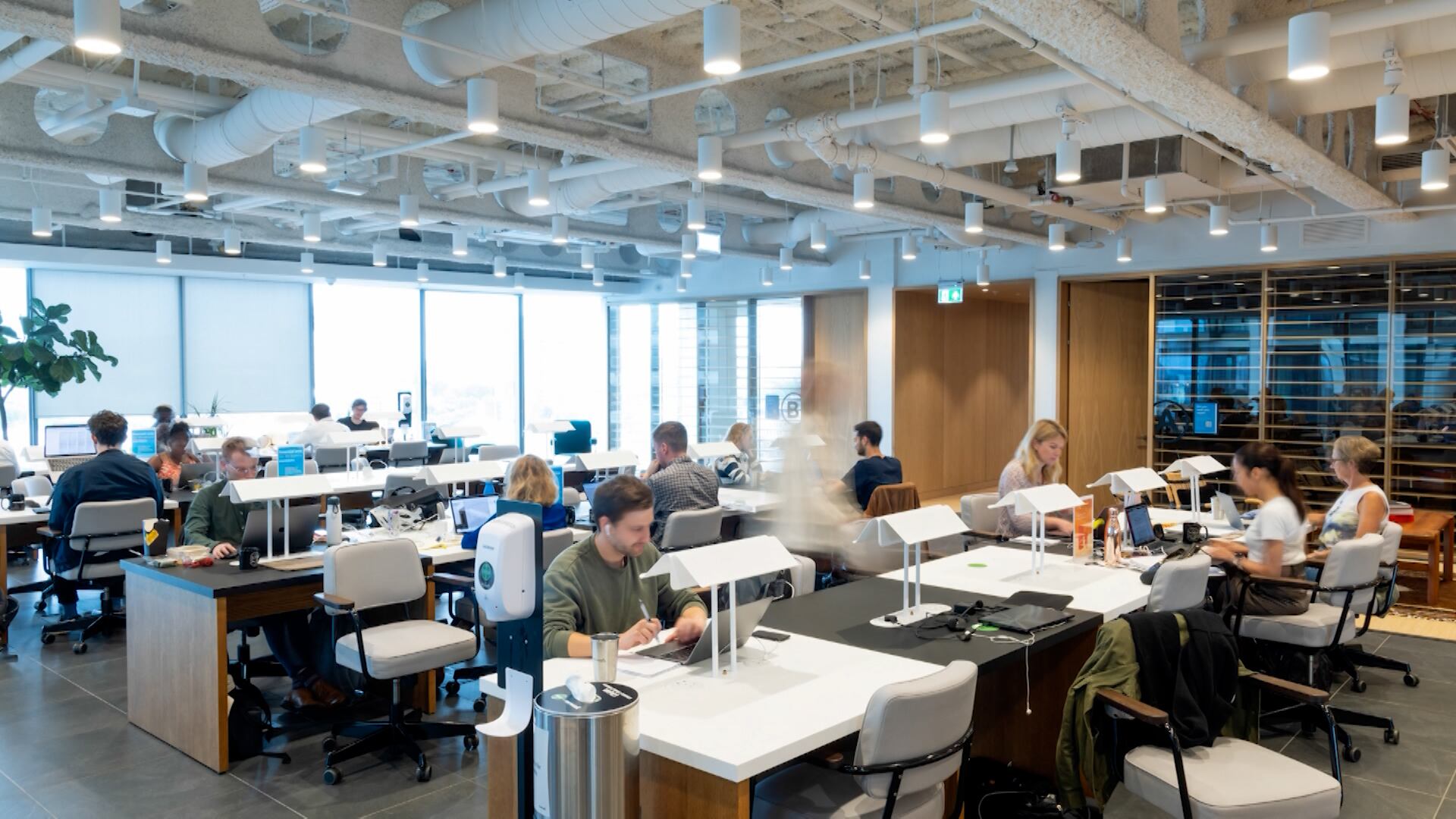
Businesses face more challenges for building a positive work environment as offices reopen. Workplace tech platform Envoy's At Work Report showed that hybrid work is currently in vogue, featuring focused work in both the office and at home. Annette Reavis, chief people officer for Envoy, joined Cheddar to discuss how employers can smooth the rough edges for their returning employees. "It is about hybrid though, it's really important for the future that we change our mindset from five days a week," she said. "Those are days of the past to working hybrids. So when you're in the office, you're focused, you're working cross-functionally."
Following the invasion of Ukraine, a multitude of Western companies have paused doing business with Russia. PepsiCo, Coca-Cola, McDonald's, and Starbucks are the most recent companies to temporarily cease operations in Russia. Dean of Miami Herbert Business School at the University of Miami, John Quelch, joined Cheddar News to discuss what message this sends to Russia and the Russian consumer. “I would not underestimate the collective strength of all of these multinational companies, essentially coming together to make their collective statement in support of the political statements that have come out of Washington," he said.
Cristyl Kimbrough, real estate attorney and star of 'Ladies Who List: Atlanta,' joins Cheddar News to discuss her new show on OWN and breaking into Atlanta's luxury real estate space.
Carl Tobias, professor of law at the University of Richmond, joins Cheddar News to talk about how Johnson & Johnson funded experiments on mostly Black men comparing the effects of talc and asbestos on their skin.
Amazon unveiled its new mobile app called Amp as a direct competitor to Clubhouse, allowing people to host live radio shows. Although it is still in beta, users can join the waitlist from the iOS store.
President Biden announced a ban on Russian oil and natural gas imports to the U.S. in response to its invasion of Ukraine, a move he warned could lead to an even greater surge in gas prices. The ban is prompting a conversation about the current oil production levels in the U.S. and whether or not the industry can ramp up production to soften the blow to American families at the gas pump. Clark Williams-Derry, Energy Finance Analyst with the Institute for Energy Economics and Financial Analysis, breaks down the state of the U.S. oil industry and how the ban might impact production levels here at home.