Ford's business will gradually transition from its internal combustion vehicles to battery electric vehicles, but combustion vehicles will continue to grow for the next few years, CFO John Lawler told Cheddar News.
"Over time, we do see the transition between internal combustion engines — gas vehicles — to [battery electric vehicles] but that's going to be over time," he said. "We still see growth for [internal combustion engine] businesses over the next few years."
That optimism comes in spite of a $2.1 billion loss that Ford's electric vehicle division reported in 2022. The company anticipates the segment will lose an additional $3 billion in 2023, as it works toward profitability in 2026.
Lawler joined "Wake Up with Cheddar" after the automaker announced a major change in the way it reports financials. Instead of reporting geographic results, the new format will break out financials for three customer-facing groups. "Ford Blue" will include its traditional gasoline, diesel, and hybrid vehicles like the F-150 and Mustang. "Ford Model E" includes all electric vehicles, and "Ford Pro" includes commercial vehicles and fleets. The company is framing this shift as a whole new Ford.
"What we've done in creating Ford Blue, Ford Model E, and Ford Pro is far more than an accounting exercise. After 120 years, we've essentially refounded Ford," Lawler said on a call with the press on Wednesday evening.
Following the change, Ford also reviewed what 2021 and 2022 financials would have looked like in the new format. Whereas the Model E segment lost about $2.1 billion, Ford Blue and Ford Pro brought in $6.8 billion and $3.2 billion, respectively.
Lawler justified Model E's losses as par for the course for electric vehicles, describing the segment as a "startup that was buried inside of Ford Motor Company."
"Like all electric vehicle startups, you lose money at first as you're building scale, as you're designing your products, as you're growing and building share," he said.
The company's path to achieving 8 percent EBIT margin by 2026 in the Model E segment will be facilitated by scale and design efficiency for things like batteries, Lawler said. The company also plans to shave about $3 billion in structural costs from the company's balance sheet by 2026. Lawler said reducing design complexity and increasing reuse and commonality would be "some of the main levers" to cut those costs.
Ford was one of the biggest producers of electric vehicles in 2022, second only to Tesla. In spite of all the buzz around EVs, Lawler emphasized that Ford is still focusing on all three of its segments.
"Right now all three businesses are growth businesses," he said.
Sam Burd, president of Dell Technologies Client Solutions Group, joined Cheddar to talk about the firm's Q3 earnings beat and what consumers can expect from the tech company in the future. He noted a return to offices alongside the overall change to how people work as sources for the earnings beat. Burd also discussed how the company has been able to navigate the ongoing global semiconductor chip shortage.
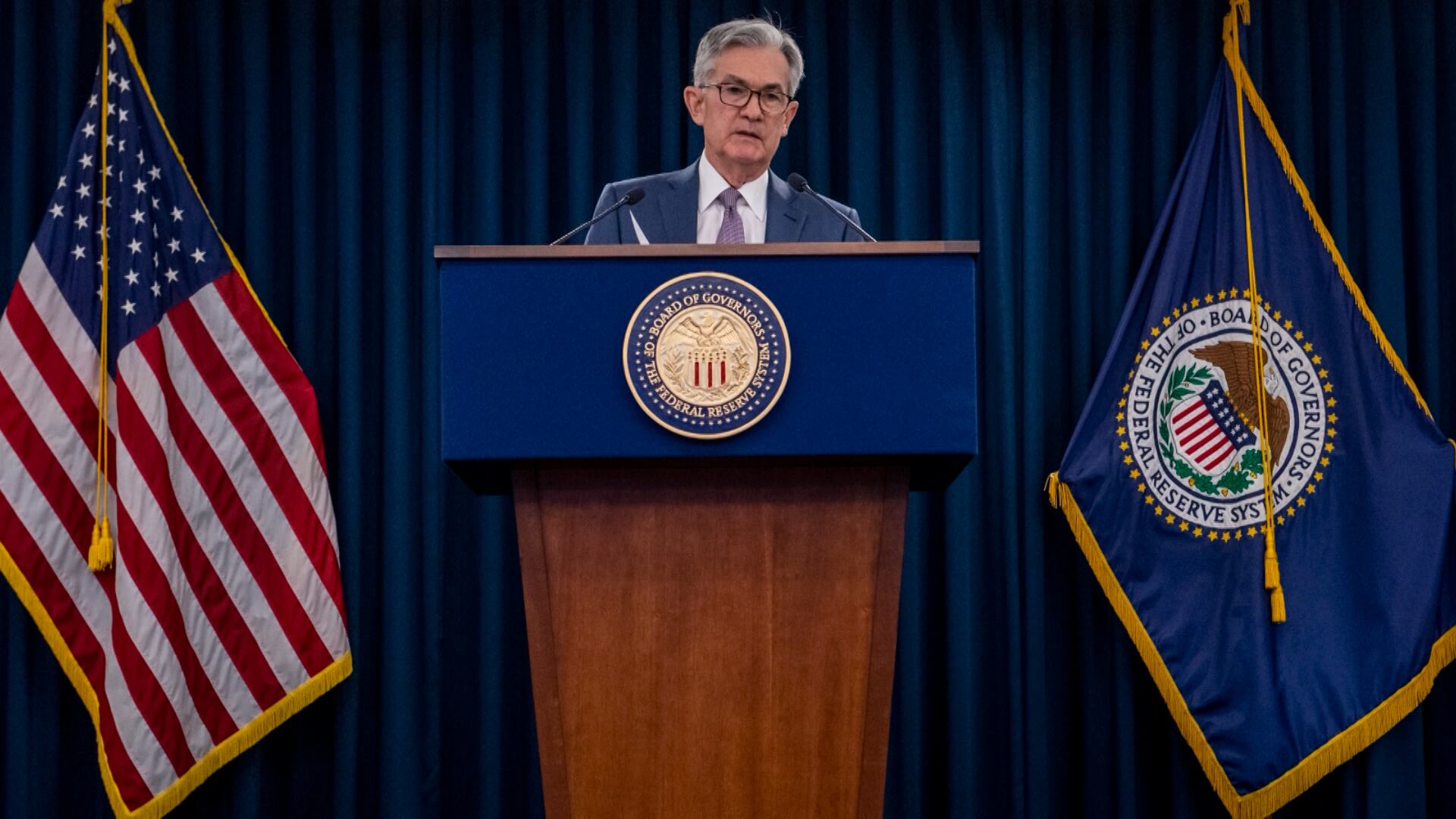
Matt Peron, Director of Research at Janus Henderson Investors, joins Cheddar News' Closing Bell, where he breaks down the factors leading to today's market slide and says there's more to it than Fed Chair Jerome Powell's comments about speeding up tapering efforts.
The United Nations Secretary-General said this year that his agency's warning about climate change was a 'code red for humanity.' So how will political pledges to lower emissions, increase green energy, and ramp up electric vehicle infrastructure play out, and can we reverse some climate damage next year? Vijay Vaitheeswaran, Global energy & climate innovation editor for The Economist, and host of 'To a Lesser Degree,' The Economist’s podcast on climate change, joins Cheddar Climate to discuss what we can look ahead to in 2022, including global policy shifts and investments from the private and public sectors, holding global leaders accountable, and more.
In recent years, extreme weather events like flooding and wildfires have become more frequent, and more severe - and scientists say global warming is to blame. Climate crises could leave people in need of help, and that's where Global Rescue steps in. The crisis response firm employs former Navy Seals and Army Rangers to rescue travelers from climate-related emergencies. Global Rescue CEO Dan Richards joins Cheddar Climate to discuss.
Cloud-based AI-powered writing assistant Grammarly recently raised $200 million in a funding round that values the company at $13 billion. The funding will be used to help Grammarly achieve its goal of becoming more ubiquitous, as the company says it wants to be the go-to writing assistant for wherever people type. Grammarly also says it aims to solve what it calls one of the most critical problems facing people and businesses today -- ineffective communication. Grammarly global head of product Rahul Roy-Chowdhury joins Cheddar News' Closing Bell to discuss.
The Competition and Markets Authority in the UK moved to block Facebook parent company Meta from acquiring the image sharing platform Giphy after saying advertisers and consumers would be adversely impacted. Hatem Dhiab, managing partner at Gerber Kawasaki Wealth & Investment, joined Cheddar to break down the decision and noted that the CMA's order could also halt other big tech firms from making similar purchases in the future. "I think this is going to be true for Facebook, it's going to happen for other big tech companies — Amazon, perhaps Google, so it's interesting that the UK is starting this wave," he said.
Jennifer Lotito, president and COO at the non-profit (RED), joined Cheddar to discuss the CODE (RED) campaign as the organization looks to expand its mission to support both AIDS and COVID-19 relief. She explained that people can get involved in the campaign for Giving Tuesday and ahead of World AIDS Day by shopping (RED) branded products and even using credit card rewards points to add their own support. Lotito also pointed out that COVID-19 has also impacted HIV testing as people avoid clinics out of fear of the other pandemic.
Jack Dorsey has officially stepped down as CEO of Twitter.
In a statement -- he says he is leaving because the company is ready to move on from its founders. Tom Morton, Global Chief Strategy Officer, R/GA joined Cheddar's Opening Bell to discuss the implications of the move.
After a nearly 30-year saga, the New York Islanders have officially found a new home. The NHL team kicked off their very first game at the state of the art UBS arena earlier this month, bringing fans together in Belmont Park, NY.
The over $1 billion dollar project comes as the city attempts to return to normalcy. Tom Naratil, President of the Americas at UBS and Jon Ledecky Co-Owner of the New York Islanders joined Cheddar's Opening Bell to discuss the new beginning.